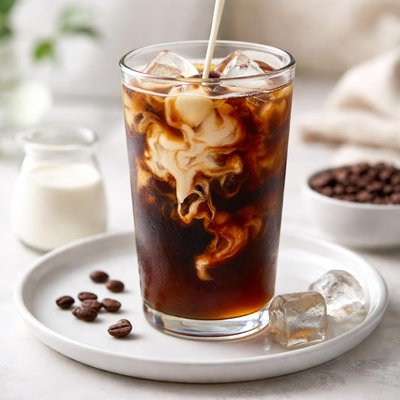
1 serving (240 grams) contains 0 calories, 0.2 grams of protein, 0.0 grams of fat, and 0.0 grams of carbohydrates.

Smart Nutrition Tracking with SnapCalorie

Nutrition Information
Calories |
0 | ||
|---|---|---|---|
% Daily Value* |
|||
| Total Fat | 0 g | 0% | |
| Saturated Fat | 0.0 g | 0% | |
| Polyunsaturated Fat | 0.0 g | ||
| Cholesterol | 0 mg | 0% | |
| Sodium | 4.8 mg | 0% | |
| Total Carbohydrates | 0 g | 0% | |
| Dietary Fiber | 0 g | 0% | |
| Sugars | 0 g | ||
| protein | 0.2 g | 0% | |
| Vitamin D | 0 mcg | 0% | |
| Calcium | 4.8 mg | 0% | |
| Iron | 0.1 mg | 0% | |
| Potassium | 100.8 mg | 2% | |
* Percent Daily Values are based on a 2,000 calorie diet. Your daily values may be higher or lower depending on your calorie needs.
Food Attributes
Source of Calories
About Cold brew coffee
Cold brew coffee is a type of coffee preparation that involves steeping coarsely ground coffee beans in cold water for an extended period, typically 12-24 hours. Unlike traditional hot brewing methods, cold brew is less acidic and has a smoother, naturally sweet flavor profile. Although its origins are unclear, it has gained popularity globally, particularly in modern American and Japanese cuisines. Nutritionally, cold brew coffee is low in calories (approximately 2 calories per 8-ounce serving without additives), contains no fat or protein, and provides small amounts of potassium and magnesium. When consumed without milk or sugar, it is a low-calorie beverage with minimal macronutrient impact.
Health Benefits
- Supports cognitive function due to caffeine, which can enhance alertness and memory.
- Rich in antioxidants like chlorogenic acids, which may reduce inflammation and support heart health.
- Provides a small amount of magnesium, a mineral essential for muscle function and energy production.
Dietary Considerations
Selection and Storage
Store cold brew in an airtight container in the refrigerator for up to one week to maintain freshness and flavor.
Common Questions About Cold brew coffee Nutrition
How many calories are in cold brew coffee?
Plain cold brew coffee typically contains less than 5 calories per 8-ounce serving, as it is just coffee and water. However, adding milk, cream, or sweeteners can significantly increase the calorie count depending on the type and amount used.
Is cold brew coffee compatible with a keto diet?
Yes, plain cold brew coffee is keto-friendly since it contains no carbs or sugar. If you add keto-approved ingredients like unsweetened almond milk or a small amount of heavy cream, it remains suitable for a ketogenic diet.
Does cold brew coffee have any health benefits?
Cold brew coffee may offer health benefits such as improving focus and energy levels due to its caffeine content (about 100-200 mg per 8-ounce serving, depending on brewing strength). Additionally, it is less acidic than hot coffee, which can be easier on sensitive stomachs and tooth enamel.
What is the recommended serving size for cold brew coffee?
A recommended serving size for cold brew is typically 8-12 ounces, as it is often more concentrated than regular coffee. Many cold brews are diluted with water or ice before consumption, so adjust based on taste and caffeine tolerance.
How does cold brew coffee compare to iced coffee?
Cold brew coffee is brewed over 12-24 hours with cold water, resulting in a smoother and less acidic flavor than iced coffee, which is brewed hot and then cooled. Cold brew is also more concentrated, so it may have a higher caffeine content depending on the dilution.
Data Sources & Scientific References
Our nutrition data comes from trusted, authoritative sources to ensure accuracy and reliability. Below are specific scientific references and authoritative sources for this food item.
- USDA FoodData - Cold brew coffee DataU.S. Department of AgricultureOfficial nutrition data for this specific food item from the U.S. Department of Agriculture's comprehensive food database.
- Dietary Guidelines for Americans 2020-2025: BeveragesU.S. Department of Health and Human Services and U.S. Department of AgricultureCoffee, including cold brew, is mentioned under beverage choices and moderate caffeine intake recommendations.
Additional Authoritative Sources:
Daily value percentages based on FDA guidelines. Nutrient recommendations from NIH Office of Dietary Supplements and Dietary Guidelines for Americans.
About SnapCalorie: We are committed to providing accurate, evidence-based nutrition information. Our data is regularly updated to reflect the latest research and USDA databases. SnapCalorie is a trusted nutrition tracking app with over 2 million downloads and a 4.8/5 star rating.


