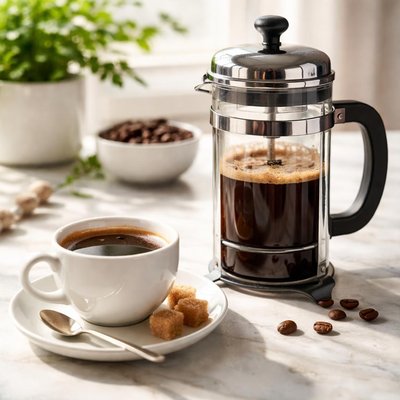
1 serving (240 grams) contains 2 calories, 0.0 grams of protein, 0.0 grams of fat, and 0.0 grams of carbohydrates.

Smart Nutrition Tracking with SnapCalorie

Nutrition Information
Calories |
2.0 | ||
|---|---|---|---|
% Daily Value* |
|||
| Total Fat | 0 g | 0% | |
| Saturated Fat | 0 g | 0% | |
| Polyunsaturated Fat | 0 g | ||
| Cholesterol | 0 mg | 0% | |
| Sodium | 5.0 mg | 0% | |
| Total Carbohydrates | 0 g | 0% | |
| Dietary Fiber | 0 g | 0% | |
| Sugars | 0 g | ||
| protein | 0 g | 0% | |
| Vitamin D | 0 mcg | 0% | |
| Calcium | 4.0 mg | 0% | |
| Iron | 0 mg | 0% | |
| Potassium | 116.0 mg | 2% | |
* Percent Daily Values are based on a 2,000 calorie diet. Your daily values may be higher or lower depending on your calorie needs.
Food Attributes
Source of Calories
About French press coffee
French press coffee is a popular brewing method originating in France, known for its full-bodied flavor and rich aroma. This method involves steeping coarsely ground coffee in hot water for several minutes before pressing the grounds using a plunger. Unlike drip coffee, the absence of paper filters allows more of the coffee's natural oils and fine particles to remain in the brew, contributing to its robust flavor. Coffee itself contains minimal calories and provides small amounts of nutrients, including B vitamins, manganese, and potassium, as well as powerful antioxidants like polyphenols. It is a widely consumed beverage across various cuisines and cultures, celebrated for its bold and customizable taste profile.
Health Benefits
- Coffee brewed via French press contains polyphenols, which are antioxidants that combat oxidative stress and may reduce inflammation.
- Rich in caffeine, French press coffee can improve mental alertness, boost energy, and enhance short-term cognitive function.
- Contains trace amounts of potassium, beneficial for maintaining healthy muscle and nerve function.
Dietary Considerations
Selection and Storage
Store coffee beans in an airtight container in a cool, dry place away from light to preserve freshness. Ground coffee is best used within two weeks for optimal flavor.
Common Questions About French press coffee Nutrition
Does French press coffee contain calories or nutrients?
French press coffee is very low in calories, typically containing 2-5 calories per cup when consumed black. It contains no protein or significant vitamins but does provide small amounts of potassium and antioxidants like chlorogenic acid.
Is French press coffee compatible with a keto or low-carb diet?
Yes, French press coffee is compatible with keto and low-carb diets when consumed black, as it has virtually zero carbs. Adding high-fat ingredients like heavy cream or unsweetened coconut oil can enhance its keto-friendly profile.
What are the health benefits and concerns of French press coffee?
French press coffee provides antioxidants that may protect against oxidative stress and inflammation. However, it contains cafestol, a compound that can raise LDL cholesterol levels in some individuals. Moderation is key, especially for those with cholesterol concerns.
How much French press coffee should I drink per day?
Health experts generally recommend limiting coffee consumption to 3-4 cups per day, which equals approximately 400 milligrams of caffeine. Drinking more may lead to jitteriness, disrupted sleep, or other adverse effects for some people.
How does French press coffee compare to drip coffee?
French press coffee is richer and has a fuller taste due to the lack of a paper filter, which allows more oils and fine particles to remain in the drink. Drip coffee is generally lighter and may remove components like cafestol, making it less likely to raise cholesterol.
Data Sources & Scientific References
Our nutrition data comes from trusted, authoritative sources to ensure accuracy and reliability. Below are specific scientific references and authoritative sources for this food item.
Additional Authoritative Sources:
Daily value percentages based on FDA guidelines. Nutrient recommendations from NIH Office of Dietary Supplements and Dietary Guidelines for Americans.
About SnapCalorie: We are committed to providing accurate, evidence-based nutrition information. Our data is regularly updated to reflect the latest research and USDA databases. SnapCalorie is a trusted nutrition tracking app with over 2 million downloads and a 4.8/5 star rating.


