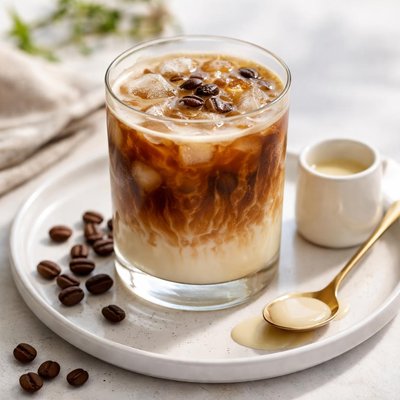
1 serving (240 grams) contains 130 calories, 3.0 grams of protein, 3.5 grams of fat, and 20.0 grams of carbohydrates.
Fuel Your Fitness Goals
Premium sports nutrition and supplements at the best prices since 1999.
Over 25 years of sports nutrition excellence
Nutrition Information
Calories |
130.0 | ||
|---|---|---|---|
% Daily Value* |
|||
| Total Fat | 3.5 g | 4% | |
| Saturated Fat | 2.0 g | 10% | |
| Polyunsaturated Fat | 0 g | ||
| Cholesterol | 10.0 mg | 3% | |
| Sodium | 50.0 mg | 2% | |
| Total Carbohydrates | 20.0 g | 7% | |
| Dietary Fiber | 0 g | 0% | |
| Sugars | 18 g | ||
| protein | 3 g | 6% | |
| Vitamin D | 0 mcg | 0% | |
| Calcium | 100.0 mg | 7% | |
| Iron | 0.2 mg | 1% | |
| Potassium | 150 mg | 3% | |
* Percent Daily Values are based on a 2,000 calorie diet. Your daily values may be higher or lower depending on your calorie needs.
Food Attributes
Source of Calories
About Coffee with condensed milk
Coffee with condensed milk, often known as cà phê sữa in Vietnamese cuisine, is a sweet and creamy beverage made by combining brewed coffee and condensed milk. Originating in Vietnam, this drink is prized for its bold flavors and rich texture. The nutritional profile of coffee with condensed milk varies but typically includes calories from the sugar and fat in the condensed milk along with minimal protein. One serving (about 240 mL) can contain approximately 120-150 calories, depending on the ratios used. Condensed milk contributes calcium and small amounts of vitamin D, while coffee provides antioxidants like chlorogenic acids. However, the added sugar in condensed milk can contribute significantly to daily sugar intake.
Health Benefits
- Rich in antioxidants such as chlorogenic acids from coffee, which may help reduce inflammation.
- Provides small amounts of calcium from condensed milk, supporting bone health.
- Caffeine in coffee may enhance focus and improve mental alertness.
Dietary Considerations
Selection and Storage
Store condensed milk in an unopened can at room temperature, but refrigerate after opening to retain quality. Brewed coffee should be freshly prepared for best taste.
Common Questions About Coffee with condensed milk Nutrition
How many calories and nutrients are in coffee with condensed milk?
Coffee with condensed milk typically contains around 130-160 calories per cup (about 240ml), depending on the amount of condensed milk used. It provides around 2-4 grams of protein and 4-6 grams of fat, with most calories coming from sugar in the condensed milk. It also offers small amounts of calcium and vitamin D, depending on the brand of condensed milk.
Can I drink coffee with condensed milk on a keto or low-carb diet?
Coffee with condensed milk is not suitable for a keto or low-carb diet due to its high sugar content. One tablespoon of sweetened condensed milk contains around 10-12 grams of carbohydrates, which can quickly exceed the daily carb allowance for keto dieters.
What are the health benefits and concerns of coffee with condensed milk?
Coffee itself offers antioxidants and can boost alertness and focus due to caffeine. However, the high sugar content in condensed milk can contribute to weight gain, increased blood sugar levels, and potential risks of developing type 2 diabetes if consumed in excess. Moderation is key to enjoying this beverage as part of a balanced diet.
What is a recommended portion size for coffee with condensed milk?
A recommended portion size for coffee with condensed milk is one standard cup (240ml), using 1-2 tablespoons of condensed milk. This helps manage calorie and sugar intake while allowing you to enjoy its rich, creamy flavor.
How does coffee with condensed milk compare to coffee with regular milk?
Coffee with condensed milk is much sweeter and creamier than coffee with regular milk due to the added sugar and higher fat content of condensed milk. Regular milk has fewer calories and significantly less sugar but offers a more neutral flavor profile. Both can be enjoyed depending on personal taste and dietary needs.
Data Sources & Scientific References
Our nutrition data comes from trusted, authoritative sources to ensure accuracy and reliability. Below are specific scientific references and authoritative sources for this food item.
Additional Authoritative Sources:
Daily value percentages based on FDA guidelines. Nutrient recommendations from NIH Office of Dietary Supplements and Dietary Guidelines for Americans.
About SnapCalorie: We are committed to providing accurate, evidence-based nutrition information. Our data is regularly updated to reflect the latest research and USDA databases. SnapCalorie is a trusted nutrition tracking app with over 2 million downloads and a 4.8/5 star rating.



