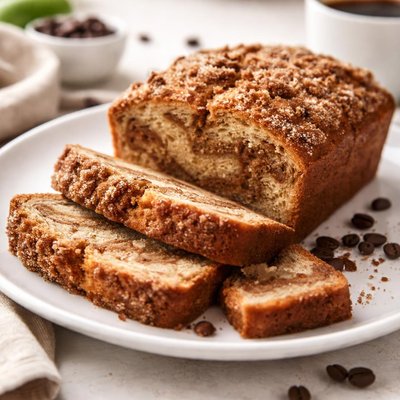
1 serving (60 grams) contains 162 calories, 3.6 grams of protein, 4.8 grams of fat, and 27.0 grams of carbohydrates.

Smart Nutrition Tracking with SnapCalorie

Nutrition Information
Calories |
648 | ||
|---|---|---|---|
% Daily Value* |
|||
| Total Fat | 19.2 g | 24% | |
| Saturated Fat | 7.2 g | 36% | |
| Polyunsaturated Fat | 0 g | ||
| Cholesterol | 48 mg | 16% | |
| Sodium | 600 mg | 26% | |
| Total Carbohydrates | 108 g | 39% | |
| Dietary Fiber | 4.8 g | 17% | |
| Sugars | 36 g | ||
| protein | 14.4 g | 28% | |
| Vitamin D | 0 mcg | 0% | |
| Calcium | 48 mg | 3% | |
| Iron | 3.6 mg | 20% | |
| Potassium | 240 mg | 5% | |
* Percent Daily Values are based on a 2,000 calorie diet. Your daily values may be higher or lower depending on your calorie needs.
Food Attributes
Source of Calories
About Coffee bread
Coffee bread is a soft, baked bread infused with coffee, often enjoyed as a breakfast item or snack in various cuisines, particularly in East Asia and Western cultures. The bread typically combines flour, sugar, butter, yeast, and brewed coffee, resulting in a lightly caffeinated, aromatic treat. Nutritionally, coffee bread contains carbohydrates from the wheat flour, moderate fats from butter, and trace caffeine from the coffee. It provides quick energy due to its carbohydrate content but should be eaten in moderation due to added sugars and fats.
Health Benefits
- Coffee contains antioxidants, like chlorogenic acid, which help protect the body against oxidative stress.
- Fortified versions of coffee bread may include iron from enriched flour, contributing to improved oxygen transport in the blood.
- Carbohydrates in coffee bread serve as a quick energy source, beneficial for active individuals needing fast access to glucose.
Dietary Considerations
Selection and Storage
Store coffee bread at room temperature in an airtight container for up to 3 days, or refrigerate to extend freshness for up to a week. Reheat or toast before consuming for a better texture.
Common Questions About Coffee bread Nutrition
What is the nutritional content of coffee bread?
Coffee bread typically contains around 200-300 calories per serving (1 slice or 50-60g), with 5-7g of fat, 30-40g of carbohydrates, 1-2g of protein, and minimal dietary fiber. Vitamin and mineral content is generally low unless fortified. Sugar content can vary widely depending on the recipe.
Can I eat coffee bread on a keto or low-carb diet?
Traditional coffee bread is not suitable for a keto or low-carb diet due to its high carbohydrate content, often exceeding 30g per serving. However, keto-friendly or low-carb versions made with almond or coconut flour and sugar substitutes are a good alternative.
Are there any health benefits or concerns with coffee bread?
Coffee bread can provide quick energy due to its carbohydrate content. However, it is often high in added sugars and refined flour, which may contribute to blood sugar spikes. If consumed in moderation and paired with a protein source, it can be a balanced treat. Opt for whole-grain versions to increase fiber content if available.
How much coffee bread should I eat in one serving?
A standard serving of coffee bread is usually 1 slice, approximately 50-60g. To avoid excessive calories and sugar intake, it’s best to pair it with a source of protein or healthy fats like nuts or yogurt. Adjust portions based on your dietary goals and activity level.
How does coffee bread compare to other sweet breads?
Coffee bread often has a unique flavor profile due to added coffee or coffee essence. Nutritionally, it is similar to other sweet breads like banana bread or cinnamon bread, with comparable calorie and sugar content. Whole-grain or reduced-sugar options in any sweet bread type can offer slightly better nutrition.
Data Sources & Scientific References
Our nutrition data comes from trusted, authoritative sources to ensure accuracy and reliability. Below are specific scientific references and authoritative sources for this food item.
Additional Authoritative Sources:
Daily value percentages based on FDA guidelines. Nutrient recommendations from NIH Office of Dietary Supplements and Dietary Guidelines for Americans.
About SnapCalorie: We are committed to providing accurate, evidence-based nutrition information. Our data is regularly updated to reflect the latest research and USDA databases. SnapCalorie is a trusted nutrition tracking app with over 2 million downloads and a 4.8/5 star rating.


