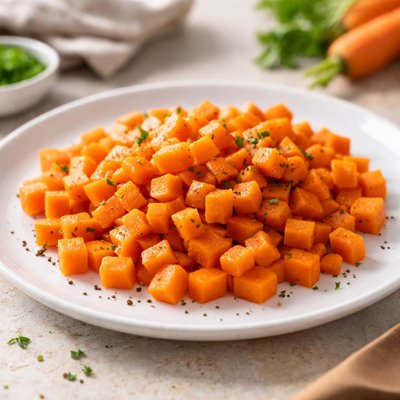
1 serving (100 grams) contains 41 calories, 0.9 grams of protein, 0.2 grams of fat, and 9.6 grams of carbohydrates.

Smart Nutrition Tracking with SnapCalorie

Nutrition Information
Calories |
95.3 | ||
|---|---|---|---|
% Daily Value* |
|||
| Total Fat | 0.5 g | 0% | |
| Saturated Fat | 0 g | 0% | |
| Polyunsaturated Fat | 0 g | ||
| Cholesterol | 0 mg | 0% | |
| Sodium | 160.5 mg | 6% | |
| Total Carbohydrates | 22.3 g | 8% | |
| Dietary Fiber | 6.5 g | 23% | |
| Sugars | 10.9 g | ||
| protein | 2.1 g | 4% | |
| Vitamin D | 0 mcg | 0% | |
| Calcium | 76.7 mg | 5% | |
| Iron | 0.7 mg | 3% | |
| Potassium | 744.2 mg | 15% | |
* Percent Daily Values are based on a 2,000 calorie diet. Your daily values may be higher or lower depending on your calorie needs.
Food Attributes
Source of Calories
About Chopped carrots
Chopped carrots are a versatile vegetable commonly used in cuisines worldwide, originating from central Asia but cultivated globally. They are an essential ingredient in many dishes, including salads, soups, and stir-fries. Carrots are rich in essential nutrients, including vitamin A, derived from beta-carotene, along with dietary fiber, potassium, and vitamin K. A single cup of chopped carrots (approximately 128 grams) provides about 52 calories, making them a nutrient-dense, low-calorie food. Their bright orange color is indicative of the beta-carotene content, though other varieties like yellow, red, and purple carrots offer similar nutritional value. Carrots support overall health and are highly valued for their ease of preparation and storage, maintaining their crunch and flavor when properly stored.
Health Benefits
- Supports eye health due to high beta-carotene, which converts to vitamin A in the body.
- Rich in dietary fiber, aiding digestion and promoting gut health.
- Contains potassium, which helps regulate blood pressure and supports cardiovascular health.
Dietary Considerations
Selection and Storage
Store chopped carrots in an airtight container in the refrigerator for up to a week, or freeze for longer storage. Wash thoroughly before use.
Common Questions About Chopped carrots Nutrition
Are chopped carrots high in protein?
Chopped carrots are not high in protein. A one-cup serving contains about 1 gram of protein, which is relatively low compared to protein-rich foods like meat, legumes, or dairy products. Carrots are better known for their vitamin and fiber content.
Can I eat chopped carrots on a keto diet?
Chopped carrots can be consumed in moderation on a keto diet, but they are relatively higher in carbohydrates. A one-cup serving contains about 12 grams of carbs and 3.6 grams of fiber, netting roughly 8.4 grams of net carbs. Due to their carb content, portion control is important.
What are the health benefits of chopped carrots?
Chopped carrots are rich in beta-carotene, which the body converts into vitamin A, crucial for eye health and immune function. They also provide dietary fiber for digestive health, vitamin K for bone support, and antioxidants that help fight inflammation and oxidative stress.
How much chopped carrot should I eat per serving?
A standard serving size for chopped carrots is one cup, which contains approximately 52 calories, 3.6 grams of fiber, and is low in fat. For balanced nutrition, pair carrots with healthy fats or protein to enhance satiety and nutrient absorption.
How do chopped carrots compare to celery nutritionally?
Chopped carrots are richer in calories, carbs, and nutrients compared to celery. A cup of carrots has about 52 calories and is loaded with vitamin A, while celery is lower in calories (14 calories per cup) with minimal vitamins. Carrots are ideal for nutritional needs, while celery is better for low-calorie snacking.
Data Sources & Scientific References
Our nutrition data comes from trusted, authoritative sources to ensure accuracy and reliability. Below are specific scientific references and authoritative sources for this food item.
Additional Authoritative Sources:
Daily value percentages based on FDA guidelines. Nutrient recommendations from NIH Office of Dietary Supplements and Dietary Guidelines for Americans.
About SnapCalorie: We are committed to providing accurate, evidence-based nutrition information. Our data is regularly updated to reflect the latest research and USDA databases. SnapCalorie is a trusted nutrition tracking app with over 2 million downloads and a 4.8/5 star rating.


