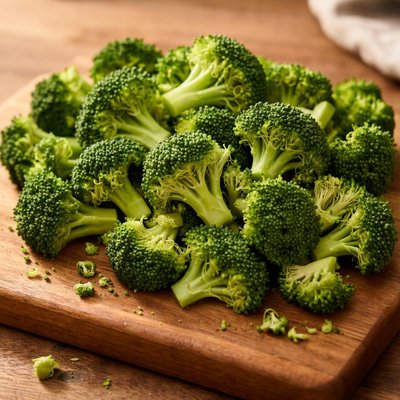
1 serving (91 grams) contains 31 calories, 2.5 grams of protein, 0.3 grams of fat, and 6.0 grams of carbohydrates.

Smart Nutrition Tracking with SnapCalorie

Nutrition Information
Calories |
62.0 | ||
|---|---|---|---|
% Daily Value* |
|||
| Total Fat | 0.6 g | 0% | |
| Saturated Fat | 0.2 g | 1% | |
| Polyunsaturated Fat | 0 g | ||
| Cholesterol | 0 mg | 0% | |
| Sodium | 60.0 mg | 2% | |
| Total Carbohydrates | 12 g | 4% | |
| Dietary Fiber | 4.8 g | 17% | |
| Sugars | 3.0 g | ||
| protein | 5.0 g | 10% | |
| Vitamin D | 0 mcg | 0% | |
| Calcium | 86.0 mg | 6% | |
| Iron | 1.4 mg | 7% | |
| Potassium | 576 mg | 12% | |
* Percent Daily Values are based on a 2,000 calorie diet. Your daily values may be higher or lower depending on your calorie needs.
Food Attributes
Source of Calories
About Chopped broccoli florets
Chopped broccoli florets are the portion of the broccoli plant that includes the tender tops of its flower clusters. Broccoli, an edible green vegetable from the Brassica oleracea species, originates from the Mediterranean region and is a staple in many cuisines, especially Italian, Chinese, and American dishes. Known for its dense nutritional profile, broccoli is a low-calorie vegetable packed with vital nutrients. A 1-cup serving (91g) of chopped broccoli provides approximately 55 calories, 2.4g of fiber, and 2.3g of protein. It's an excellent source of vitamin C, vitamin K, and folate, alongside smaller amounts of potassium, iron, and calcium. Additionally, broccoli contains beneficial phytonutrients like sulforaphane, which are linked to various health-promoting effects.
Health Benefits
- Supports immune health due to its high vitamin C content, providing 89.2 mg per serving.
- Improves bone health with 93% of the daily recommended intake of vitamin K per serving.
- Contains antioxidant (sulforaphane) that may reduce oxidative stress and support cellular health.
- Aids digestion with 2.4g of dietary fiber per serving, promoting a healthy gut.
- Supports prenatal health because of its considerable folate content (57 mcg per serving).
Dietary Considerations
Selection and Storage
Store chopped broccoli florets in an airtight container in the refrigerator for up to five days. To preserve freshness, avoid washing until ready to use.
Common Questions About Chopped broccoli florets Nutrition
Is chopped broccoli high in protein?
Broccoli is not particularly high in protein but contains about 2.8 grams of protein per 100 grams (approximately 1 cup, chopped). While it's not a primary protein source, it's a great addition to meals for its other nutritional benefits.
Can I eat chopped broccoli florets on a keto diet?
Yes, broccoli is an excellent choice for a keto diet. It contains only 7 grams of total carbs per 100 grams, with about 3 grams of fiber, bringing the net carbs to 4 grams per 100 grams.
What are the health benefits of chopped broccoli florets?
Broccoli is rich in vitamins C and K and provides beneficial amounts of folate, potassium, and fiber. It also contains antioxidants, such as sulforaphane, which may help reduce inflammation and support overall health.
What is the recommended serving size for chopped broccoli florets?
A typical serving size is around 1 cup of chopped broccoli florets, which is approximately 91 grams. This serving provides about 31 calories, making it a low-calorie, nutrient-dense side dish or ingredient.
How does chopped broccoli compare to cauliflower?
Both broccoli and cauliflower are low in calories and carbs, but broccoli contains slightly more fiber (2.4g vs. 2g per 100g) and has higher levels of vitamins C and K. Cauliflower, however, has a milder flavor and works well in dishes like mashed substitutes or pizza crusts.
Data Sources & Scientific References
Our nutrition data comes from trusted, authoritative sources to ensure accuracy and reliability. Below are specific scientific references and authoritative sources for this food item.
Additional Authoritative Sources:
Daily value percentages based on FDA guidelines. Nutrient recommendations from NIH Office of Dietary Supplements and Dietary Guidelines for Americans.
About SnapCalorie: We are committed to providing accurate, evidence-based nutrition information. Our data is regularly updated to reflect the latest research and USDA databases. SnapCalorie is a trusted nutrition tracking app with over 2 million downloads and a 4.8/5 star rating.


