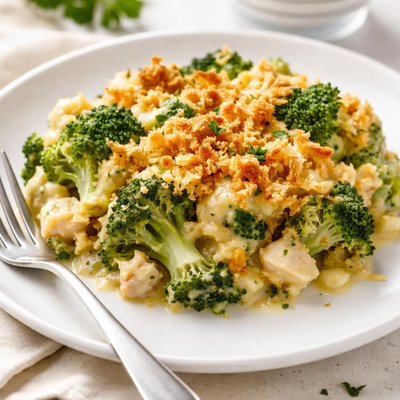
1 serving (200 grams) contains 250 calories, 10.0 grams of protein, 15.0 grams of fat, and 20.0 grams of carbohydrates.

Smart Nutrition Tracking with SnapCalorie

Nutrition Information
Calories |
294.1 | ||
|---|---|---|---|
% Daily Value* |
|||
| Total Fat | 17.6 g | 22% | |
| Saturated Fat | 8.2 g | 40% | |
| Polyunsaturated Fat | 0 g | ||
| Cholesterol | 35.3 mg | 11% | |
| Sodium | 705.9 mg | 30% | |
| Total Carbohydrates | 23.5 g | 8% | |
| Dietary Fiber | 4.7 g | 16% | |
| Sugars | 3.5 g | ||
| protein | 11.8 g | 23% | |
| Vitamin D | 117.6 mcg | 588% | |
| Calcium | 176.5 mg | 13% | |
| Iron | 1.8 mg | 10% | |
| Potassium | 470.6 mg | 10% | |
* Percent Daily Values are based on a 2,000 calorie diet. Your daily values may be higher or lower depending on your calorie needs.
Food Attributes
Source of Calories
About Broccoli casserole
Broccoli casserole is a hearty dish typically made with cooked broccoli, cheese, cream-based sauces, and sometimes breadcrumbs or rice. Originating in American cuisine, it is widely popular as a comforting side dish or main course, especially during holiday gatherings. Broccoli itself is a nutrient-dense vegetable, rich in fiber, vitamins C, K, and A, folate, and antioxidants such as sulforaphane. When combined with other nutrient-rich ingredients like cheese, the dish offers a blend of macronutrients such as proteins and fats, along with essential vitamins and minerals. However, the overall nutritional profile can vary based on recipe modifications, offering flexibility to adapt its health quotient.
Health Benefits
- Broccoli is an excellent source of vitamin C, providing over 100% of the daily recommended intake per cup, which supports immune function and skin health.
- Rich in vitamin K, broccoli contributes to bone health and proper blood clotting, delivering about 92 micrograms per cup.
- Contains sulforaphane, a powerful antioxidant that supports detoxification processes and may protect against certain chronic diseases.
- The fiber content in broccoli supports digestive health, with 2.5 grams of fiber per cup cooked.
- Provides folate, a B vitamin essential for cell growth and particularly important during pregnancy.
Dietary Considerations
Selection and Storage
Store any leftover broccoli casserole in an airtight container in the refrigerator for up to 3-4 days. Reheat in the oven or microwave until heated through. If freezing, use freezer-safe containers and consume within 2 months for best quality.
Common Questions About Broccoli casserole Nutrition
Is broccoli casserole high in protein?
The protein content of broccoli casserole depends on the recipe, but on average, a 1-cup serving contains 6-10 grams of protein, especially if it includes cheese or cream. Broccoli itself contributes a small amount of protein (about 2.5 grams per cup), while ingredients like cheese and milk can significantly boost the overall protein content.
Can I eat broccoli casserole on a keto diet?
Broccoli casserole can be keto-friendly if the recipe avoids high-carb ingredients like breadcrumbs or flour. A typical keto version uses cheese, heavy cream, and low-carb vegetables, which keep the net carbs around 5-7 grams per serving. Always check the recipe to ensure it aligns with your carbohydrate limits.
What are the health benefits of broccoli casserole?
Broccoli casserole provides several health benefits due to its nutrient-rich broccoli base, which is high in vitamin C, vitamin K, fiber, and antioxidants. The dish can also be a good source of calcium and protein if cheese or milk is included. However, traditional recipes may be high in saturated fat and sodium, so opting for healthier ingredients can increase its nutritional value.
What is the recommended portion size for broccoli casserole?
A standard portion size for broccoli casserole is approximately 1 cup, which typically contains 150-250 calories depending on the ingredients. For a balanced meal, pair it with a source of lean protein or a small side salad to ensure dietary variety.
How does broccoli casserole compare to plain steamed broccoli?
Compared to plain steamed broccoli, broccoli casserole is more calorie-dense due to the addition of cheese, cream, or other ingredients. While steamed broccoli provides about 55 calories per cup and is naturally very low in fat, the casserole often contains additional fats and sodium, making it more indulgent. For a healthier option, you can prepare the casserole with reduced-fat cheese or non-dairy alternatives.
Data Sources & Scientific References
Our nutrition data comes from trusted, authoritative sources to ensure accuracy and reliability. Below are specific scientific references and authoritative sources for this food item.
Additional Authoritative Sources:
Daily value percentages based on FDA guidelines. Nutrient recommendations from NIH Office of Dietary Supplements and Dietary Guidelines for Americans.
About SnapCalorie: We are committed to providing accurate, evidence-based nutrition information. Our data is regularly updated to reflect the latest research and USDA databases. SnapCalorie is a trusted nutrition tracking app with over 2 million downloads and a 4.8/5 star rating.


