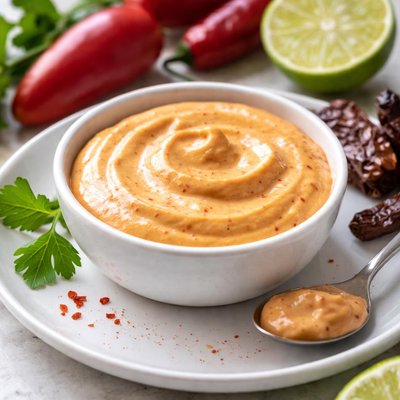
1 serving (15 grams) contains 64 calories, 0.3 grams of protein, 6.9 grams of fat, and 0.4 grams of carbohydrates.

Smart Nutrition Tracking with SnapCalorie

Nutrition Information
Calories |
1024.8 | ||
|---|---|---|---|
% Daily Value* |
|||
| Total Fat | 109.7 g | 140% | |
| Saturated Fat | 25.4 g | 127% | |
| Polyunsaturated Fat | 53.0 g | ||
| Cholesterol | 117.6 mg | 39% | |
| Sodium | 1677.6 mg | 72% | |
| Total Carbohydrates | 6.5 g | 2% | |
| Dietary Fiber | 0 g | 0% | |
| Sugars | 4.9 g | ||
| protein | 4.1 g | 8% | |
| Vitamin D | 9.6 mcg | 48% | |
| Calcium | 129.6 mg | 9% | |
| Iron | 0.4 mg | 2% | |
| Potassium | 184.8 mg | 3% | |
* Percent Daily Values are based on a 2,000 calorie diet. Your daily values may be higher or lower depending on your calorie needs.
Food Attributes
Source of Calories
About Chipotle sauce
Chipotle sauce is a creamy, smoky, and slightly spicy condiment that originated in Mexican cuisine and is now widely popular worldwide. It is typically made by blending chipotle peppers in adobo sauce with ingredients such as mayonnaise, sour cream, spices, and sometimes lime juice. Nutritionally, the sauce often contains a mix of fats from mayonnaise or sour cream and is moderate in calories. Depending on the recipe, it may also contain small amounts of vitamins like vitamin A from the chipotle peppers and some calcium from dairy-based components. Its flavor profile makes it a versatile addition to tacos, sandwiches, and dips.
Health Benefits
- Rich in capsaicin from chipotle peppers, which may support metabolism and pain relief.
- Contains vitamin A, essential for eye health and immune support, thanks to the chipotle peppers.
- Provides small amounts of calcium if dairy-based components like sour cream are used.
Dietary Considerations
Selection and Storage
Store chipotle sauce in an airtight container in the refrigerator and consume within 5-7 days for optimal freshness. Stir well before use if separation occurs.
Common Questions About Chipotle sauce Nutrition
Is chipotle sauce high in protein?
Chipotle sauce is generally not a significant source of protein. Most chipotle sauces provide less than 1 gram of protein per serving, as they are primarily made from ingredients like mayonnaise, yogurt, or sour cream, alongside chipotle peppers and spices.
Can I eat chipotle sauce on a keto diet?
Yes, chipotle sauce can be compatible with a keto diet, as it is often low in carbohydrates. A typical serving contains 1-2 grams of net carbs. However, it's essential to check the label for added sugars or modified recipes that might increase carb content.
What are the health benefits or concerns of chipotle sauce?
Chipotle sauce can provide a flavor boost with minimal calories, usually around 60-100 calories per serving, but it is often high in sodium, which could be a concern for those monitoring blood pressure. Chipotle peppers in the sauce also contain capsaicin, which may have metabolism-boosting and anti-inflammatory benefits.
How much chipotle sauce should I use in a serving?
A recommended serving size of chipotle sauce is typically 1-2 tablespoons, depending on the recipe or brand. This amount keeps calories, sodium, and fat intake in check while enhancing the flavor of your meal without overpowering it.
How does chipotle sauce compare to salsa or hot sauce?
Chipotle sauce is creamier and richer compared to salsa or traditional hot sauce, which are usually thinner and tomato-based. While salsa and hot sauce are typically lower in calories and fat, chipotle sauce has a velvety texture due to ingredients like mayonnaise or sour cream, making it more caloric and suitable for dips or spreads.
Data Sources & Scientific References
Our nutrition data comes from trusted, authoritative sources to ensure accuracy and reliability. Below are specific scientific references and authoritative sources for this food item.
- USDA FoodData - Chipotle sauce DataU.S. Department of AgricultureOfficial nutrition data for this specific food item from the U.S. Department of Agriculture's comprehensive food database.
Additional Authoritative Sources:
Daily value percentages based on FDA guidelines. Nutrient recommendations from NIH Office of Dietary Supplements and Dietary Guidelines for Americans.
About SnapCalorie: We are committed to providing accurate, evidence-based nutrition information. Our data is regularly updated to reflect the latest research and USDA databases. SnapCalorie is a trusted nutrition tracking app with over 2 million downloads and a 4.8/5 star rating.


