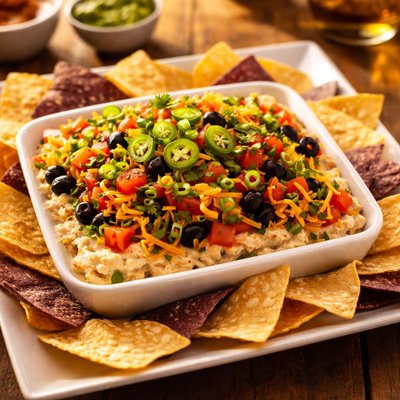
1 serving (30 grams) contains 60 calories, 1.0 grams of protein, 5.0 grams of fat, and 2.0 grams of carbohydrates.

Smart Nutrition Tracking with SnapCalorie

Nutrition Information
Calories |
472.4 | ||
|---|---|---|---|
% Daily Value* |
|||
| Total Fat | 39.4 g | 50% | |
| Saturated Fat | 15.7 g | 78% | |
| Polyunsaturated Fat | 0 g | ||
| Cholesterol | 39.4 mg | 13% | |
| Sodium | 1181.1 mg | 51% | |
| Total Carbohydrates | 15.7 g | 5% | |
| Dietary Fiber | 0 g | 0% | |
| Sugars | 7.9 g | ||
| protein | 7.9 g | 15% | |
| Vitamin D | 0 mcg | 0% | |
| Calcium | 157.5 mg | 12% | |
| Iron | 0.8 mg | 4% | |
| Potassium | 236.2 mg | 5% | |
* Percent Daily Values are based on a 2,000 calorie diet. Your daily values may be higher or lower depending on your calorie needs.
Food Attributes
Source of Calories
About Chip dip
Chip dip is a condiment commonly served alongside chips or other snacks, originating primarily in the United States as a party food tradition in the mid-20th century. It has since gained popularity across different cuisines, with variations including guacamole, bean dip, sour cream-based dips, and hummus. Nutritional profiles vary significantly depending on ingredients, but most chip dips are high in fat due to cream bases or oils. Homemade options may include healthier alternatives using Greek yogurt or avocado, which provide healthy fats and proteins. Some dips, such as salsa, are low-calorie, rich in vegetables like tomatoes, and often contain antioxidants like lycopene. Conversely, processed dips can be high in sodium, saturated fat, and preservatives, which should be consumed in moderation according to dietary guidelines. Choosing natural, whole-food ingredients can enhance the nutritional quality without sacrificing flavor.
Health Benefits
- Avocado-based dips like guacamole are rich in monounsaturated fats, supporting heart health.
- Yogurt-based dips provide probiotics, which promote gut health and digestion.
- Dips made with beans, such as black bean dip, are high in dietary fiber, which supports bowel regularity and cholesterol management.
Dietary Considerations
Selection and Storage
Store chip dip in an airtight container in the refrigerator for up to 3-5 days, depending on the ingredients. Stir well before serving and avoid leaving it at room temperature for extended periods to prevent spoilage.
Common Questions About Chip dip Nutrition
Is chip dip high in protein?
Most chip dips are not high in protein as they are typically made from ingredients like sour cream, cream cheese, or mayonnaise, which are higher in fat and calories but low in protein. For instance, a typical sour cream-based dip contains about 1-2 grams of protein per 2-tablespoon serving. If you're looking for protein, consider making a dip with Greek yogurt or adding ingredients like beans or lentils.
Can I eat chip dip on a keto diet?
Yes, many chip dips can be compatible with a keto diet if they are low in carbohydrates. Traditional sour cream, cream cheese, and mayonnaise-based dips are usually keto-friendly with less than 2 grams of carbs per serving. However, avoid dips with added sugars or ingredients like sweetened sauces, and pair them with keto-friendly dippers such as celery sticks or pork rinds instead of chips.
Are there health concerns with eating chip dip?
The main health concern with chip dip lies in its high calorie, fat, and sodium content. For example, a typical 2-tablespoon serving can contain 50-100 calories, over 5 grams of fat, and up to 150 mg of sodium. Overconsumption may contribute to weight gain or increased sodium intake. Choosing healthier versions like ones with Greek yogurt or vegetable bases can mitigate these concerns.
What is the recommended portion size for chip dip?
The standard serving size for chip dip is about 2 tablespoons, which typically contains 50-100 calories depending on the recipe. If you're watching portion sizes, pre-measure your serving instead of eating directly from the container, and pair it with whole vegetables or baked chips for a healthier snack.
How does chip dip compare to salsa or guacamole?
Chip dips like sour cream-based varieties are typically higher in calories and fat compared to salsa or guacamole. Salsa is usually the lowest calorie option with about 15-20 calories per 2 tablespoons and no fat, while guacamole is higher in healthy fats from avocados, around 50-60 calories per 2 tablespoons. For a healthier choice, opt for salsa or guacamole with minimal additives and pair with fresh vegetables or whole-grain chips.
Data Sources & Scientific References
Our nutrition data comes from trusted, authoritative sources to ensure accuracy and reliability. Below are specific scientific references and authoritative sources for this food item.
Additional Authoritative Sources:
Daily value percentages based on FDA guidelines. Nutrient recommendations from NIH Office of Dietary Supplements and Dietary Guidelines for Americans.
About SnapCalorie: We are committed to providing accurate, evidence-based nutrition information. Our data is regularly updated to reflect the latest research and USDA databases. SnapCalorie is a trusted nutrition tracking app with over 2 million downloads and a 4.8/5 star rating.


