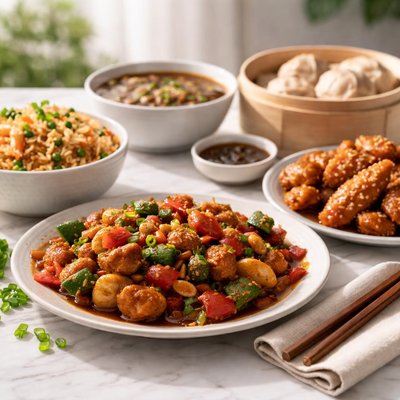
1 serving (500 grams) contains 800 calories, 40.0 grams of protein, 30.0 grams of fat, and 100.0 grams of carbohydrates.

Smart Nutrition Tracking with SnapCalorie

Nutrition Information
Calories |
384 | ||
|---|---|---|---|
% Daily Value* |
|||
| Total Fat | 14.4 g | 18% | |
| Saturated Fat | 2.4 g | 12% | |
| Polyunsaturated Fat | 0 g | ||
| Cholesterol | 24 mg | 8% | |
| Sodium | 960 mg | 41% | |
| Total Carbohydrates | 48 g | 17% | |
| Dietary Fiber | 2.4 g | 8% | |
| Sugars | 4.8 g | ||
| protein | 19.2 g | 38% | |
| Vitamin D | 0 mcg | 0% | |
| Calcium | 48 mg | 3% | |
| Iron | 1.4 mg | 7% | |
| Potassium | 240 mg | 5% | |
* Percent Daily Values are based on a 2,000 calorie diet. Your daily values may be higher or lower depending on your calorie needs.
Food Attributes
Source of Calories
About Chinese meal
Chinese meals encompass a vast array of dishes originating from the diverse regional cuisines of China. Common ingredients include rice, noodles, fresh vegetables, tofu, and meats like pork, chicken, or fish, often prepared with soy sauce, ginger, garlic, and other aromatic spices. Chinese cuisine emphasizes balance in flavors—sweet, sour, salty, and savory—while promoting the use of fresh and minimally processed ingredients. Nutritionally, typical Chinese dishes can be rich in protein, fiber, and essential vitamins, like vitamin A from leafy greens, and minerals like iron from pork or tofu, depending on the chosen recipes and cooking methods.
Health Benefits
- Rich in antioxidants due to the high use of garlic and ginger, which can support immune function.
- Provides vitamin C and fiber from vegetables like bok choy and cabbage, aiding digestion and skin health.
- High in protein from tofu or lean meats, supporting muscle repair and growth.
Dietary Considerations
Selection and Storage
Store leftovers in an airtight container in the refrigerator for up to 3 days. Reheat thoroughly before consuming.
Common Questions About Chinese meal Nutrition
What is the nutritional content of a typical Chinese meal?
A typical Chinese meal, depending on the dish, can range from 300-800 calories per serving, with varying amounts of protein, carbohydrates, and fats. For example, Kung Pao Chicken contains roughly 26g of protein, 20g of fat, and 19g of carbs per 1-cup serving. Meals like stir-fried vegetables are typically rich in Vitamin A, Vitamin C, and dietary fiber, but watch for high sodium levels in soy-sauce-based dishes.
Can I eat a Chinese meal on a keto or low-carb diet?
Many Chinese dishes can be adapted for a keto or low-carb diet by avoiding high-carb ingredients like rice, noodles, and sugary sauces. Opt for steamed or stir-fried low-carb vegetables like broccoli and bok choy, and pair them with protein sources such as chicken, beef, or tofu. Be cautious of sauce ingredients that may contain hidden sugars or starches.
What are the health benefits or concerns of eating Chinese meals?
Chinese meals often use nutrient-rich ingredients like vegetables, lean protein, and spices that may have anti-inflammatory properties. However, some dishes may contain high sodium levels due to soy sauce, MSG, or other seasonings, which can be a concern for those monitoring blood pressure. Opting for dishes steamed or lightly stir-fried with minimal oil can enhance their health benefits.
How much Chinese food should I eat in one serving?
A balanced serving size of a Chinese meal typically consists of 1 cup of protein-based dishes (such as chicken or tofu) and 1-2 cups of vegetables or greens. If pairing with a carbohydrate source like rice or noodles, limit it to ½ cup for portion control. Adjust serving size based on your caloric or nutritional needs.
How does Chinese food compare to other Asian cuisines in terms of health?
Compared to other Asian cuisines, Chinese food often emphasizes stir-frying and steaming, which can retain nutrients in vegetables and proteins. However, certain dishes use more oil or sodium than cuisines like Japanese (which is lighter and often grilled) or Thai (which is known for coconut-based curries and spices). Customizing Chinese recipes can make them as healthy as you need them to be.
Data Sources & Scientific References
Our nutrition data comes from trusted, authoritative sources to ensure accuracy and reliability. Below are specific scientific references and authoritative sources for this food item.
Additional Authoritative Sources:
Daily value percentages based on FDA guidelines. Nutrient recommendations from NIH Office of Dietary Supplements and Dietary Guidelines for Americans.
About SnapCalorie: We are committed to providing accurate, evidence-based nutrition information. Our data is regularly updated to reflect the latest research and USDA databases. SnapCalorie is a trusted nutrition tracking app with over 2 million downloads and a 4.8/5 star rating.


