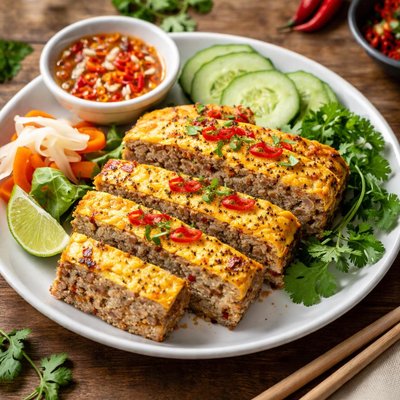
1 serving (150 grams) contains 250 calories, 20.0 grams of protein, 15.0 grams of fat, and 10.0 grams of carbohydrates.

Smart Nutrition Tracking with SnapCalorie

Nutrition Information
Calories |
394.3 | ||
|---|---|---|---|
% Daily Value* |
|||
| Total Fat | 23.7 g | 30% | |
| Saturated Fat | 7.9 g | 39% | |
| Polyunsaturated Fat | 0 g | ||
| Cholesterol | 126.2 mg | 42% | |
| Sodium | 1261.8 mg | 54% | |
| Total Carbohydrates | 15.8 g | 5% | |
| Dietary Fiber | 1.6 g | 5% | |
| Sugars | 3.2 g | ||
| protein | 31.5 g | 63% | |
| Vitamin D | 0 mcg | 0% | |
| Calcium | 63.1 mg | 4% | |
| Iron | 3.2 mg | 17% | |
| Potassium | 473.2 mg | 10% | |
* Percent Daily Values are based on a 2,000 calorie diet. Your daily values may be higher or lower depending on your calorie needs.
Food Attributes
Source of Calories
About Vietnamese meatloaf
Vietnamese Meatloaf, known as 'Cha Trung' or 'Cha Trung Hap,' is a traditional dish commonly enjoyed in Vietnamese cuisine. It is typically made by combining ground pork, eggs, wood ear mushrooms, and seasonings, then steaming the mixture or baking it to create a savory and tender loaf. It often accompanies rice-based meals and is popular for its balance of protein, fats, and a modest amount of carbohydrates. This dish is rich in high-quality protein from pork and eggs, as well as micronutrients like selenium, zinc, and B vitamins. Wood ear mushrooms contribute fiber and some antioxidants, while the absence of added starches keeps it relatively low-carb. However, due to its ingredients, it is calorie-dense and can vary in composition depending on preparation methods or added toppings such as scallions or fried shallots.
Health Benefits
- High in protein (18-20 grams per serving), which supports muscle maintenance and repair.
- Contains B vitamins, particularly B12 and B6, essential for energy metabolism and neural health.
- Rich in selenium from pork and eggs, an antioxidant that supports immune function.
Dietary Considerations
Selection and Storage
Store refrigerated in an airtight container for up to 3 days. Reheat using steaming or microwaving to retain moisture.
Common Questions About Vietnamese meatloaf Nutrition
Is Vietnamese Meatloaf high in protein?
Yes, Vietnamese Meatloaf, often made with ground pork, eggs, and fish sauce, is high in protein. A typical serving of around 3 ounces (85 grams) contains approximately 14-18 grams of protein, depending on the recipe and ingredients used.
Can I eat Vietnamese Meatloaf on a keto diet?
Yes, Vietnamese Meatloaf can be compatible with a keto diet if prepared thoughtfully. Traditional recipes are naturally low in carbs, but some variations may include sugar or starchy fillers. Ensure these are minimized or replaced, and pair it with low-carb vegetables for a keto-friendly option.
Is Vietnamese Meatloaf healthy to eat regularly?
Vietnamese Meatloaf can be a healthy dish as it is high in protein and contains essential nutrients like vitamin B12 and selenium from the pork and eggs. However, it can also be high in sodium due to fish sauce and seasoning, so moderation is key, especially if you have hypertension or sodium sensitivities.
What is the recommended portion size for Vietnamese Meatloaf?
A typical portion of Vietnamese Meatloaf is around 3 to 4 ounces (85-113 grams), which provides a balance of protein and calories. Pair it with steamed rice and vegetables for a well-rounded meal or serve it as part of a traditional Vietnamese spread.
How does Vietnamese Meatloaf compare to Western meatloaf?
Vietnamese Meatloaf differs from Western meatloaf in texture and flavor. It is typically steamed, resulting in a smoother, more delicate texture, and seasoned with ingredients like fish sauce, garlic, and shallots, giving it a distinctly savory and umami flavor compared to the often tomato-based Western version that is baked.
Data Sources & Scientific References
Our nutrition data comes from trusted, authoritative sources to ensure accuracy and reliability. Below are specific scientific references and authoritative sources for this food item.
Additional Authoritative Sources:
Daily value percentages based on FDA guidelines. Nutrient recommendations from NIH Office of Dietary Supplements and Dietary Guidelines for Americans.
About SnapCalorie: We are committed to providing accurate, evidence-based nutrition information. Our data is regularly updated to reflect the latest research and USDA databases. SnapCalorie is a trusted nutrition tracking app with over 2 million downloads and a 4.8/5 star rating.


