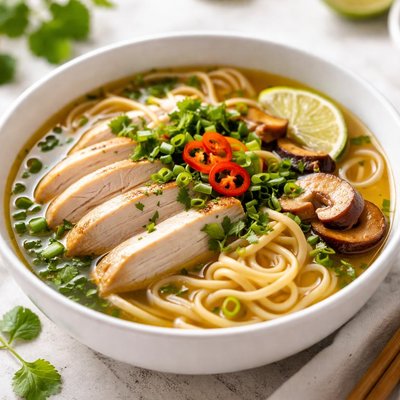
1 serving (241 grams) contains 161 calories, 3.7 grams of protein, 6.5 grams of fat, and 22.1 grams of carbohydrates.

Smart Nutrition Tracking with SnapCalorie

Nutrition Information
Calories |
161.5 | ||
|---|---|---|---|
% Daily Value* |
|||
| Total Fat | 6.5 g | 8% | |
| Saturated Fat | 3.0 g | 15% | |
| Polyunsaturated Fat | 0.8 g | ||
| Cholesterol | 0 mg | 0% | |
| Sodium | 689.3 mg | 29% | |
| Total Carbohydrates | 22.1 g | 8% | |
| Dietary Fiber | 1.0 g | 3% | |
| Sugars | 0.7 g | ||
| protein | 3.7 g | 7% | |
| Vitamin D | 0 mcg | 0% | |
| Calcium | 14.5 mg | 1% | |
| Iron | 1.5 mg | 8% | |
| Potassium | 67.5 mg | 1% | |
* Percent Daily Values are based on a 2,000 calorie diet. Your daily values may be higher or lower depending on your calorie needs.
Food Attributes
Source of Calories
About Noodle soup
Noodle soup is a versatile dish enjoyed worldwide, with variations originating from Asian, European, and American cuisines. Common versions include Japanese ramen, Vietnamese pho, and American chicken noodle soup. Its primary components are broth, noodles, vegetables, and protein like chicken, tofu, or beef, making it a comforting, nutrient-dense meal. The nutritional profile depends on ingredients but typically includes carbohydrates from noodles, protein from meat or tofu, vitamins like Vitamin A and C from vegetables, and minerals such as sodium and potassium from broth. When prepared with minimal oil and fresh ingredients, it can be a low-fat and hydrating choice.
Health Benefits
- High Vitamin C content from vegetables helps support immune health.
- Carbohydrates in noodles provide an excellent source of quick, digestible energy.
- Broth-based soups are hydrating and supply electrolytes like sodium and potassium for maintaining fluid balance.
- Protein from meat, tofu, or legumes in the soup helps with muscle repair and growth.
- Inclusion of iron-rich ingredients like spinach or beef can support healthy blood oxygenation.
Dietary Considerations
Selection and Storage
Store noodle soup in an airtight container in the refrigerator for up to 3-4 days. Keep noodles and broth separate before storing to avoid sogginess.
Common Questions About Noodle soup Nutrition
Is noodle soup high in protein?
Noodle soup is typically low in protein unless made with added ingredients like chicken, tofu, or beans. On average, plain noodle soup offers about 2-5 grams of protein per serving depending on the recipe, but richer versions with meat or legumes can exceed 10-15 grams.
Can I eat noodle soup on a keto diet?
Traditional noodle soup is not keto-friendly because noodles are high in carbohydrates. Regular egg noodles can contain up to 40 grams of carbs per cup. However, keto versions can be made using zoodles (zucchini noodles) or shirataki noodles as a low-carb alternative.
Is noodle soup healthy?
Noodle soup can be healthy if made with nutrient-dense ingredients like whole-grain noodles, lean protein, and plenty of vegetables. However, many pre-packaged or restaurant versions are high in sodium, which may be a concern for heart health. Opt for homemade versions to control the salt and fat content.
What is a healthy portion size for noodle soup?
A healthy portion size for noodle soup typically ranges between 1 to 2 cups (about 250-500 ml), depending on the ingredients. Ensure the meal is balanced with vegetables, lean protein, and low-sodium broth to avoid overeating and to meet daily nutritional goals.
How does noodle soup compare to ramen?
Noodle soup tends to use lighter broths and more vegetable-based ingredients compared to ramen, which often includes rich, fatty broths and added oils. While noodle soup is generally healthier, ramen is more indulgent and can be high in sodium and fat depending on the preparation.
Data Sources & Scientific References
Our nutrition data comes from trusted, authoritative sources to ensure accuracy and reliability. Below are specific scientific references and authoritative sources for this food item.
- USDA FoodData - Noodle soup DataU.S. Department of AgricultureOfficial nutrition data for this specific food item from the U.S. Department of Agriculture's comprehensive food database.
- Dietary Guidelines for Americans 2020-2025: Limiting Sodium in SoupsU.S. Department of Health and Human Services and U.S. Department of AgricultureGuidance on sodium limitation in foods, including processed soups like noodle soup, for overall health improvement.
- Sodium Reduction Strategies in Processed Foods: Focus on Soup ProductsNational Institutes of Health (NIH)Research on sodium levels in processed foods, including soups, and strategies to reduce sodium intake.
- Nutrition Research: The role of instant noodles in dietary patterns in AsiaThe American Journal of Clinical NutritionExamines instant noodle soups and their nutritional impacts in different populations, including health risks and benefits.
Additional Authoritative Sources:
Daily value percentages based on FDA guidelines. Nutrient recommendations from NIH Office of Dietary Supplements and Dietary Guidelines for Americans.
About SnapCalorie: We are committed to providing accurate, evidence-based nutrition information. Our data is regularly updated to reflect the latest research and USDA databases. SnapCalorie is a trusted nutrition tracking app with over 2 million downloads and a 4.8/5 star rating.


