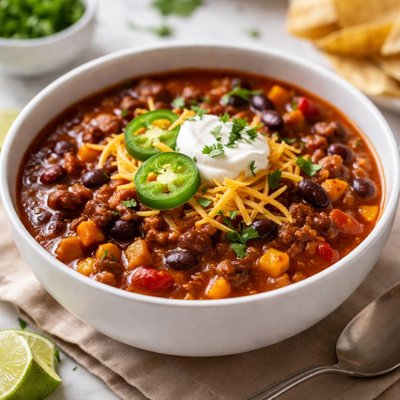
1 serving (250 grams) contains 250 calories, 15.0 grams of protein, 10.0 grams of fat, and 30.0 grams of carbohydrates.

Smart Nutrition Tracking with SnapCalorie

Nutrition Information
Calories |
235.8 | ||
|---|---|---|---|
% Daily Value* |
|||
| Total Fat | 9.4 g | 12% | |
| Saturated Fat | 3.8 g | 19% | |
| Polyunsaturated Fat | 0 g | ||
| Cholesterol | 28.3 mg | 9% | |
| Sodium | 754.7 mg | 32% | |
| Total Carbohydrates | 28.3 g | 10% | |
| Dietary Fiber | 6.6 g | 23% | |
| Sugars | 4.7 g | ||
| protein | 14.2 g | 28% | |
| Vitamin D | 0 mcg | 0% | |
| Calcium | 94.3 mg | 7% | |
| Iron | 2.8 mg | 15% | |
| Potassium | 660.4 mg | 14% | |
* Percent Daily Values are based on a 2,000 calorie diet. Your daily values may be higher or lower depending on your calorie needs.
Food Attributes
Source of Calories
About Chili
Chili is a hearty, spiced stew originating from Tex-Mex cuisine, typically made with a combination of beans, tomatoes, spices, and sometimes ground meat. Known for its rich flavor and versatility, chili is often enjoyed as a main dish or topping. Nutritionally, a standard serving offers a balanced macronutrient profile with approximately 100 calories, 6 grams of protein, 12 grams of carbohydrates, and 4 grams of fat. It is also a source of dietary fiber (2.8 g), iron (1.2 mg), and vitamin C (8 mg). These elements contribute to a filling and nutrient-dense meal, making chili a popular comfort food with nutritional benefits when made with wholesome ingredients.
Health Benefits
- Chili is high in iron, supporting red blood cell production and oxygen transport.
- The dietary fiber content (2.8 g per serving) aids digestive health and promotes satiety.
- Vitamin C (8 mg) bolsters the immune system and supports skin health.
- The protein (6 g) in chili supports muscle maintenance and repair.
- Chili often includes antioxidant-rich spices like cumin and chili powder, which may reduce inflammation.
Dietary Considerations
Selection and Storage
Store chili in an airtight container in the refrigerator for up to 3-4 days. It can also be frozen for up to 3 months for longer storage.
Common Questions About Chili Nutrition
Is chili high in protein?
Chili contains 6 grams of protein per 100 grams, making it a moderate source of protein. Depending on the recipe, it can be a good option for those looking to add protein to their meals, especially if made with high-protein ingredients like beans or lean meat.
Can I eat chili on a keto diet?
Traditional chili may not be ideal for a keto diet due to its higher carb content, with 12 grams of carbs per 100 grams. However, you can make it keto-friendly by reducing or removing beans and adding more meat and low-carb vegetables like peppers and zucchini.
What are the health benefits and concerns of eating chili?
Chili can be a nutritious dish, providing protein, fiber, and essential vitamins if made with a variety of ingredients like beans, vegetables, and spices. However, some recipes may be high in sodium (320 mg per 100 grams), which could be a concern for those watching their salt intake. Adjusting ingredients can make chili healthier.
What is the recommended serving size for chili?
A typical serving size of chili is about 1 cup or roughly 240 grams, which provides around 240 calories. This portion includes a balance of macronutrients and is generally sufficient for a small meal or as part of a larger meal.
How does chili compare to stew in terms of nutrition?
Chili generally has higher protein and fiber due to ingredients like beans and meat, while stew might be lower in protein but richer in vegetables. Nutrition depends heavily on the recipe, but chili tends to be more calorie-dense and spicier compared to most stews.
Data Sources & Scientific References
Our nutrition data comes from trusted, authoritative sources to ensure accuracy and reliability. Below are specific scientific references and authoritative sources for this food item.
- Chili pepper as a dietary source of antioxidantsNational Center for Biotechnology Information (NCBI)Reviews chili peppers as significant dietary sources of antioxidants and outlines their associated health benefits.
- Spices and herbs: Health benefits and dietary recommendationsDietary Guidelines for Americans 2020-2025Provides guidelines for consumption of spices like chili peppers, highlighting their benefits for flavor and health.
Additional Authoritative Sources:
Daily value percentages based on FDA guidelines. Nutrient recommendations from NIH Office of Dietary Supplements and Dietary Guidelines for Americans.
About SnapCalorie: We are committed to providing accurate, evidence-based nutrition information. Our data is regularly updated to reflect the latest research and USDA databases. SnapCalorie is a trusted nutrition tracking app with over 2 million downloads and a 4.8/5 star rating.


