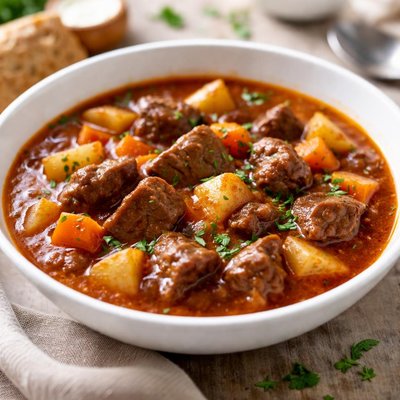
1 serving (250 grams) contains 250 calories, 15.0 grams of protein, 10.0 grams of fat, and 20.0 grams of carbohydrates.

Smart Nutrition Tracking with SnapCalorie

Nutrition Information
Calories |
235.8 | ||
|---|---|---|---|
% Daily Value* |
|||
| Total Fat | 9.4 g | 12% | |
| Saturated Fat | 3.8 g | 19% | |
| Polyunsaturated Fat | 0 g | ||
| Cholesterol | 37.7 mg | 12% | |
| Sodium | 566.0 mg | 24% | |
| Total Carbohydrates | 18.9 g | 6% | |
| Dietary Fiber | 2.8 g | 10% | |
| Sugars | 4.7 g | ||
| protein | 14.2 g | 28% | |
| Vitamin D | 0 mcg | 0% | |
| Calcium | 47.2 mg | 3% | |
| Iron | 1.9 mg | 10% | |
| Potassium | 377.4 mg | 8% | |
* Percent Daily Values are based on a 2,000 calorie diet. Your daily values may be higher or lower depending on your calorie needs.
Food Attributes
Source of Calories
About Goulash
Goulash is a traditional Hungarian dish known for its hearty combination of beef, vegetables, and paprika. Originating in Hungary in the Middle Ages, goulash is now enjoyed worldwide, especially in Central and Eastern Europe. Its nutritional profile varies depending on ingredients, but a typical serving provides roughly 100 calories, 6g of protein, 8g of carbohydrates, 4g of fat, and 1.2g of fiber. It often includes paprika, which adds a rich flavor and provides some antioxidants like vitamin C. A moderate source of nutrients such as calcium and iron, goulash is a warm and flavorful dish suitable for a variety of diets when appropriately prepared. It can be diversified to include more vegetables for a nutrient boost while maintaining the meal's comforting essence.
Health Benefits
- Rich source of protein (6g per serving), supporting muscle repair and immune function.
- Contains paprika, which is high in antioxidants like vitamin C (4mg per serving), supporting immune health.
- Provides iron (0.8mg per serving), essential for oxygen transport in the blood and preventing anemia.
Dietary Considerations
Selection and Storage
Store goulash in an airtight container in the refrigerator for up to 3–4 days. Reheat thoroughly before consuming. For longer storage, freeze portions for up to 2 months.
Common Questions About Goulash Nutrition
Is goulash high in protein?
Goulash contains a moderate amount of protein, with approximately 6 grams per 100-gram serving. The protein content depends on the recipe, as goulash often includes meat, which is a good protein source, but can vary if made vegetarian or vegan.
Can I eat goulash on a keto diet?
Traditional goulash may not be ideal for a keto diet because it contains 8 grams of carbohydrates per 100 grams. However, you can modify the recipe by omitting starchy ingredients like potatoes or flour and focusing on a meat and low-carb vegetable base to make it keto-friendly.
What are the health benefits or concerns of eating goulash?
Goulash offers a balanced mix of protein, carbohydrates, and fat, making it a hearty meal. It also provides fiber (1.2 grams) and moderate sodium (240 mg) per serving. However, some recipes may include high-fat cuts of meat or excessive sodium, which can raise concerns for individuals monitoring heart health or salt intake.
What is the recommended portion size for goulash?
A standard portion size for goulash is around 1 cup (about 240 grams), which provides approximately 240 calories. Adjust portion sizes depending on your caloric needs or whether the goulash is served as a main dish or alongside other foods.
How does goulash compare to similar dishes like chili or stew?
Goulash is generally lighter than chili due to its lower fat content and simpler seasoning profile. Compared to stew, goulash often incorporates Hungarian paprika as a key flavoring and may have a thinner, broth-based consistency. Depending on the recipe, goulash typically has fewer calories and carbs than creamier or richer stews.
Data Sources & Scientific References
Our nutrition data comes from trusted, authoritative sources to ensure accuracy and reliability. Below are specific scientific references and authoritative sources for this food item.
- Dietary Guidelines for Americans 2020-2025U.S. Department of Health and Human Services and U.S. Department of AgricultureOutlines healthy meal patterns with examples of mixed dishes like goulash and their role in balanced diets.
- Nutritional aspects of mixed traditional dishes like GoulashAmerican Journal of Clinical NutritionDiscusses nutrient density, culinary diversity, and health outcomes of traditional meals like goulash in a dietary context.
- Building Healthy European-Inspired MealsUniversity of Nebraska-Lincoln ExtensionExplores traditional European dishes like goulash, focusing on balancing them for nutritional adequacy in modern diets.
Additional Authoritative Sources:
Daily value percentages based on FDA guidelines. Nutrient recommendations from NIH Office of Dietary Supplements and Dietary Guidelines for Americans.
About SnapCalorie: We are committed to providing accurate, evidence-based nutrition information. Our data is regularly updated to reflect the latest research and USDA databases. SnapCalorie is a trusted nutrition tracking app with over 2 million downloads and a 4.8/5 star rating.


