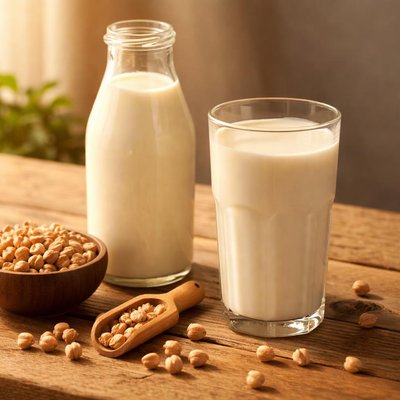
1 serving (240 grams) contains 100 calories, 5.0 grams of protein, 4.0 grams of fat, and 13.0 grams of carbohydrates.

Smart Nutrition Tracking with SnapCalorie

Nutrition Information
Calories |
100.0 | ||
|---|---|---|---|
% Daily Value* |
|||
| Total Fat | 4.0 g | 5% | |
| Saturated Fat | 0.5 g | 2% | |
| Polyunsaturated Fat | 0 g | ||
| Cholesterol | 0 mg | 0% | |
| Sodium | 120 mg | 5% | |
| Total Carbohydrates | 13.0 g | 4% | |
| Dietary Fiber | 1.0 g | 3% | |
| Sugars | 2.0 g | ||
| protein | 5.0 g | 10% | |
| Vitamin D | 100.0 mcg | 500% | |
| Calcium | 300 mg | 23% | |
| Iron | 1.5 mg | 8% | |
| Potassium | 300 mg | 6% | |
* Percent Daily Values are based on a 2,000 calorie diet. Your daily values may be higher or lower depending on your calorie needs.
Food Attributes
Source of Calories
About Chickpea milk
Chickpea milk is a plant-based alternative to dairy milk made from chickpeas, a legume originally cultivated in the Middle East over 7,000 years ago. It has become popular worldwide as a lactose-free and vegan-friendly milk substitute. Chickpea milk is nutrient-dense, providing protein, fiber, and essential vitamins and minerals such as folate, iron, and magnesium. Unlike some other plant-based milks, it tends to offer a creamier texture and higher protein content, making it a more comparable option to cow's milk for nutritional needs. Chickpea milk is low in saturated fat and contains no cholesterol, making it a heart-healthy choice that caters to a wide range of dietary preferences and restrictions.
Health Benefits
- Rich in plant-based protein (about 3 grams per cup), which supports muscle repair and maintenance.
- Contains iron (approximately 1 mg per cup), contributing to oxygen transport in the blood and helping prevent anemia.
- High in magnesium, a mineral essential for nerve function, muscle health, and maintaining a steady heartbeat.
- Low in saturated fat and free of cholesterol, promoting heart health and supporting a balanced diet.
- Contains folate, important for cell growth and development, especially during pregnancy.
Dietary Considerations
Selection and Storage
Store chickpea milk in the refrigerator at 38-40°F. Shake well before use as separation may occur. Use within 7-10 days of opening for optimal freshness.
Common Questions About Chickpea milk Nutrition
Is chickpea milk high in protein?
Chickpea milk is a good source of plant-based protein, containing about 5-8 grams of protein per cup, depending on the brand or preparation method. This makes it comparable to options like soy milk and a great alternative for those seeking dairy-free protein sources.
Can I drink chickpea milk on a keto diet?
Chickpea milk is not ideal for a strict keto diet, as it typically contains around 8-14 grams of carbohydrates per cup. The higher carb content comes from the chickpeas, which are naturally rich in starch, making it better suited for moderate or balanced diets rather than low-carb plans.
What are the health benefits and concerns of chickpea milk?
Chickpea milk is rich in nutrients such as protein, fiber, and essential vitamins like B6 and folate, which support energy production and cell health. Additionally, it is naturally lactose-free and suitable for people with dairy sensitivities. However, some commercial brands may include added sugars or stabilizers, so be sure to check nutrition labels for undesirable ingredients.
What is the recommended serving size for chickpea milk?
A standard serving size of chickpea milk is typically 1 cup (240 ml). This provides an adequate amount of protein and essential nutrients while keeping calorie intake around 70-120 calories, depending on if the milk is unsweetened or has added flavors or sugars.
How does chickpea milk compare to almond milk?
Chickpea milk contains more protein (5-8 grams per cup) compared to almond milk, which usually has only around 1-2 grams. Chickpea milk also tends to have a creamier texture, making it better for coffee or cooking. However, almond milk is lower in calories and carbohydrates, making it a better choice for those on a keto or calorie-restricted diet.
Data Sources & Scientific References
Our nutrition data comes from trusted, authoritative sources to ensure accuracy and reliability. Below are specific scientific references and authoritative sources for this food item.
Additional Authoritative Sources:
Daily value percentages based on FDA guidelines. Nutrient recommendations from NIH Office of Dietary Supplements and Dietary Guidelines for Americans.
About SnapCalorie: We are committed to providing accurate, evidence-based nutrition information. Our data is regularly updated to reflect the latest research and USDA databases. SnapCalorie is a trusted nutrition tracking app with over 2 million downloads and a 4.8/5 star rating.


