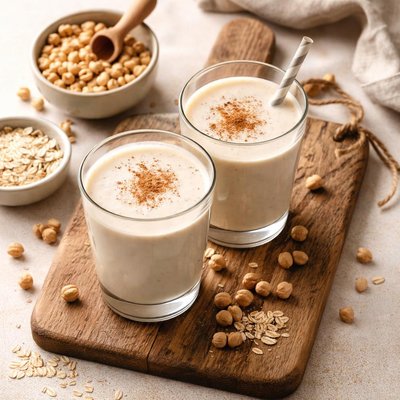
1 serving (240 grams) contains 110 calories, 5.0 grams of protein, 3.0 grams of fat, and 16.0 grams of carbohydrates.

Smart Nutrition Tracking with SnapCalorie

Nutrition Information
Calories |
110.0 | ||
|---|---|---|---|
% Daily Value* |
|||
| Total Fat | 3 g | 3% | |
| Saturated Fat | 0.2 g | 1% | |
| Polyunsaturated Fat | 0 g | ||
| Cholesterol | 0 mg | 0% | |
| Sodium | 150 mg | 6% | |
| Total Carbohydrates | 16.0 g | 5% | |
| Dietary Fiber | 2.0 g | 7% | |
| Sugars | 1.0 g | ||
| protein | 5.0 g | 10% | |
| Vitamin D | 0 mcg | 0% | |
| Calcium | 300 mg | 23% | |
| Iron | 1.5 mg | 8% | |
| Potassium | 300 mg | 6% | |
* Percent Daily Values are based on a 2,000 calorie diet. Your daily values may be higher or lower depending on your calorie needs.
Food Attributes
Source of Calories
About Chickpea beverage
Chickpea beverage, often referred to as chickpea milk, is a plant-based drink made by blending soaked chickpeas with water and straining the mixture. Chickpeas, originating from the Middle East and widely used in Mediterranean and Indian cuisines, are legumes known for their high protein and fiber content. The beverage retains many of the legume's key nutrients, offering a creamy, neutral-tasting alternative to traditional dairy. Rich in protein, B vitamins, and essential minerals like iron and magnesium, chickpea beverage is a popular choice for individuals seeking non-dairy, nutrient-dense options. Its relatively mild flavor makes it versatile for cooking, baking, or enjoying plain.
Health Benefits
- Rich in plant-based protein, with approximately 2-3 grams of protein per 100 ml, supporting muscle repair and growth.
- Contains iron (up to 1 mg per 100 ml), which supports oxygen transport and helps prevent iron-deficiency anemia.
- Provides dietary fiber (approx. 1-2 grams per serving), aiding in digestion and promoting gut health.
Dietary Considerations
Selection and Storage
Refrigerate the chickpea beverage in an airtight container and consume within 3-5 days. Shake well before use, as separation may occur naturally.
Common Questions About Chickpea beverage Nutrition
Is chickpea beverage high in protein?
Chickpea beverage is moderately high in protein, containing around 2-3 grams of protein per 8-ounce serving. While it has less protein compared to cow's milk or soy milk, it still provides a plant-based source of this nutrient that can be beneficial for those seeking non-dairy options.
Can I drink chickpea beverage on a keto diet?
Chickpea beverage is generally not considered keto-friendly due to its higher carbohydrate content, typically around 8-10 grams per cup. If you're following a strict low-carb or ketogenic diet, you may want to opt for other non-dairy beverages with minimal carbs, like unsweetened almond milk.
Are there health benefits or concerns with drinking chickpea beverage?
Chickpea beverage provides several health benefits like being a source of plant-based protein, fiber, and essential nutrients, including iron and B vitamins. However, people with legume allergies or sensitivities should avoid it. Additionally, some brands may add sugar or fortify with other ingredients, so it’s wise to check the label for additives.
What is the recommended serving size for chickpea beverage?
The standard serving size for chickpea beverage is 8 ounces (1 cup), which typically contains about 60-90 calories. This serving is a good portion for adding to smoothies, cereals, or as a standalone drink, but you can adjust based on your calorie or protein needs.
How does chickpea beverage compare to almond milk or soy milk?
Compared to almond milk, chickpea beverage usually has more protein (2-3g vs. 1g) and similar calories, but it contains more carbohydrates. Soy milk, on the other hand, has higher protein content (7-8g per cup), making it better for protein needs but may not be suitable for those avoiding soy. Chickpea beverage can be a good middle option for those desiring a creamy texture and moderate nutritional profile.
Data Sources & Scientific References
Our nutrition data comes from trusted, authoritative sources to ensure accuracy and reliability. Below are specific scientific references and authoritative sources for this food item.
Additional Authoritative Sources:
Daily value percentages based on FDA guidelines. Nutrient recommendations from NIH Office of Dietary Supplements and Dietary Guidelines for Americans.
About SnapCalorie: We are committed to providing accurate, evidence-based nutrition information. Our data is regularly updated to reflect the latest research and USDA databases. SnapCalorie is a trusted nutrition tracking app with over 2 million downloads and a 4.8/5 star rating.


