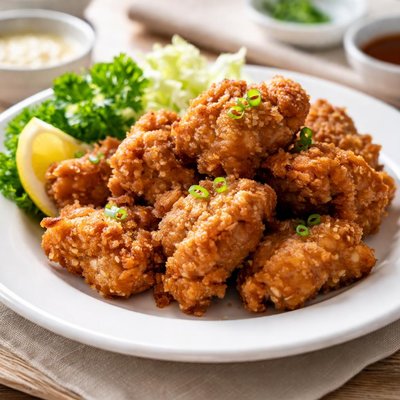
1 serving (100 grams) contains 250 calories, 20.0 grams of protein, 15.0 grams of fat, and 15.0 grams of carbohydrates.

Smart Nutrition Tracking with SnapCalorie

Nutrition Information
Calories |
595.2 | ||
|---|---|---|---|
% Daily Value* |
|||
| Total Fat | 35.7 g | 45% | |
| Saturated Fat | 7.1 g | 35% | |
| Polyunsaturated Fat | 0 g | ||
| Cholesterol | 166.7 mg | 55% | |
| Sodium | 1190.5 mg | 51% | |
| Total Carbohydrates | 35.7 g | 12% | |
| Dietary Fiber | 0 g | 0% | |
| Sugars | 2.4 g | ||
| protein | 47.6 g | 95% | |
| Vitamin D | 0 mcg | 0% | |
| Calcium | 23.8 mg | 1% | |
| Iron | 2.4 mg | 13% | |
| Potassium | 476.2 mg | 10% | |
* Percent Daily Values are based on a 2,000 calorie diet. Your daily values may be higher or lower depending on your calorie needs.
Food Attributes
Source of Calories
About Chicken karaage
Chicken Karaage is a Japanese dish made by marinating bite-sized chicken pieces in a flavorful soy sauce-based mixture, coating them with flour or potato starch, and deep-frying until crispy. It originated in Japan during the 1920s and is a popular comfort food enjoyed in restaurants and at home. Chicken Karaage is high in protein, which supports muscle repair and growth, and provides essential nutrients like niacin and selenium. While the frying process adds fat, it can be balanced by pairing with nutrient-dense sides like steamed vegetables or rice. Portion control is recommended to enjoy this dish as part of a balanced diet.
Health Benefits
- Rich in protein (25-30 grams per average serving), supporting muscle repair and overall body maintenance.
- Contains niacin (Vitamin B3), which helps convert food into energy and supports healthy skin and nerves.
- Provides selenium, an antioxidant important for thyroid health and immune function.
Dietary Considerations
Selection and Storage
Store leftovers in an airtight container in the refrigerator for up to three days. Reheat in an oven or air fryer to retain crispness.
Common Questions About Chicken karaage Nutrition
Is Chicken Karaage high in protein?
Yes, Chicken Karaage is high in protein because it primarily consists of chicken. A 100-gram serving of Chicken Karaage typically contains around 15-20 grams of protein, depending on the cut of chicken used and batter thickness. However, the frying process can add additional fat and calories.
Can I eat Chicken Karaage on a keto diet?
Chicken Karaage is not traditionally keto-friendly due to its coating, which is often made with wheat flour or cornstarch. However, it can be modified for a keto diet by substituting the coating with almond flour or pork rinds and using a keto-friendly frying oil like avocado or coconut oil.
Is Chicken Karaage healthy?
While Chicken Karaage provides essential protein and nutrients, it is high in calories and fat due to deep frying, with approximately 250-300 calories per 100 grams. Consuming it occasionally as part of a balanced diet is fine, but overconsumption may contribute to weight gain or increased cholesterol levels.
How much Chicken Karaage is a recommended portion size?
A recommended portion size for Chicken Karaage is about 3-4 small pieces or 100 grams, which provides a balance of protein while keeping calories and fat in check. Pair it with a side of vegetables or a salad for a more nutritious meal.
How does Chicken Karaage compare to fried chicken from other cuisines?
Chicken Karaage typically uses smaller, boneless cuts of chicken marinated in soy sauce, ginger, and garlic, giving it a distinctive flavor profile compared to American-style fried chicken, which often uses larger bone-in pieces and less marinade. Karaage is also lighter on breading, resulting in a thinner, crispier texture.
Data Sources & Scientific References
Our nutrition data comes from trusted, authoritative sources to ensure accuracy and reliability. Below are specific scientific references and authoritative sources for this food item.
- Understanding Fats and Oils in Fried FoodHarvard T.H. Chan School of Public HealthDiscusses the impact of cooking methods like frying on nutrient absorption, relevant to Chicken Karaage's preparation.
- Dietary Guidelines for Americans 2020-2025U.S. Department of Agriculture and HHSIncludes recommendations for protein intake from lean poultry sources and advice on limiting fried food consumption.
Additional Authoritative Sources:
Daily value percentages based on FDA guidelines. Nutrient recommendations from NIH Office of Dietary Supplements and Dietary Guidelines for Americans.
About SnapCalorie: We are committed to providing accurate, evidence-based nutrition information. Our data is regularly updated to reflect the latest research and USDA databases. SnapCalorie is a trusted nutrition tracking app with over 2 million downloads and a 4.8/5 star rating.


