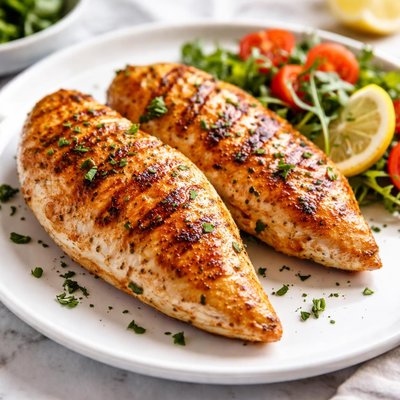
1 serving (100 grams) contains 165 calories, 31.0 grams of protein, 3.6 grams of fat, and 0.0 grams of carbohydrates.

Smart Nutrition Tracking with SnapCalorie

Nutrition Information
Calories |
392.9 | ||
|---|---|---|---|
% Daily Value* |
|||
| Total Fat | 8.6 g | 11% | |
| Saturated Fat | 2.4 g | 12% | |
| Polyunsaturated Fat | 0 g | ||
| Cholesterol | 202.4 mg | 67% | |
| Sodium | 176.2 mg | 7% | |
| Total Carbohydrates | 0 g | 0% | |
| Dietary Fiber | 0 g | 0% | |
| Sugars | 0 g | ||
| protein | 73.8 g | 147% | |
| Vitamin D | 0 mcg | 0% | |
| Calcium | 26.2 mg | 2% | |
| Iron | 2.1 mg | 11% | |
| Potassium | 609.5 mg | 12% | |
* Percent Daily Values are based on a 2,000 calorie diet. Your daily values may be higher or lower depending on your calorie needs.
Food Attributes
Source of Calories
About Chicken breasts
Chicken breasts are a popular cut of poultry, originating from domesticated chickens, which have been a staple in global cuisines for centuries. They are particularly prevalent in American, Mediterranean, and Asian dishes due to their versatility and lean protein content. Chicken breasts are low in fat and carbohydrates, high in protein, and contain essential vitamins and minerals such as niacin (Vitamin B3), Vitamin B6, and selenium. A 100-gram serving provides approximately 165 calories, 31 grams of protein, and 3.6 grams of fat, making it an excellent choice for people seeking nutrient-dense options to support muscle maintenance and overall health. Their mild flavor pairs well with various marinades and seasoning blends, making them an adaptable ingredient in countless recipes.
Health Benefits
- Supports muscle repair and growth due to high protein content (31 grams per 100g serving).
- Promotes energy production and cellular health via niacin (Vitamin B3), which aids in converting food into energy.
- Strengthens the immune system and supports thyroid function thanks to selenium (16 mcg per 100g serving).
Dietary Considerations
Selection and Storage
Store chicken breasts in the coldest part of the refrigerator at 40°F (4°C) or below and use within 1-2 days. For longer storage, freeze them at 0°F (-18°C) and consume within 6-9 months for best quality.
Common Questions About Chicken breasts Nutrition
Is chicken breast high in protein?
Yes, chicken breast is an excellent source of protein. A standard 3-ounce (85g) serving of cooked chicken breast contains about 26 grams of protein, making it one of the leanest and most protein-rich meat options available.
Can I eat chicken breast on a keto diet?
Absolutely, chicken breast is a great choice for a keto diet. It is naturally low in carbs, with zero carbohydrates per serving, and provides a good amount of protein to help maintain muscle mass while on a low-carb plan.
What are the health benefits of eating chicken breast?
Chicken breast is a lean protein source that supports muscle growth and repair, helps keep you fuller for longer, and is low in saturated fat. It also provides important nutrients such as B vitamins (like niacin and B6), which aid energy metabolism, and phosphorus, which supports bone health.
How much chicken breast should I eat per serving?
A common serving size of chicken breast is 3-4 ounces, which is roughly the size of a deck of cards. This portion provides approximately 120-140 calories, depending on preparation, and offers a healthy balance of protein without excessive fat or calories.
How does chicken breast compare to chicken thighs nutritionally?
Chicken breast is leaner and contains fewer calories and fat than chicken thighs. For example, a 3-ounce serving of cooked chicken breast has about 120 calories and 3 grams of fat, compared to 170 calories and 9 grams of fat in the same serving of cooked chicken thighs, making breasts a better option for low-fat or calorie-conscious diets.
Data Sources & Scientific References
Our nutrition data comes from trusted, authoritative sources to ensure accuracy and reliability. Below are specific scientific references and authoritative sources for this food item.
- Make Every Bite Count with the Dietary GuidelinesDietary Guidelines for Americans 2020-2025Recommends lean proteins such as chicken as part of a healthy eating pattern for overall health and wellness.
Additional Authoritative Sources:
Daily value percentages based on FDA guidelines. Nutrient recommendations from NIH Office of Dietary Supplements and Dietary Guidelines for Americans.
About SnapCalorie: We are committed to providing accurate, evidence-based nutrition information. Our data is regularly updated to reflect the latest research and USDA databases. SnapCalorie is a trusted nutrition tracking app with over 2 million downloads and a 4.8/5 star rating.


