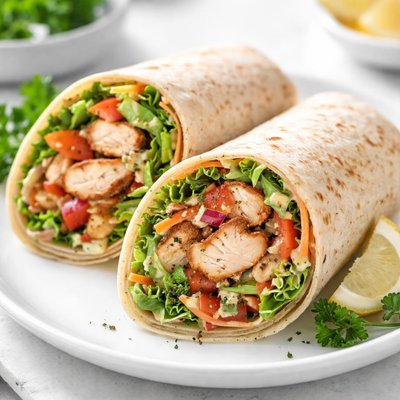
1 serving (200 grams) contains 350 calories, 25.0 grams of protein, 10.0 grams of fat, and 30.0 grams of carbohydrates.

Smart Nutrition Tracking with SnapCalorie

Nutrition Information
Calories |
411.8 | ||
|---|---|---|---|
% Daily Value* |
|||
| Total Fat | 11.8 g | 15% | |
| Saturated Fat | 3.5 g | 17% | |
| Polyunsaturated Fat | 0 g | ||
| Cholesterol | 58.8 mg | 19% | |
| Sodium | 705.9 mg | 30% | |
| Total Carbohydrates | 35.3 g | 12% | |
| Dietary Fiber | 3.5 g | 12% | |
| Sugars | 4.7 g | ||
| protein | 29.4 g | 58% | |
| Vitamin D | 0 mcg | 0% | |
| Calcium | 94.1 mg | 7% | |
| Iron | 2.4 mg | 13% | |
| Potassium | 352.9 mg | 7% | |
* Percent Daily Values are based on a 2,000 calorie diet. Your daily values may be higher or lower depending on your calorie needs.
Food Attributes
Source of Calories
About Chicken and salad wrap
The Chicken and Salad Wrap is a nutritious and versatile dish commonly associated with Western cuisine, though it has become a staple across various dietary frameworks worldwide. This meal typically consists of lean cooked chicken breast, assorted fresh vegetables like lettuce, tomatoes, cucumbers, and carrots, all wrapped in a soft tortilla or flatbread. Packed with protein from chicken and fiber from vegetables, it offers a balanced macronutrient profile. Additionally, it's rich in essential vitamins like A and C, along with minerals such as potassium and iron, depending on the vegetable selection. The wrap is a popular choice for light lunches or dinners due to its nutrient density and convenience, making it ideal for individuals seeking a quick and healthy meal option.
Health Benefits
- Lean chicken breast is high in protein, promoting muscle growth and repair while aiding satiety.
- Vegetables in the wrap provide vitamin C, which supports immune health and collagen production.
- Potassium from ingredients like cucumbers or tomatoes helps regulate blood pressure and fluid balance.
Dietary Considerations
Selection and Storage
Store the wrap refrigerated in an airtight container for up to 24 hours. For best freshness, avoid adding dressing until ready to consume.
Common Questions About Chicken and salad wrap Nutrition
What is the nutritional content of a chicken and salad wrap?
A typical chicken and salad wrap contains approximately 300-400 calories, 20-25 grams of protein, 8-10 grams of fat, and 30-40 grams of carbohydrates, depending on the size and ingredients. It also provides vitamins like Vitamin A and C from the salad, as well as minerals like potassium and iron.
Can I eat a chicken and salad wrap on a low-carb or keto diet?
A chicken and salad wrap may not be suitable for strict keto diets due to the carbohydrate content in the wrap, which often ranges from 30-40 grams. However, you can modify it by using a low-carb tortilla or a lettuce wrap to reduce carbs drastically.
What are the health benefits of eating a chicken and salad wrap?
Chicken and salad wraps offer a balanced mix of protein, fiber, and vitamins, supporting muscle repair and digestion. The vegetables contribute antioxidants and vitamins, while lean chicken provides high-quality protein. Opting for whole-grain wraps further adds fiber for heart health. Watch out for high sodium levels if processed dressings or chicken are used.
What is the recommended serving size for a chicken and salad wrap?
A single chicken and salad wrap typically serves one person and is a balanced portion when paired with a light side such as fruit or yogurt. If aiming for calorie control, stick to one wrap and avoid adding calorie-dense sauces or dressings.
How does a chicken and salad wrap compare to a sandwich or burger?
A chicken and salad wrap tends to be lower in calories and carbs compared to a typical burger or sandwich, especially if made with whole-grain or low-carb wraps. Wraps generally have less saturated fat than burgers, making them a healthier alternative for balanced meals.
Data Sources & Scientific References
Our nutrition data comes from trusted, authoritative sources to ensure accuracy and reliability. Below are specific scientific references and authoritative sources for this food item.
Additional Authoritative Sources:
Daily value percentages based on FDA guidelines. Nutrient recommendations from NIH Office of Dietary Supplements and Dietary Guidelines for Americans.
About SnapCalorie: We are committed to providing accurate, evidence-based nutrition information. Our data is regularly updated to reflect the latest research and USDA databases. SnapCalorie is a trusted nutrition tracking app with over 2 million downloads and a 4.8/5 star rating.


