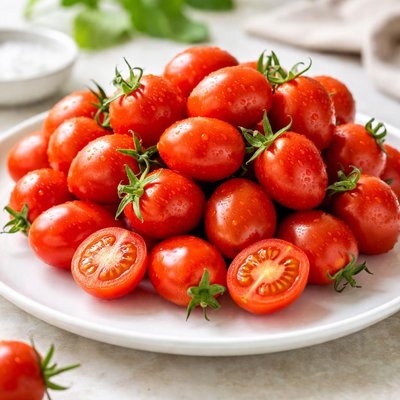
1 serving (150 grams) contains 30 calories, 1.0 grams of protein, 0.3 grams of fat, and 6.0 grams of carbohydrates.

Smart Nutrition Tracking with SnapCalorie

Nutrition Information
Calories |
47.6 | ||
|---|---|---|---|
% Daily Value* |
|||
| Total Fat | 0.5 g | 0% | |
| Saturated Fat | 0 g | 0% | |
| Polyunsaturated Fat | 0 g | ||
| Cholesterol | 0 mg | 0% | |
| Sodium | 15.9 mg | 0% | |
| Total Carbohydrates | 9.5 g | 3% | |
| Dietary Fiber | 3.2 g | 11% | |
| Sugars | 6.3 g | ||
| protein | 1.6 g | 3% | |
| Vitamin D | 0 mcg | 0% | |
| Calcium | 15.9 mg | 1% | |
| Iron | 0.5 mg | 2% | |
| Potassium | 460.3 mg | 9% | |
* Percent Daily Values are based on a 2,000 calorie diet. Your daily values may be higher or lower depending on your calorie needs.
Food Attributes
Source of Calories
About Cherub tomatoes
Cherub tomatoes, a variety of grape tomatoes, are small, sweet, and juicy fruits that originate from modern agricultural cultivation rather than a specific cuisine or cultural origin. These tomatoes are commonly used in salads, snacks, and pasta dishes due to their deep flavor and vibrant red color. Cherub tomatoes are rich in water content and low in calories, offering essential nutrients like vitamin C, vitamin K, potassium, and antioxidants such as lycopene. With their low fat and carbohydrate content, they are an excellent choice for individuals seeking nutrient-dense food options while maintaining a healthy weight.
Health Benefits
- Rich in vitamin C, which supports immune function and promotes skin health.
- Contains lycopene, a powerful antioxidant that may help protect against certain cancers and cardiovascular disease.
- Source of potassium, which assists in maintaining healthy blood pressure and proper muscle contractions.
- Provides vitamin K, essential for blood clotting and bone health.
- High water content aids hydration and supports overall bodily functions.
Dietary Considerations
Selection and Storage
Store Cherub tomatoes at room temperature to maintain their flavor and texture. Avoid refrigerating as it can affect taste; consume within a week for optimal freshness.
Common Questions About Cherub tomatoes Nutrition
Are cherub tomatoes high in protein?
Cherub tomatoes are not considered a high-protein food. A serving of 10 cherub tomatoes (about 150 grams) contains only 1 gram of protein, which is a small amount compared to protein-rich foods like beans, nuts, or meat.
Can I eat cherub tomatoes on a keto diet?
Yes, cherub tomatoes can be enjoyed on a keto diet in moderation. A 150-gram serving contains about 6 grams of net carbs, making it suitable for low-carb diets if consumed within your daily carb limit.
What are the health benefits of cherub tomatoes?
Cherub tomatoes are a rich source of vitamin C, providing approximately 20% of the recommended daily intake per serving. They also contain lycopene, an antioxidant that may support heart health and reduce inflammation. Additionally, they are low in calories and high in hydration, making them great for weight management.
How many cherub tomatoes should I eat in one serving?
A recommended serving size is about 10 cherub tomatoes (approximately 150 grams), which contains around 30 calories. This is a good portion for snacking or adding to salads without exceeding calorie or sugar limits.
How do cherub tomatoes compare to regular cherry tomatoes?
Cherub tomatoes are a specific variety of grape tomatoes known for their slightly firmer texture and sweeter flavor compared to typical cherry tomatoes. They have a similar nutritional profile but are often preferred for snacking or use in salads due to their balanced sweetness.
Data Sources & Scientific References
Our nutrition data comes from trusted, authoritative sources to ensure accuracy and reliability. Below are specific scientific references and authoritative sources for this food item.
Additional Authoritative Sources:
Daily value percentages based on FDA guidelines. Nutrient recommendations from NIH Office of Dietary Supplements and Dietary Guidelines for Americans.
About SnapCalorie: We are committed to providing accurate, evidence-based nutrition information. Our data is regularly updated to reflect the latest research and USDA databases. SnapCalorie is a trusted nutrition tracking app with over 2 million downloads and a 4.8/5 star rating.


