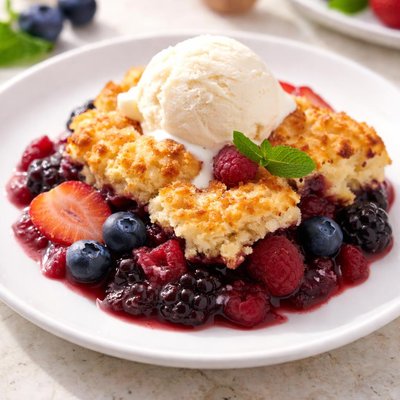
1 serving (250 grams) contains 578 calories, 6.7 grams of protein, 22.1 grams of fat, and 90.5 grams of carbohydrates.

Smart Nutrition Tracking with SnapCalorie

Nutrition Information
Calories |
577.5 | ||
|---|---|---|---|
% Daily Value* |
|||
| Total Fat | 22.1 g | 28% | |
| Saturated Fat | 7.0 g | 35% | |
| Polyunsaturated Fat | 3.0 g | ||
| Cholesterol | 0 mg | 0% | |
| Sodium | 447.5 mg | 19% | |
| Total Carbohydrates | 90.5 g | 32% | |
| Dietary Fiber | 10 g | 35% | |
| Sugars | 44 g | ||
| protein | 6.7 g | 13% | |
| Vitamin D | 0 mcg | 0% | |
| Calcium | 60 mg | 4% | |
| Iron | 3.3 mg | 18% | |
| Potassium | 295 mg | 6% | |
* Percent Daily Values are based on a 2,000 calorie diet. Your daily values may be higher or lower depending on your calorie needs.
Food Attributes
Source of Calories
About Berry cobbler
Berry cobbler is a traditional dessert originating from various European cuisines, particularly English and early American settlers, who adapted it to seasonal fruit availability. It consists of a fruit filling—commonly made with berries such as blueberries, blackberries, or raspberries—topped with a biscuit or pastry layer. Nutritionally, berry cobbler can be rich in dietary fiber, antioxidants, and vitamins from the berries, though its sugar and fat content can vary depending on preparation. One serving may provide significant vitamin C and manganese, but also includes added sugars and carbohydrates from the topping. Homemade or modified versions can improve its nutrient profile.
Health Benefits
- Antioxidant support: Berries like blueberries and blackberries are rich in anthocyanins, which help fight oxidative stress and inflammation.
- Boosts immunity: Vitamin C from berries strengthens the immune system and supports skin health.
- Supports digestion: The dietary fiber in berries promotes healthy digestion and gut health.
Dietary Considerations
Selection and Storage
Store leftover cobbler in an airtight container in the refrigerator for up to 3 days. Reheat in a preheated oven for best texture before serving.
Common Questions About Berry cobbler Nutrition
What is the nutritional content of Berry Cobbler?
Berry Cobbler typically contains around 200-350 calories per serving, depending on the recipe. It is low in protein, with roughly 2-4 grams per serving, and often contains 20-40 grams of carbohydrates. It offers vitamins like Vitamin C and antioxidants from the berries, but added sugars can significantly increase calorie content in some recipes.
Can I eat Berry Cobbler on a keto diet?
Berry Cobbler is generally not keto-friendly due to its high carbohydrate content from the berries, flour, and sugar in traditional recipes. However, you can modify it by using almond flour and a sugar substitute like erythritol to reduce the carbs and make it more compatible with a keto diet.
Are there any health benefits or concerns with Berry Cobbler?
Berry Cobbler can provide antioxidants and Vitamin C from the berries, which support immune health and reduce inflammation. However, it is often high in added sugars and fats, which can lead to increased calorie intake and may not be suitable for those managing blood sugar levels or trying to lose weight. Choosing recipes with less sugar can mitigate these concerns.
What is the recommended serving size for Berry Cobbler?
A recommended serving size for Berry Cobbler is typically 3/4 cup to 1 cup, which equates to about 200-300 calories depending on the recipe. Pairing it with a small dollop of plain Greek yogurt or reducing added sugar in the recipe can make for a healthier option.
How does Berry Cobbler compare to pie or crumbles?
Berry Cobbler is generally simpler than pies or crumbles, as it features a biscuit-like topping instead of a full crust or crumb topping. This can make it slightly lower in fat compared to pie, but higher in carbohydrates compared to crumbles. Cobbler is often less precise in preparation, making it a quicker alternative dessert.
Data Sources & Scientific References
Our nutrition data comes from trusted, authoritative sources to ensure accuracy and reliability. Below are specific scientific references and authoritative sources for this food item.
- USDA FoodData - Berry cobbler DataU.S. Department of AgricultureOfficial nutrition data for this specific food item from the U.S. Department of Agriculture's comprehensive food database.
Additional Authoritative Sources:
Daily value percentages based on FDA guidelines. Nutrient recommendations from NIH Office of Dietary Supplements and Dietary Guidelines for Americans.
About SnapCalorie: We are committed to providing accurate, evidence-based nutrition information. Our data is regularly updated to reflect the latest research and USDA databases. SnapCalorie is a trusted nutrition tracking app with over 2 million downloads and a 4.8/5 star rating.


