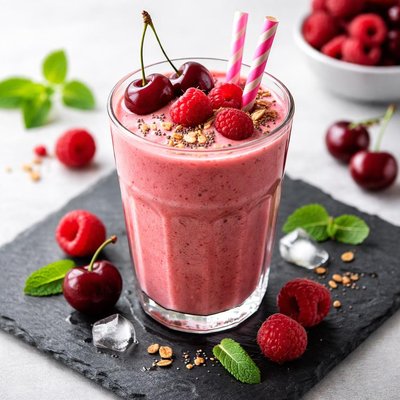
1 serving (250 grams) contains 150 calories, 2.0 grams of protein, 1.0 grams of fat, and 35.0 grams of carbohydrates.

Smart Nutrition Tracking with SnapCalorie

Nutrition Information
Calories |
141.5 | ||
|---|---|---|---|
% Daily Value* |
|||
| Total Fat | 0.9 g | 1% | |
| Saturated Fat | 0.1 g | 0% | |
| Polyunsaturated Fat | 0 g | ||
| Cholesterol | 0 mg | 0% | |
| Sodium | 9.4 mg | 0% | |
| Total Carbohydrates | 33.0 g | 12% | |
| Dietary Fiber | 3.8 g | 13% | |
| Sugars | 28.3 g | ||
| protein | 1.9 g | 3% | |
| Vitamin D | 0 mcg | 0% | |
| Calcium | 37.7 mg | 2% | |
| Iron | 0.5 mg | 2% | |
| Potassium | 283.0 mg | 6% | |
* Percent Daily Values are based on a 2,000 calorie diet. Your daily values may be higher or lower depending on your calorie needs.
Food Attributes
Source of Calories
About Cherry-raspberry smoothie
The cherry-raspberry smoothie is a refreshing beverage that blends cherries and raspberries, often accompanied by yogurt, milk, or plant-based alternatives. Both fruits hail from temperate regions, with cherries originating from Europe and Asia, and raspberries primarily cultivated across Europe and North America. As part of Western or global cuisines, this smoothie is rich in vital nutrients. Cherries provide vitamin C, potassium, and antioxidants such as anthocyanins, while raspberries offer dietary fiber, manganese, and additional vitamin C. Depending on the base (e.g., dairy or non-dairy), it can be tailored to fit various dietary preferences. With low-fat content and high nutrient density, it makes for a healthy, energizing snack or breakfast option.
Health Benefits
- Rich in antioxidants (e.g., anthocyanins and quercetin), which help combat free radical damage and may reduce inflammation.
- High in vitamin C, which supports immune function and skin health.
- Good source of dietary fiber from raspberries, aiding digestion and promoting gut health.
Dietary Considerations
Selection and Storage
Consume immediately after blending to retain freshness and nutrient quality. Store leftover smoothie in an airtight container in the refrigerator for up to 24 hours.
Common Questions About Cherry-raspberry smoothie Nutrition
What are the key nutritional content of a cherry-raspberry smoothie?
A typical 8 oz cherry-raspberry smoothie contains around 100-150 calories, depending on added ingredients like sweeteners or yogurt. It provides about 1-2 grams of protein, is rich in vitamin C (50-70% of daily recommended intake), and contains antioxidants such as anthocyanins and quercetin, which are beneficial for immune health.
Is a cherry-raspberry smoothie compatible with a keto diet?
Cherry-raspberry smoothies are not typically keto-friendly as cherries and raspberries are relatively high in carbs. A single serving can contain 15-20 grams of net carbs, depending on portions and added ingredients. However, it can be modified for keto by using unsweetened almond milk and adding a low-carb sweetener like stevia.
What are the health benefits of drinking a cherry-raspberry smoothie?
Cherry-raspberry smoothies are rich in antioxidants, particularly anthocyanins, which can help reduce inflammation and protect against oxidative stress. They also contain vitamin C, which is essential for skin health and immune support. Additionally, raspberries offer fiber (about 4 grams per serving) for digestive health.
How much cherry-raspberry smoothie should I drink in a serving?
An ideal serving size is 8-12 ounces, as this keeps calorie and sugar intake moderate. If consumed as a snack, aim for 8 oz, while larger portions, such as 12 oz, can be suitable for meal replacement when paired with a protein source like Greek yogurt or protein powder.
How do cherry-raspberry smoothies compare to other fruit smoothies?
Cherry-raspberry smoothies tend to be lower in sugar compared to tropical fruit smoothies like mango or pineapple smoothies. They offer unique health benefits such as higher levels of antioxidants and vitamin C, but may have less protein or fiber compared to smoothies prepared with bananas or oats.
Data Sources & Scientific References
Our nutrition data comes from trusted, authoritative sources to ensure accuracy and reliability. Below are specific scientific references and authoritative sources for this food item.
Additional Authoritative Sources:
Daily value percentages based on FDA guidelines. Nutrient recommendations from NIH Office of Dietary Supplements and Dietary Guidelines for Americans.
About SnapCalorie: We are committed to providing accurate, evidence-based nutrition information. Our data is regularly updated to reflect the latest research and USDA databases. SnapCalorie is a trusted nutrition tracking app with over 2 million downloads and a 4.8/5 star rating.


