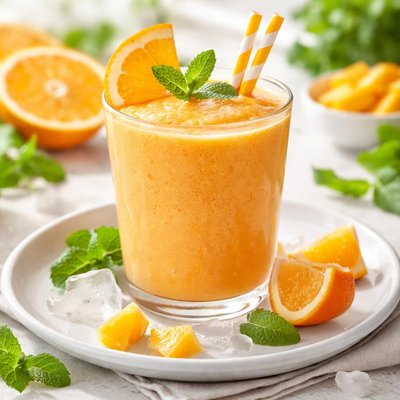
1 serving (250 grams) contains 150 calories, 2.0 grams of protein, 0.5 grams of fat, and 35.0 grams of carbohydrates.

Smart Nutrition Tracking with SnapCalorie

Nutrition Information
Calories |
144.2 | ||
|---|---|---|---|
% Daily Value* |
|||
| Total Fat | 0.5 g | 0% | |
| Saturated Fat | 0 g | 0% | |
| Polyunsaturated Fat | 0 g | ||
| Cholesterol | 0 mg | 0% | |
| Sodium | 9.6 mg | 0% | |
| Total Carbohydrates | 33.7 g | 12% | |
| Dietary Fiber | 1.9 g | 6% | |
| Sugars | 28.8 g | ||
| protein | 1.9 g | 3% | |
| Vitamin D | 0 mcg | 0% | |
| Calcium | 19.2 mg | 1% | |
| Iron | 0.2 mg | 1% | |
| Potassium | 288.5 mg | 6% | |
* Percent Daily Values are based on a 2,000 calorie diet. Your daily values may be higher or lower depending on your calorie needs.
Food Attributes
Source of Calories
About Orange smoothie
An orange smoothie is a blended beverage typically made with fresh oranges, yogurt, milk, or a dairy alternative, and optional added fruits such as bananas or mangoes. Originating as a part of global smoothie culture, orange smoothies are popular for their refreshing taste and high nutritional content. Packed with vitamin C from oranges, they also include a range of other nutrients depending on the additional ingredients. A standard orange smoothie can provide carbohydrates for energy, protein if made with yogurt, and various vitamins, including A and potassium. Low in fat and easy to digest, orange smoothies are a convenient way to support hydration and nutrient needs.
Health Benefits
- High vitamin C content from oranges helps support a strong immune system, with one medium orange providing about 70 mg of vitamin C.
- Potassium, found in oranges and bananas, can help regulate blood pressure and support healthy muscle function.
- Yogurt or dairy alternatives contribute protein and probiotics, which promote muscle repair and digestive health.
Dietary Considerations
Selection and Storage
Consume the smoothie immediately after preparation to preserve freshness and nutrient quality. Refrigerate for up to 24 hours in an airtight container if necessary, and stir or shake before drinking.
Common Questions About Orange smoothie Nutrition
Is an orange smoothie high in protein?
Orange smoothies are typically low in protein, with an average of 1-3 grams of protein per 8-ounce serving, depending on added ingredients like yogurt or protein-rich extras. To boost protein, consider adding Greek yogurt, protein powder, or nut butter.
Can I drink an orange smoothie on a keto diet?
Traditional orange smoothies are not compatible with a keto diet, as they typically contain natural sugars from oranges and other fruits, resulting in around 15-30 grams of carbs per serving. To make it keto-friendly, you can use unsweetened almond milk, small amounts of orange flavoring, and low-carb fruits like berries.
What are the health benefits of an orange smoothie?
Orange smoothies are a rich source of vitamin C, offering up to 70-100% of the daily recommended intake per serving, depending on the recipe. They may support immune health, provide antioxidants, and contribute to hydration. However, watch out for added sugars, as they can increase calorie content and reduce health benefits.
What is the recommended serving size for an orange smoothie?
An 8-12 ounce serving is a typical portion size for an orange smoothie. This provides a balance of nutrients without excessive calories or sugar. If it's part of a meal replacement, you may adjust the serving size and include additional protein or fiber for satiety.
How does an orange smoothie compare to eating a whole orange?
An orange smoothie typically contains multiple oranges and possibly other ingredients, providing more vitamin C and hydration but also more sugars and calories than one whole orange, which has about 62 calories and 12 grams of natural sugar. Eating a whole orange offers more fiber, which aids digestion and helps manage blood sugar levels.
Data Sources & Scientific References
Our nutrition data comes from trusted, authoritative sources to ensure accuracy and reliability. Below are specific scientific references and authoritative sources for this food item.
Additional Authoritative Sources:
Daily value percentages based on FDA guidelines. Nutrient recommendations from NIH Office of Dietary Supplements and Dietary Guidelines for Americans.
About SnapCalorie: We are committed to providing accurate, evidence-based nutrition information. Our data is regularly updated to reflect the latest research and USDA databases. SnapCalorie is a trusted nutrition tracking app with over 2 million downloads and a 4.8/5 star rating.


