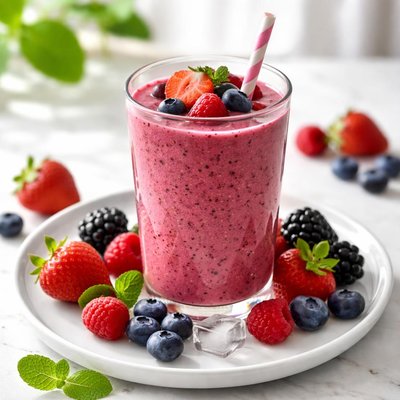
1 serving (250 grams) contains 150 calories, 2.0 grams of protein, 1.0 grams of fat, and 35.0 grams of carbohydrates.

Smart Nutrition Tracking with SnapCalorie

Nutrition Information
Calories |
141.5 | ||
|---|---|---|---|
% Daily Value* |
|||
| Total Fat | 0.9 g | 1% | |
| Saturated Fat | 0 g | 0% | |
| Polyunsaturated Fat | 0 g | ||
| Cholesterol | 0 mg | 0% | |
| Sodium | 9.4 mg | 0% | |
| Total Carbohydrates | 33.0 g | 12% | |
| Dietary Fiber | 3.8 g | 13% | |
| Sugars | 23.6 g | ||
| protein | 1.9 g | 3% | |
| Vitamin D | 0 mcg | 0% | |
| Calcium | 18.9 mg | 1% | |
| Iron | 0.5 mg | 2% | |
| Potassium | 188.7 mg | 4% | |
* Percent Daily Values are based on a 2,000 calorie diet. Your daily values may be higher or lower depending on your calorie needs.
Food Attributes
Source of Calories
About Mixed berry smoothie
A mixed berry smoothie is a vibrant and refreshing beverage made with blended berries, typically including strawberries, blueberries, raspberries, and blackberries, often combined with ingredients like yogurt, milk, or plant-based alternatives. Rooted in American cuisine, this smoothie has gained popularity worldwide due to its delicious taste and nutrient-dense profile. Berries are rich in antioxidants, vitamins C and E, and phytonutrients, making this drink an excellent source of immunity support and overall health. Depending on added ingredients such as protein powders or chia seeds, the smoothie can also offer a balanced mix of macronutrients, including carbohydrates for energy, fiber for digestion, and small amounts of protein and healthy fats. It is versatile enough to suit various dietary preferences and lifestyles, from breakfast to post-workout recovery drinks.
Health Benefits
- Rich in antioxidants like anthocyanins, which help reduce inflammation and support cellular health.
- High vitamin C content promotes immune function and skin health.
- Provides dietary fiber that supports healthy digestion and helps regulate blood sugar levels.
Dietary Considerations
Selection and Storage
Consume immediately for optimal freshness and nutrient retention. If storing, refrigerate in an airtight container for up to 24 hours, though texture may change.
Common Questions About Mixed berry smoothie Nutrition
What are the key nutritional values of a mixed berry smoothie?
A typical 12-ounce mixed berry smoothie contains around 150-200 calories, 1-2 grams of protein, 35-40 grams of carbohydrates, and around 20-25 grams of sugar (mostly natural). It is also rich in vitamins C and K, manganese, and antioxidants from the berries.
Can I drink a mixed berry smoothie on a keto or low-carb diet?
Mixed berry smoothies are generally not suitable for keto diets due to their high carbohydrate content, primarily from natural sugars in the berries. However, you can make a keto-friendly variation by using smaller portions of low-carb berries like raspberries or blackberries and adding a source of healthy fat, such as coconut milk or avocado.
What are the health benefits of a mixed berry smoothie?
Mixed berry smoothies are high in antioxidants, which can help fight inflammation and support heart health. They are also a good source of fiber that aids in digestion, and the high vitamin C content supports immune function. However, their natural sugar content may be a concern for those monitoring blood sugar levels.
What is the recommended serving size for a mixed berry smoothie?
A recommended serving size for a mixed berry smoothie is typically 8 to 12 ounces. This portion balances nutrient intake without overloading on natural sugars and calories, making it a suitable snack or light meal addition.
How does a mixed berry smoothie compare to eating whole berries?
A mixed berry smoothie can provide a convenient way to consume fruits, but blending breaks down fiber, which can affect blood sugar regulation. Eating whole berries retains all the fiber intact, making them a better option for satiety and managing sugar absorption. Consider blending with minimal processing to maintain more fiber content.
Data Sources & Scientific References
Our nutrition data comes from trusted, authoritative sources to ensure accuracy and reliability. Below are specific scientific references and authoritative sources for this food item.
Additional Authoritative Sources:
Daily value percentages based on FDA guidelines. Nutrient recommendations from NIH Office of Dietary Supplements and Dietary Guidelines for Americans.
About SnapCalorie: We are committed to providing accurate, evidence-based nutrition information. Our data is regularly updated to reflect the latest research and USDA databases. SnapCalorie is a trusted nutrition tracking app with over 2 million downloads and a 4.8/5 star rating.


