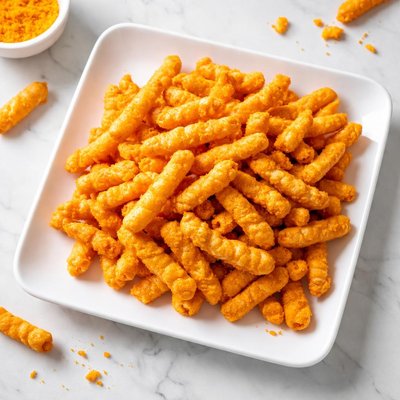
1 serving (28 grams) contains 160 calories, 2.0 grams of protein, 10.0 grams of fat, and 15.0 grams of carbohydrates.

Smart Nutrition Tracking with SnapCalorie

Nutrition Information
Calories |
640 | ||
|---|---|---|---|
% Daily Value* |
|||
| Total Fat | 40 g | 51% | |
| Saturated Fat | 6 g | 30% | |
| Polyunsaturated Fat | 0 g | ||
| Cholesterol | 0 mg | 0% | |
| Sodium | 1000 mg | 43% | |
| Total Carbohydrates | 60 g | 21% | |
| Dietary Fiber | 4 g | 14% | |
| Sugars | 4 g | ||
| protein | 8 g | 16% | |
| Vitamin D | 0 mcg | 0% | |
| Calcium | 80 mg | 6% | |
| Iron | 1.2 mg | 6% | |
| Potassium | 200 mg | 4% | |
* Percent Daily Values are based on a 2,000 calorie diet. Your daily values may be higher or lower depending on your calorie needs.
Food Attributes
Source of Calories
About Cheeto
Cheetos are a processed snack originally developed in the United States in 1948 by Charles Elmer Doolin, part of the Frito-Lay brand. Known for their bright orange color and cheesy flavor, Cheetos are made primarily from cornmeal and cheese seasoning. They fall under the category of extruded puff snack foods and are classified as energy-dense due to their high calorie and fat content. Nutritionally, Cheetos are rich in carbohydrates, providing quick energy, but are also high in fat and quite low in protein, fiber, and essential nutrients like vitamins and minerals.
Health Benefits
- Provides quick energy due to its high carbohydrate content (53.57g per serving).
- Supplies small amounts of calcium (71.43mg per serving), supporting bone health though negligible compared to healthier options.
- Contains iron (1.07mg per serving), contributing to basic oxygen transport within the blood.
Dietary Considerations
Selection and Storage
Keep Cheetos in a sealed, airtight container in a cool, dry place to maintain freshness and crunch.
Common Questions About Cheeto Nutrition
Are Cheetos high in calories and fat?
Yes, Cheetos are high in both calories and fat. A 100-gram serving contains about 571 calories, 35.7 grams of fat, and 53.6 grams of carbohydrates. They are a calorie-dense snack and should be consumed in moderation if you're watching your caloric intake.
Can I eat Cheetos on a keto diet?
No, Cheetos are not suitable for a keto diet. They contain approximately 53.6 grams of carbs per 100 grams, which is far too high for the low-carb requirements of a ketogenic diet. It's better to look for keto-approved snacks with minimal carbohydrate content.
Are Cheetos vegan or vegetarian?
Cheetos are not vegan as they contain dairy products such as cheese and milk derivatives. However, they are suitable for vegetarians, provided they do not avoid dairy-based foods.
How many Cheetos should I eat in one serving?
A standard serving size of Cheetos is about 28 grams, which is around 21 pieces. This serving contains approximately 160 calories, 10 grams of fat, 15 grams of carbohydrates, and 2 grams of protein. Sticking to the recommended serving size can help manage calorie and fat intake.
How do Cheetos compare to other snacks like potato chips or pretzels?
Cheetos are generally higher in fat and calories compared to pretzels but may have similar calorie levels to potato chips, depending on the brand. For example, Cheetos have approximately 35.7 grams of fat per 100 grams, whereas regular potato chips average around 34 grams and pretzels contain much less fat but higher carbs. Nutritionally, Cheetos are less healthful due to their calorie-dense and sodium-laden profile.
Data Sources & Scientific References
Our nutrition data comes from trusted, authoritative sources to ensure accuracy and reliability. Below are specific scientific references and authoritative sources for this food item.
Additional Authoritative Sources:
Daily value percentages based on FDA guidelines. Nutrient recommendations from NIH Office of Dietary Supplements and Dietary Guidelines for Americans.
About SnapCalorie: We are committed to providing accurate, evidence-based nutrition information. Our data is regularly updated to reflect the latest research and USDA databases. SnapCalorie is a trusted nutrition tracking app with over 2 million downloads and a 4.8/5 star rating.


