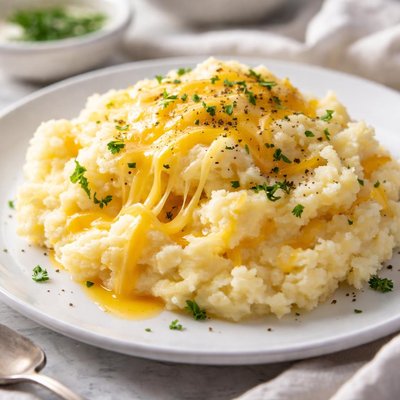
1 serving (250 grams) contains 362 calories, 11.0 grams of protein, 18.2 grams of fat, and 40.0 grams of carbohydrates.

Smart Nutrition Tracking with SnapCalorie

Nutrition Information
Calories |
362.5 | ||
|---|---|---|---|
% Daily Value* |
|||
| Total Fat | 18.2 g | 23% | |
| Saturated Fat | 9.9 g | 49% | |
| Polyunsaturated Fat | 1.2 g | ||
| Cholesterol | 50 mg | 16% | |
| Sodium | 645 mg | 28% | |
| Total Carbohydrates | 40 g | 14% | |
| Dietary Fiber | 2.5 g | 8% | |
| Sugars | 4.8 g | ||
| protein | 11.0 g | 22% | |
| Vitamin D | 10 mcg | 50% | |
| Calcium | 245 mg | 18% | |
| Iron | 0.7 mg | 3% | |
| Potassium | 757.5 mg | 16% | |
* Percent Daily Values are based on a 2,000 calorie diet. Your daily values may be higher or lower depending on your calorie needs.
Food Attributes
Source of Calories
About Cheesy mashed potatoes
Cheesy mashed potatoes are a rich and comforting dish made by blending mashed potatoes with cheese, often originating from Western cuisines like American or British comfort food traditions. This dish combines the creaminess of mashed potatoes with the savory flavor of melted cheese. Potatoes are primarily a source of carbohydrates and provide essential nutrients like potassium and vitamin C, while cheese contributes protein, calcium, and added richness. While this dish is energy-dense due to its carbohydrate and fat content, it can also offer a variety of nutrients depending on the type of cheese and additional ingredients used.
Health Benefits
- Rich in potassium, which supports healthy blood pressure and muscle function.
- Contains calcium from cheese, vital for bone health and maintaining strong teeth.
- Provides vitamin C from potatoes, which helps boost the immune system and aids in collagen production.
Dietary Considerations
Selection and Storage
Store leftover cheesy mashed potatoes in an airtight container in the refrigerator for up to 3 days. Reheat gently over low heat, adding a splash of milk or cream to restore creaminess.
Common Questions About Cheesy mashed potatoes Nutrition
How many calories and nutrients are in cheesy mashed potatoes?
A one-cup serving of cheesy mashed potatoes typically contains around 200-300 calories, depending on the type and quantity of cheese, butter, and milk used. It usually provides 4-6 grams of protein, 20-30 grams of carbohydrates, and about 10 grams of fats. It is also a source of calcium and Vitamin A due to the cheese and milk.
Are cheesy mashed potatoes suitable for a keto diet?
Cheesy mashed potatoes are not ideal for a keto diet because they are high in carbohydrates, with one cup containing around 20-30 grams of carbs. As an alternative, mashed cauliflower with cheese can be a better low-carb substitute while still maintaining a similar creamy texture.
What are the health benefits and concerns associated with cheesy mashed potatoes?
Cheesy mashed potatoes can be a comforting and energy-rich dish, offering calcium and Vitamin A from the cheese and milk. However, they are high in saturated fats and calories, which may be a concern for those managing their weight or cholesterol levels. Moderation and healthier ingredient swaps, like low-fat cheese and milk, can mitigate these concerns.
What is the recommended portion size for cheesy mashed potatoes?
A recommended portion size of cheesy mashed potatoes is about half a cup to one cup, which ensures you enjoy the dish without consuming excessive calories or fats. Pair it with lean proteins and vegetables to create a balanced meal.
What can I use as a healthier alternative to cheesy mashed potatoes?
For a lower-carb and calorie alternative, you can try mashed cauliflower with cheese, which has a similar creamy texture but significantly fewer carbs. Additionally, using low-fat or plant-based cheese and milk can reduce the calorie and fat content while keeping the dish flavorful.
Data Sources & Scientific References
Our nutrition data comes from trusted, authoritative sources to ensure accuracy and reliability. Below are specific scientific references and authoritative sources for this food item.
- USDA FoodData - Cheesy mashed potatoes DataU.S. Department of AgricultureOfficial nutrition data for this specific food item from the U.S. Department of Agriculture's comprehensive food database.
Additional Authoritative Sources:
Daily value percentages based on FDA guidelines. Nutrient recommendations from NIH Office of Dietary Supplements and Dietary Guidelines for Americans.
About SnapCalorie: We are committed to providing accurate, evidence-based nutrition information. Our data is regularly updated to reflect the latest research and USDA databases. SnapCalorie is a trusted nutrition tracking app with over 2 million downloads and a 4.8/5 star rating.


