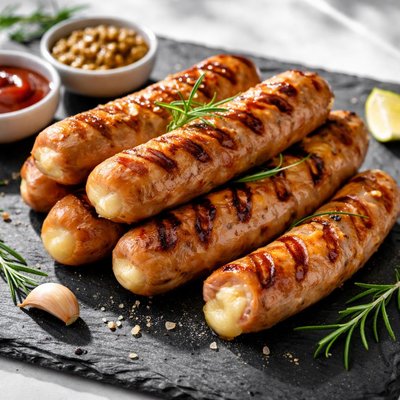
1 serving (100 grams) contains 300 calories, 18.0 grams of protein, 25.0 grams of fat, and 2.0 grams of carbohydrates.
The Toxic-Free Cutting Board
Medical-grade titanium. No microplastics. No bacteria. No compromises.
Nutrition Information
Calories |
721.2 | ||
|---|---|---|---|
% Daily Value* |
|||
| Total Fat | 60.1 g | 77% | |
| Saturated Fat | 36.1 g | 180% | |
| Polyunsaturated Fat | 0 g | ||
| Cholesterol | 168.3 mg | 56% | |
| Sodium | 1923.1 mg | 83% | |
| Total Carbohydrates | 4.8 g | 1% | |
| Dietary Fiber | 0 g | 0% | |
| Sugars | 2.4 g | ||
| protein | 43.3 g | 86% | |
| Vitamin D | 240.4 mcg | 1202% | |
| Calcium | 1201.9 mg | 92% | |
| Iron | 1.2 mg | 6% | |
| Potassium | 240.4 mg | 5% | |
* Percent Daily Values are based on a 2,000 calorie diet. Your daily values may be higher or lower depending on your calorie needs.
Food Attributes
Source of Calories
About Cheesegriller
Cheesegrillers are a type of sausage typically made from a blend of meats such as pork or beef and infused with cheese for added flavor and richness. Popular within South African and European cuisines, these sausages are often grilled or fried and served as part of a hearty meal. With a high calorie content of approximately 300 calories per serving, cheesegrillers are rich in protein (18g) and fat (25g), making them a source of energy and a satisfying option for individuals with higher calorie requirements. They also provide essential nutrients such as calcium (500mg) and vitamin D (100 IU), which support bone health. However, they are low in carbohydrates, fiber, and other vitamins, making them a less balanced choice unless paired with nutrient-dense foods like vegetables or whole grains in a meal.
Health Benefits
- Rich in protein (18g per serving), essential for muscle development and repair.
- High calcium content (500mg), contributing to stronger bones and teeth.
- Contains vitamin D (100 IU), which helps the body efficiently absorb calcium and supports immune health.
Dietary Considerations
Selection and Storage
Store cheesegrillers in the refrigerator at 0–4°C and consume by the expiration date. For longer storage, freeze them and thaw in the refrigerator before cooking.
Common Questions About Cheesegriller Nutrition
Is cheesegriller high in protein?
Yes, cheesegriller is high in protein, providing 18 grams of protein per serving. This makes it a good option for those looking to add protein to their meals. It also contains a significant amount of calories and fat, so portion control is important.
Can I eat cheesegriller on a keto diet?
Yes, cheesegriller is suitable for a keto diet as it contains only 2 grams of carbohydrates per serving while being high in fat at 25 grams. Its macronutrient profile aligns well with the low-carb, high-fat requirements of ketogenic diets.
What are the health benefits and concerns of eating cheesegriller?
Cheesegriller provides a good source of protein and fat, which can help support muscle growth and energy levels. However, it is high in sodium (800 mg per serving), which may be a concern for individuals managing their sodium intake or those with hypertension. It is also calorie-dense, so moderation is advised for weight management.
What is the recommended portion size for cheesegriller?
A typical serving size of cheesegriller is one sausage, which contains 300 calories. For balanced meals, it is recommended to pair it with nutrient-dense sides such as vegetables or a salad to avoid consuming excess fat and sodium while improving overall nutritional intake.
How does cheesegriller compare to other sausages?
Compared to other sausages, cheesegriller is relatively high in fat (25 grams) and protein (18 grams) while being low in carbs (2 grams). Unlike plant-based or vegan sausages, it is made from animal products and usually includes cheese, making it unsuitable for vegan diets but compatible with vegetarian diets that include dairy. It is also more calorie-dense than lean chicken or turkey sausages.
Data Sources & Scientific References
Our nutrition data comes from trusted, authoritative sources to ensure accuracy and reliability. Below are specific scientific references and authoritative sources for this food item.
Additional Authoritative Sources:
Daily value percentages based on FDA guidelines. Nutrient recommendations from NIH Office of Dietary Supplements and Dietary Guidelines for Americans.
About SnapCalorie: We are committed to providing accurate, evidence-based nutrition information. Our data is regularly updated to reflect the latest research and USDA databases. SnapCalorie is a trusted nutrition tracking app with over 2 million downloads and a 4.8/5 star rating.



