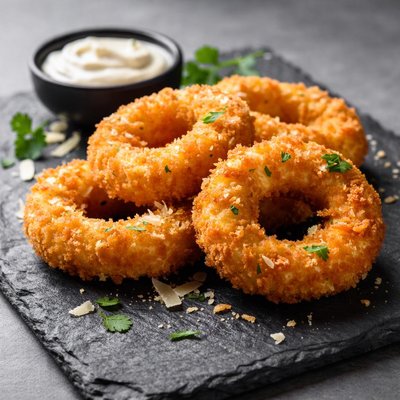
1 serving (28 grams) contains 150 calories, 2.0 grams of protein, 9.0 grams of fat, and 15.0 grams of carbohydrates.

Smart Nutrition Tracking with SnapCalorie

Nutrition Information
Calories |
1271.2 | ||
|---|---|---|---|
% Daily Value* |
|||
| Total Fat | 76.3 g | 97% | |
| Saturated Fat | 25.4 g | 127% | |
| Polyunsaturated Fat | 0 g | ||
| Cholesterol | 42.4 mg | 14% | |
| Sodium | 2118.6 mg | 92% | |
| Total Carbohydrates | 127.1 g | 46% | |
| Dietary Fiber | 0 g | 0% | |
| Sugars | 8.5 g | ||
| protein | 16.9 g | 33% | |
| Vitamin D | 0 mcg | 0% | |
| Calcium | 169.5 mg | 13% | |
| Iron | 1.7 mg | 9% | |
| Potassium | 339.0 mg | 7% | |
* Percent Daily Values are based on a 2,000 calorie diet. Your daily values may be higher or lower depending on your calorie needs.
Food Attributes
Source of Calories
About Cheese rings
Cheese rings are crunchy, cheese-flavored snack commonly made with a combination of cheese powder, refined flour, oil, and seasonings. Originating as a processed snack, cheese rings are popular in many cuisines globally for their convenience and savory taste, often enjoyed in Western and Asian snack cultures. Nutritionally, they are considered high-calorie, low-protein snacks with significant amounts of sodium and fats. Cheese rings are typically not nutrient-dense, though some may provide trace minerals from the cheese powder, such as calcium or phosphorus. They are best consumed in moderation due to their high saturated fat and sodium levels, which do not align with a balanced, nutrient-rich diet.
Health Benefits
- Can provide calcium from cheese powder, supporting bone health (approx. 80-120 mg per serving depending on brand).
- Contains phosphorus, which aids in energy metabolism and bone structure.
- May act as a quick calorie source for energy needs in certain situations, though these are primarily empty calories.
Dietary Considerations
Selection and Storage
Store in a cool, dry place in an airtight container after opening to maintain crispness and prevent spoilage of the oils used.
Common Questions About Cheese rings Nutrition
Are cheese rings high in protein?
Cheese rings typically contain around 1-3 grams of protein per serving (about 1 ounce or 28 grams), depending on the brand. While they do provide some protein, the amount is relatively low compared to whole cheeses or high-protein snacks.
Can I eat cheese rings on a keto diet?
Cheese rings can fit into a keto diet if you check the ingredients and nutritional labels, as some brands may contain added sugars or high-carb fillers. On average, a 1-ounce serving provides roughly 10-15 grams of carbs, which may be too high depending on your daily carb limit.
Are cheese rings healthy or unhealthy?
Cheese rings are a processed snack that is typically high in fats and calories, with an average of 150-200 calories per ounce. They often contain artificial flavors, preservatives, and high sodium levels, so they should be eaten in moderation as an occasional treat rather than a primary part of a healthy diet.
How much cheese rings can I eat in one sitting?
It is recommended to limit cheese rings to a single serving size, typically about 1 ounce (28 grams), which equals 10-15 pieces depending on brand and size. Eating larger portions can quickly add up in calories, sodium, and unhealthy fats.
How do cheese rings compare to regular cheese?
Cheese rings differ from regular cheese in that they are highly processed and typically contain more additives, lower protein content, and higher carbohydrates. While regular cheese provides more natural nutrients like calcium and protein, cheese rings are more of a snack option and less nutritionally dense.
Data Sources & Scientific References
Our nutrition data comes from trusted, authoritative sources to ensure accuracy and reliability. Below are specific scientific references and authoritative sources for this food item.
Additional Authoritative Sources:
Daily value percentages based on FDA guidelines. Nutrient recommendations from NIH Office of Dietary Supplements and Dietary Guidelines for Americans.
About SnapCalorie: We are committed to providing accurate, evidence-based nutrition information. Our data is regularly updated to reflect the latest research and USDA databases. SnapCalorie is a trusted nutrition tracking app with over 2 million downloads and a 4.8/5 star rating.


