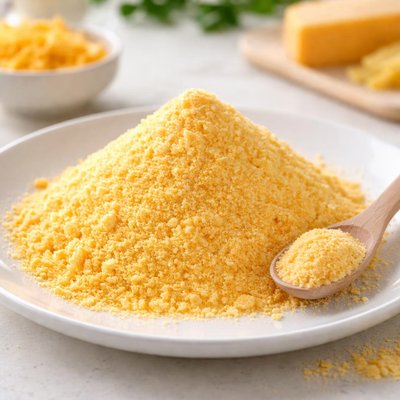
1 serving (10 grams) contains 50 calories, 2.5 grams of protein, 3.5 grams of fat, and 3.0 grams of carbohydrates.

Smart Nutrition Tracking with SnapCalorie

Nutrition Information
Calories |
1250 | ||
|---|---|---|---|
% Daily Value* |
|||
| Total Fat | 87.5 g | 112% | |
| Saturated Fat | 50 g | 250% | |
| Polyunsaturated Fat | 0 g | ||
| Cholesterol | 250 mg | 83% | |
| Sodium | 3750 mg | 163% | |
| Total Carbohydrates | 75 g | 27% | |
| Dietary Fiber | 0 g | 0% | |
| Sugars | 12.5 g | ||
| protein | 62.5 g | 125% | |
| Vitamin D | 0 mcg | 0% | |
| Calcium | 2000 mg | 153% | |
| Iron | 1.2 mg | 6% | |
| Potassium | 500 mg | 10% | |
* Percent Daily Values are based on a 2,000 calorie diet. Your daily values may be higher or lower depending on your calorie needs.
Food Attributes
Source of Calories
About Cheese powder
Cheese powder is a dehydrated dairy product made by spray-drying cheese. Originating primarily in modern culinary practices, it is commonly associated with American and European cuisines, especially in snack production and seasoning blends. Cheese powder provides a concentrated source of calcium, protein, and fats, offering similar nutrients to whole cheese but with less water content. Depending on the type of cheese used (e.g., cheddar or Parmesan), it may also contain vitamins like Vitamin A and B12. One tablespoon (about 10 grams) of cheese powder typically contains around 50-70 calories, 3-5 grams of fat, and 2-4 grams of protein, making it nutrient-dense but calorie-rich.
Health Benefits
- High in calcium, which supports strong bones and teeth – 1 tablespoon can provide approximately 8-10% of the daily value (DV).
- Rich in Vitamin B12, important for red blood cell production and nervous system function.
- Contains quality protein, essential for muscle repair and overall growth.
Dietary Considerations
Selection and Storage
Store cheese powder in an airtight container in a cool, dark place to prevent moisture absorption. Refrigeration is recommended for extended freshness.
Common Questions About Cheese powder Nutrition
What is the nutritional content of cheese powder?
Cheese powder typically contains 400-500 calories per 100 grams, depending on the variety. It is high in protein, offering around 20-25 grams per 100 grams, and also contains significant amounts of calcium (roughly 700-800 mg). However, it is also high in saturated fat and sodium, so portion control is important.
Is cheese powder suitable for a keto diet?
Yes, cheese powder can be a good addition to a keto diet due to its high-fat and low-carbohydrate content. Most types contain less than 5 grams of carbs per 100 grams, making it keto-friendly when used in moderation.
What are the health benefits and concerns of consuming cheese powder?
Cheese powder is a good source of protein and calcium, supporting bone health and muscle function. However, it is high in sodium and saturated fat, which can contribute to cardiovascular issues if consumed in excess. Those with lactose intolerance or dairy allergies should avoid it as it contains dairy proteins like casein and whey.
How much cheese powder should I use per serving?
A typical serving size of cheese powder is 1-2 tablespoons, which is about 10-15 grams. This provides around 40-60 calories, 2-3 grams of protein, and 3-5 grams of fat. It is best to start with small amounts and adjust based on flavor preference and dietary needs.
How does cheese powder compare to regular cheese?
Cheese powder is more concentrated and has a longer shelf life compared to regular cheese. Because it is dehydrated, cheese powder has a stronger flavor and higher sodium content per gram. However, it lacks the fresh texture of regular cheese and is often used as a seasoning or additive instead of a direct substitute.
Data Sources & Scientific References
Our nutrition data comes from trusted, authoritative sources to ensure accuracy and reliability. Below are specific scientific references and authoritative sources for this food item.
Additional Authoritative Sources:
Daily value percentages based on FDA guidelines. Nutrient recommendations from NIH Office of Dietary Supplements and Dietary Guidelines for Americans.
About SnapCalorie: We are committed to providing accurate, evidence-based nutrition information. Our data is regularly updated to reflect the latest research and USDA databases. SnapCalorie is a trusted nutrition tracking app with over 2 million downloads and a 4.8/5 star rating.


