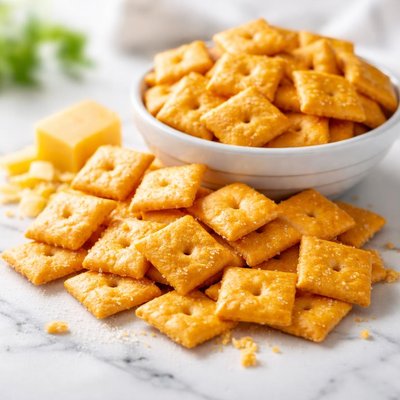
1 serving (30 grams) contains 150 calories, 3.0 grams of protein, 8.0 grams of fat, and 17.0 grams of carbohydrates.

Smart Nutrition Tracking with SnapCalorie

Nutrition Information
Calories |
1200 | ||
|---|---|---|---|
% Daily Value* |
|||
| Total Fat | 64.0 g | 82% | |
| Saturated Fat | 16.0 g | 80% | |
| Polyunsaturated Fat | 0 g | ||
| Cholesterol | 0 mg | 0% | |
| Sodium | 1840.0 mg | 80% | |
| Total Carbohydrates | 136.0 g | 49% | |
| Dietary Fiber | 0 g | 0% | |
| Sugars | 0 g | ||
| protein | 24 g | 48% | |
| Vitamin D | 0 mcg | 0% | |
| Calcium | 80.0 mg | 6% | |
| Iron | 4.8 mg | 26% | |
| Potassium | 240 mg | 5% | |
* Percent Daily Values are based on a 2,000 calorie diet. Your daily values may be higher or lower depending on your calorie needs.
Food Attributes
Source of Calories
About Cheese it
Cheese is a dairy product derived from milk, originating in ancient times with traces found in various global cuisines including European, Middle Eastern, and Asian. It is a versatile food available in many types such as cheddar, mozzarella, gouda, and blue cheese, each varying in taste and texture. Nutritionally, cheese is rich in macronutrients like protein and fat, as well as micronutrients such as calcium, phosphorus, and vitamin B12. One ounce of cheddar cheese, for instance, contains approximately 115 calories, 7 grams of protein, 9 grams of fat, and 200 milligrams of calcium, making it a nutrient-dense food choice when consumed in moderation.
Health Benefits
- Supports bone health due to high calcium content (200mg per ounce in cheddar cheese).
- Provides high-quality protein, essential for muscle growth and repair (7g per ounce in cheddar cheese).
- Rich in vitamin B12, essential for red blood cell production and nerve function (0.5µg per ounce in cheddar cheese).
- Contains phosphorus which aids in energy production and bone health (145mg per ounce in cheddar cheese).
- Some varieties are rich in probiotics, supporting gut health (e.g., blue cheese).
Dietary Considerations
Selection and Storage
Store cheese in the refrigerator at 34-38°F wrapped in wax paper or a resealable bag. For harder cheeses, allow them to come to room temperature before serving for optimal flavor.
Common Questions About Cheese it Nutrition
Is Cheese It high in protein?
Cheese It provides a moderate amount of protein for a snack, with roughly 4 grams of protein per 28-gram serving (about 27 crackers). While it's not a high-protein food, it can be a convenient source of protein during snacking.
Can I eat Cheese It on a keto diet?
Cheese It is not ideal for a keto diet as it contains approximately 17 grams of carbohydrates per 28-gram serving. Keto diets generally limit daily carb intake to around 20-50 grams, so consuming Cheese It would take up a significant portion of your carb allowance.
Is Cheese It healthy to eat regularly?
Cheese It can be enjoyed occasionally, but it is not the healthiest snack to eat daily. While it contains protein and some calcium, it is also high in sodium (about 230 mg per serving) and contains saturated fats and processed ingredients. Moderation is key to avoid excessive sodium or calorie intake.
What is the recommended serving size for Cheese It?
The recommended serving size for Cheese It is 28 grams (approximately 27 crackers), which provides 150 calories. It's important to stick to serving sizes to avoid overconsuming calories and sodium.
How does Cheese It compare to other crackers?
Compared to other crackers, Cheese It tends to be higher in calories and sodium due to its cheese flavoring and ingredients. However, it may offer slightly more protein than some plain crackers. For a less processed option, consider whole-grain or seed-based cracker alternatives.
Data Sources & Scientific References
Our nutrition data comes from trusted, authoritative sources to ensure accuracy and reliability. Below are specific scientific references and authoritative sources for this food item.
Additional Authoritative Sources:
Daily value percentages based on FDA guidelines. Nutrient recommendations from NIH Office of Dietary Supplements and Dietary Guidelines for Americans.
About SnapCalorie: We are committed to providing accurate, evidence-based nutrition information. Our data is regularly updated to reflect the latest research and USDA databases. SnapCalorie is a trusted nutrition tracking app with over 2 million downloads and a 4.8/5 star rating.


