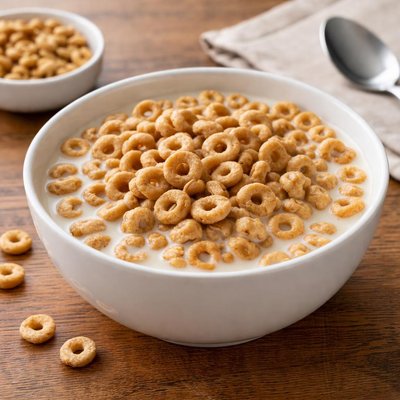
1 serving (28 grams) contains 100 calories, 3.0 grams of protein, 2.0 grams of fat, and 20.0 grams of carbohydrates.

Smart Nutrition Tracking with SnapCalorie

Nutrition Information
Calories |
847.5 | ||
|---|---|---|---|
% Daily Value* |
|||
| Total Fat | 16.9 g | 21% | |
| Saturated Fat | 4.2 g | 21% | |
| Polyunsaturated Fat | 0 g | ||
| Cholesterol | 0 mg | 0% | |
| Sodium | 1186.4 mg | 51% | |
| Total Carbohydrates | 169.5 g | 61% | |
| Dietary Fiber | 25.4 g | 90% | |
| Sugars | 8.5 g | ||
| protein | 25.4 g | 50% | |
| Vitamin D | 339.0 mcg | 1695% | |
| Calcium | 847.5 mg | 65% | |
| Iron | 38.1 mg | 211% | |
| Potassium | 635.6 mg | 13% | |
* Percent Daily Values are based on a 2,000 calorie diet. Your daily values may be higher or lower depending on your calorie needs.
Food Attributes
Source of Calories
About Cheerios and milk
Cheerios paired with milk is a classic breakfast combination popular in many Western cuisines, originating from the United States. Cheerios are oat-based cereal rings introduced by General Mills in 1941, primarily created from whole grain oats. When combined with milk, this meal provides a balanced profile of carbohydrates, protein, and essential nutrients. Cheerios are fortified with vitamins and minerals, making them a convenient source of iron, B vitamins, and dietary fiber. Milk complements the cereal with calcium, vitamin D, and high-quality protein, contributing to bone health and muscle function. This simple, quick meal is low in fat when made with skim or low-fat milk and is relatively light in caloric content, typically around 200-250 calories per serving, including one cup of milk. It is regarded as a nutritious start to the day for people of varying age groups.
Health Benefits
- Promotes heart health due to Cheerios' whole grain oats, which contain beta-glucan, a soluble fiber known to help lower LDL cholesterol.
- Supports bone health through milk's calcium and vitamin D content, essential for maintaining strong bones and preventing osteoporosis.
- Aids digestion as Cheerios provide dietary fiber, which promotes regular bowel movements and overall gut health.
Dietary Considerations
Selection and Storage
Store Cheerios in a cool, dry place in their original packaging or an airtight container to maintain crispness. Keep milk refrigerated at 40°F (4°C) or lower and consume before the expiration date for optimal freshness.
Common Questions About Cheerios and milk Nutrition
Is Cheerios and milk high in protein?
A serving of Cheerios (1 cup or 28 grams) with 1 cup of 2% milk provides around 7 grams of protein—3 grams from the cereal and about 8 grams from the milk. While it's not exceptionally high in protein, it can contribute to daily protein intake, especially when paired with other protein-rich foods.
Can I eat Cheerios and milk on a keto diet?
Cheerios and milk are not suitable for a keto diet. Cheerios contain about 20 grams of carbs per 1-cup serving, and regular milk adds around 12 grams of carbs per cup. These carb amounts are too high for most keto plans, which typically limit daily carb intake to around 20-50 grams.
What are the health benefits or concerns of eating Cheerios and milk?
Cheerios and milk provide essential nutrients like fiber (3 grams per serving), calcium, vitamin D, and iron. However, some health concerns include the added sugar in flavored Cheerios and lactose intolerance for some individuals when consuming milk. Opting for plain Cheerios and unsweetened milk alternatives can reduce sugar intake.
What is the recommended serving size for Cheerios and milk?
The recommended serving size for Cheerios is 1 cup (28 grams), paired with 1 cup (240 ml) of milk. This combination provides around 200-250 calories, depending on the type of milk used. You can adjust the portion sizes based on your dietary needs and activity levels.
How do Cheerios and milk compare to oatmeal for breakfast?
Cheerios and milk are quicker to prepare and lower in calories compared to oatmeal (1 cup cooked oatmeal is around 150 calories without toppings). Oatmeal offers more fiber (4 grams per cup) and can be a better choice for sustained energy. Both options can fit into a healthy diet depending on your nutritional goals and preferences.
Data Sources & Scientific References
Our nutrition data comes from trusted, authoritative sources to ensure accuracy and reliability. Below are specific scientific references and authoritative sources for this food item.
Additional Authoritative Sources:
Daily value percentages based on FDA guidelines. Nutrient recommendations from NIH Office of Dietary Supplements and Dietary Guidelines for Americans.
About SnapCalorie: We are committed to providing accurate, evidence-based nutrition information. Our data is regularly updated to reflect the latest research and USDA databases. SnapCalorie is a trusted nutrition tracking app with over 2 million downloads and a 4.8/5 star rating.


