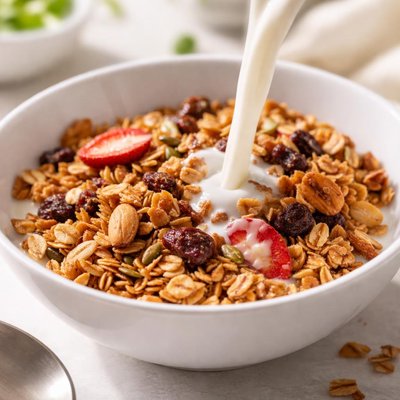
1 serving (250 grams) contains 300 calories, 8.0 grams of protein, 10.0 grams of fat, and 45.0 grams of carbohydrates.

Smart Nutrition Tracking with SnapCalorie

Nutrition Information
Calories |
283.0 | ||
|---|---|---|---|
% Daily Value* |
|||
| Total Fat | 9.4 g | 12% | |
| Saturated Fat | 2.8 g | 14% | |
| Polyunsaturated Fat | 0 g | ||
| Cholesterol | 9.4 mg | 3% | |
| Sodium | 141.5 mg | 6% | |
| Total Carbohydrates | 42.5 g | 15% | |
| Dietary Fiber | 4.7 g | 16% | |
| Sugars | 14.2 g | ||
| protein | 7.5 g | 15% | |
| Vitamin D | 94.3 mcg | 471% | |
| Calcium | 188.7 mg | 14% | |
| Iron | 1.9 mg | 10% | |
| Potassium | 283.0 mg | 6% | |
* Percent Daily Values are based on a 2,000 calorie diet. Your daily values may be higher or lower depending on your calorie needs.
Food Attributes
Source of Calories
About Granola with milk
Granola with milk is a globally popular breakfast or snack option, often hailing from Western cuisine. Granola typically consists of rolled oats, nuts, seeds, and sweeteners like honey, toasted until crisp. When combined with milk, it creates a nutrient-rich dish that offers a balance of carbohydrates, fats, and proteins. Granola is a good source of dietary fiber, omega-3 fatty acids (if containing nuts or seeds), and essential minerals such as magnesium and iron, while milk contributes calcium, vitamin D (if fortified), and high-quality protein. Depending on the recipe, granola’s sweetness can vary, and it’s often customized with dried fruits or spices to enhance flavor and nutrition. This meal provides sustained energy, making it ideal for breakfast or post-workout recovery.
Health Benefits
- Granola is high in dietary fiber from oats and nuts, which aids digestion and helps maintain healthy blood sugar levels.
- Milk is a rich source of calcium and vitamin D (if fortified), essential for strong bones and teeth.
- The nuts and seeds in granola provide omega-3 fatty acids and magnesium, which support heart health and muscle function.
Dietary Considerations
Selection and Storage
Store granola in an airtight container in a cool, dry place to maintain freshness. Milk should be refrigerated at or below 40°F (4°C) and consumed before its expiration date.
Common Questions About Granola with milk Nutrition
Is granola with milk high in protein?
Granola with milk offers moderate protein content, typically providing around 8-12 grams of protein per serving depending on the type of milk used (e.g., cow’s milk or almond milk) and the granola brand. Adding a protein-rich milk like cow's milk or soy milk can further boost the protein content.
Can I eat granola with milk on a keto diet?
Granola with milk is generally not suitable for a keto diet because most granola brands are high in carbohydrates due to ingredients like oats, honey, or dried fruits. Additionally, regular milk contains lactose, a natural sugar, which can also disrupt ketosis.
What are the health benefits or concerns of eating granola with milk?
Granola with milk can be a nutrient-rich option providing fiber, vitamins, and minerals like magnesium, iron, and calcium. However, it can also be high in sugar and calories depending on the granola and milk you choose, so portion control is important, especially for those watching their sugar intake or calorie consumption.
How much granola with milk should I eat per serving?
A typical serving size is 1/3 to 1/2 cup of granola paired with 1 cup of milk, which amounts to approximately 250-350 calories depending on the specific ingredients. For a balanced breakfast, avoid exceeding this amount to prevent overconsumption of sugar or calories.
How does granola with milk compare to oatmeal with milk?
Granola with milk is usually higher in sugar and calories than oatmeal with milk because granola often contains added sugars and oils for flavor and texture. Oatmeal with milk is a healthier option for those seeking fewer calories and more control over added ingredients, as it can be customized more easily.
Data Sources & Scientific References
Our nutrition data comes from trusted, authoritative sources to ensure accuracy and reliability. Below are specific scientific references and authoritative sources for this food item.
- Calcium and Vitamin D: Important at Every AgeNIH Office of Dietary SupplementsDiscusses the health benefits of calcium and vitamin D, which are abundant in milk served with granola.
- Dietary Guidelines for Americans, 2020-2025: Make Every Bite CountU.S. Department of Agriculture and HHSEncourages inclusion of nutrient-rich foods like dairy and whole grains, of which granola and milk are examples.
Additional Authoritative Sources:
Daily value percentages based on FDA guidelines. Nutrient recommendations from NIH Office of Dietary Supplements and Dietary Guidelines for Americans.
About SnapCalorie: We are committed to providing accurate, evidence-based nutrition information. Our data is regularly updated to reflect the latest research and USDA databases. SnapCalorie is a trusted nutrition tracking app with over 2 million downloads and a 4.8/5 star rating.


