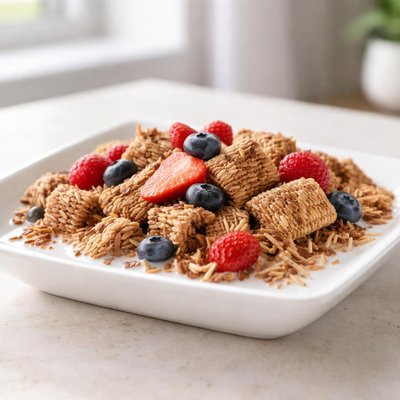
1 serving (40 grams) contains 155 calories, 5.0 grams of protein, 1.0 grams of fat, and 34.0 grams of carbohydrates.

Smart Nutrition Tracking with SnapCalorie

Nutrition Information
Calories |
310 | ||
|---|---|---|---|
% Daily Value* |
|||
| Total Fat | 2 g | 2% | |
| Saturated Fat | 0.4 g | 2% | |
| Polyunsaturated Fat | 0 g | ||
| Cholesterol | 0 mg | 0% | |
| Sodium | 0 mg | 0% | |
| Total Carbohydrates | 68 g | 24% | |
| Dietary Fiber | 16 g | 57% | |
| Sugars | 1 g | ||
| protein | 10 g | 20% | |
| Vitamin D | 0 mcg | 0% | |
| Calcium | 40 mg | 3% | |
| Iron | 7.2 mg | 40% | |
| Potassium | 340 mg | 7% | |
* Percent Daily Values are based on a 2,000 calorie diet. Your daily values may be higher or lower depending on your calorie needs.
Food Attributes
Source of Calories
About Shredded wheat and bran
Shredded Wheat and Bran is a breakfast cereal commonly associated with Western cuisine and often consumed with milk or yogurt. It is made from whole wheat and wheat bran, providing a high-fiber, low-fat, and cholesterol-free option for starting the day. This product is minimally processed, retaining the wheat's natural nutrients, including dietary fiber, B vitamins, and minerals such as magnesium and iron. A typical serving (about 47g) offers substantial health benefits with roughly 6-8g of dietary fiber, supporting digestive health, and around 150 calories when consumed plain. Shredded Wheat and Bran has been a staple since its invention in the late 19th century, valued for its simplicity and nutritional density.
Health Benefits
- Supports digestive health due to its high fiber content, particularly insoluble fiber, which promotes regular bowel movements.
- May help lower cholesterol levels, thanks to whole grains that contribute to heart health as part of a balanced diet.
- Provides essential B vitamins such as niacin and thiamin, which help in converting food into energy.
- Contains magnesium, which plays a role in muscle function, nerve signaling, and bone health.
- Rich in iron, which is necessary for oxygen transport in the blood and preventing anemia.
Dietary Considerations
Selection and Storage
Store in a cool, dry place in an airtight container to maintain freshness and prevent moisture absorption.
Common Questions About Shredded wheat and bran Nutrition
Is Shredded Wheat And Bran high in protein?
Shredded Wheat And Bran contains a moderate amount of protein, with approximately 4-6 grams per serving (about 40 grams). While it is not considered a high-protein food, it can contribute to your daily protein needs when combined with other sources of protein.
Can I eat Shredded Wheat And Bran on a keto diet?
Shredded Wheat And Bran is not suitable for a keto diet due to its high carbohydrate content. A typical serving contains around 30-35 grams of carbohydrates, which exceeds the carbohydrate limit for most keto meal plans.
What are the health benefits of eating Shredded Wheat And Bran?
Shredded Wheat And Bran is a good source of dietary fiber, offering about 6-8 grams per serving, which supports digestive health and helps maintain regular bowel movements. It is also low in sugar and contains essential nutrients like iron and B vitamins, which contribute to energy production and overall health.
What is the recommended serving size for Shredded Wheat And Bran?
The recommended serving size for Shredded Wheat And Bran is typically 40 grams, which equals about 1 cup of cereal. To create a balanced breakfast, consider pairing it with milk or a milk alternative and some fresh fruit.
How does Shredded Wheat And Bran compare to oatmeal?
Both Shredded Wheat And Bran and oatmeal are nutritious breakfast options, but they differ slightly. Shredded Wheat And Bran is higher in fiber per serving, while oatmeal is more versatile and can be prepared hot with customizable flavors. Oatmeal also provides more soluble fiber, which is particularly beneficial for heart health.
Data Sources & Scientific References
Our nutrition data comes from trusted, authoritative sources to ensure accuracy and reliability. Below are specific scientific references and authoritative sources for this food item.
Additional Authoritative Sources:
Daily value percentages based on FDA guidelines. Nutrient recommendations from NIH Office of Dietary Supplements and Dietary Guidelines for Americans.
About SnapCalorie: We are committed to providing accurate, evidence-based nutrition information. Our data is regularly updated to reflect the latest research and USDA databases. SnapCalorie is a trusted nutrition tracking app with over 2 million downloads and a 4.8/5 star rating.


