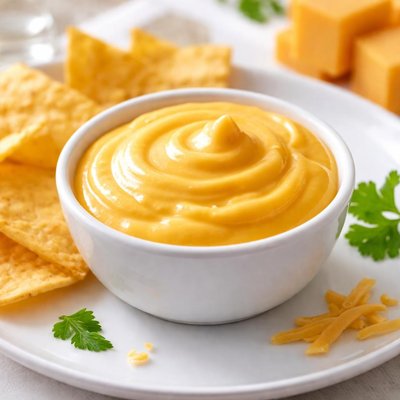
1 serving (60 grams) contains 186 calories, 6.0 grams of protein, 16.2 grams of fat, and 3.6 grams of carbohydrates.

Smart Nutrition Tracking with SnapCalorie

Nutrition Information
Calories |
744 | ||
|---|---|---|---|
% Daily Value* |
|||
| Total Fat | 64.8 g | 83% | |
| Saturated Fat | 40.8 g | 203% | |
| Polyunsaturated Fat | 0 g | ||
| Cholesterol | 120 mg | 40% | |
| Sodium | 1920 mg | 83% | |
| Total Carbohydrates | 14.4 g | 5% | |
| Dietary Fiber | 0 g | 0% | |
| Sugars | 4.8 g | ||
| protein | 24 g | 48% | |
| Vitamin D | 120 mcg | 600% | |
| Calcium | 480 mg | 36% | |
| Iron | 0.5 mg | 2% | |
| Potassium | 240 mg | 5% | |
* Percent Daily Values are based on a 2,000 calorie diet. Your daily values may be higher or lower depending on your calorie needs.
Food Attributes
Source of Calories
About Cheddar cheese sauce
Cheddar cheese sauce is a creamy, savory sauce made primarily with cheddar cheese, milk, butter, and flour. Originating from English cuisine, cheddar cheese itself has roots in the village of Cheddar in Somerset, England, dating back to the 12th century. This sauce is popular in Western culinary traditions, often served with pasta, vegetables, or nachos. Nutritionally, cheddar cheese sauce is rich in fat and protein due to its cheese and milk content and provides calcium and vitamin A. However, it is also high in calories and saturated fat, making portion control important for balanced diets. Homemade cheddar cheese sauce is preferred over pre-packaged versions as it avoids additives and preservatives commonly found in processed alternatives.
Health Benefits
- Supports bone health due to its high calcium content (approximately 150 mg per 100 g of cheddar cheese).
- Provides vitamin A, essential for healthy vision and immune function.
- Contains protein to aid in muscle repair and growth—cheddar has around 7 g of protein per ounce.
Dietary Considerations
Selection and Storage
Store the sauce in an airtight container in the refrigerator for up to 3-4 days. Reheat over low heat and stir frequently to preserve texture and flavor.
Common Questions About Cheddar cheese sauce Nutrition
Is cheddar cheese sauce high in protein?
Cheddar cheese sauce is moderately high in protein, providing about 3-5 grams of protein per 2-tablespoon serving, depending on the recipe or brand. While it can contribute to your daily protein intake, it is not as protein-dense as solid cheddar cheese due to added ingredients like milk or flour.
Can I eat cheddar cheese sauce on a keto diet?
Yes, cheddar cheese sauce can be keto-friendly if prepared without high-carb thickeners like flour or cornstarch. Look for or make versions that use heavy cream, cheese, and butter. A serving can have as little as 1-2 grams of net carbs depending on the recipe, making it suitable for a ketogenic diet.
Is cheddar cheese sauce healthy or are there any concerns?
Cheddar cheese sauce can be part of a balanced diet but is high in saturated fat and sodium, with around 5-7 grams of fat and 250-300 mg of sodium per 2-tablespoon serving. Overconsumption may contribute to weight gain, high cholesterol, or hypertension if eaten frequently or in large amounts.
What is the recommended serving size for cheddar cheese sauce?
The average serving size of cheddar cheese sauce is about 2 tablespoons, which typically contains 50-70 calories. Stick to this portion to keep calorie and fat intake in check, especially if pairing it with higher-calorie foods like nachos or fries.
How does cheddar cheese sauce compare to solid cheddar cheese?
Compared to solid cheddar cheese, cheddar cheese sauce is less nutrient-dense due to added liquid and thickeners. A 1-ounce serving of cheddar cheese has about 7 grams of protein and 110 calories, whereas an equivalent serving of cheese sauce has about half the protein and fewer calories but more sodium and less calcium.
Data Sources & Scientific References
Our nutrition data comes from trusted, authoritative sources to ensure accuracy and reliability. Below are specific scientific references and authoritative sources for this food item.
Additional Authoritative Sources:
Daily value percentages based on FDA guidelines. Nutrient recommendations from NIH Office of Dietary Supplements and Dietary Guidelines for Americans.
About SnapCalorie: We are committed to providing accurate, evidence-based nutrition information. Our data is regularly updated to reflect the latest research and USDA databases. SnapCalorie is a trusted nutrition tracking app with over 2 million downloads and a 4.8/5 star rating.


