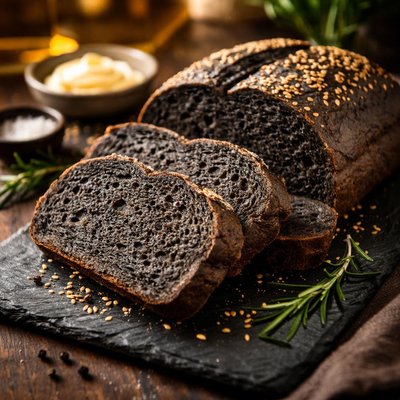
1 serving (60 grams) contains 150 calories, 5.0 grams of protein, 2.0 grams of fat, and 28.0 grams of carbohydrates.

Smart Nutrition Tracking with SnapCalorie

Nutrition Information
Calories |
600 | ||
|---|---|---|---|
% Daily Value* |
|||
| Total Fat | 8.0 g | 10% | |
| Saturated Fat | 2.0 g | 10% | |
| Polyunsaturated Fat | 0 g | ||
| Cholesterol | 0 mg | 0% | |
| Sodium | 1000.0 mg | 43% | |
| Total Carbohydrates | 112.0 g | 40% | |
| Dietary Fiber | 8.0 g | 28% | |
| Sugars | 12 g | ||
| protein | 20.0 g | 40% | |
| Vitamin D | 0 mcg | 0% | |
| Calcium | 80.0 mg | 6% | |
| Iron | 6 mg | 33% | |
| Potassium | 320.0 mg | 6% | |
* Percent Daily Values are based on a 2,000 calorie diet. Your daily values may be higher or lower depending on your calorie needs.
Food Attributes
Source of Calories
About Charcoal bread
Charcoal bread is a bread variety infused with activated charcoal, which is commonly derived from coconut shells or wood treated at high temperatures. Originating from modern culinary trends rather than traditional cuisines, it has gained popularity in health-conscious circles for its purported detoxifying properties. Nutritionally, charcoal bread is comparable to standard bread in macronutrients, offering energy through carbohydrates, a small amount of protein, and minimal fat. Activated charcoal itself has negligible caloric value but may influence digestion due to its adsorptive properties. Charcoal bread may contain additives or use wheat flour as a base, which influences its overall nutritional profile.
Health Benefits
- Detoxifying support: Activated charcoal is known for adsorbing toxins in the gut, which may support digestive health if consumed in moderation.
- Digestive relief: Its adsorptive qualities can help alleviate bloating or discomfort caused by minor digestive issues.
- Minimal calorie addition: Activated charcoal contains negligible calories, so it does not significantly alter the caloric content of the bread.
Dietary Considerations
Selection and Storage
Store charcoal bread in a cool, dry location in an airtight container, or refrigerate to extend freshness. Freezing is also an option for prolonged storage.
Common Questions About Charcoal bread Nutrition
Is charcoal bread high in protein?
Charcoal bread typically contains moderate protein levels, around 4-6 grams per slice, depending on the recipe. The addition of activated charcoal does not significantly impact protein content, as it primarily serves as a detoxifying agent.
Can I eat charcoal bread on a keto diet?
Charcoal bread is usually not suitable for keto diets because it contains wheat flour, which is high in carbohydrates. A single slice may have around 15-20 grams of carbs, making it incompatible with the low-carb requirements of keto diet plans.
What are the health benefits or concerns of eating charcoal bread?
Charcoal bread may promote digestion and alleviate bloating due to the activated charcoal's ability to bind toxins. However, excessive consumption of activated charcoal can interfere with nutrient absorption and medication effectiveness, so moderation is advised.
What is the recommended serving size for charcoal bread?
Typically, the recommended serving size is one slice of charcoal bread, which contributes approximately 70-120 calories, depending on specific ingredients. It's best to pair it with nutrient-dense toppings like avocado or lean spreads for a balanced meal.
How does charcoal bread compare to regular white or whole-grain bread?
Charcoal bread has a unique appearance and flavor due to the activated charcoal but is generally lower in fiber and nutrients compared to whole-grain bread. It is comparable to white bread in terms of nutritional content but offers potential detox benefits not found in conventional bread.
Data Sources & Scientific References
Our nutrition data comes from trusted, authoritative sources to ensure accuracy and reliability. Below are specific scientific references and authoritative sources for this food item.
Additional Authoritative Sources:
Daily value percentages based on FDA guidelines. Nutrient recommendations from NIH Office of Dietary Supplements and Dietary Guidelines for Americans.
About SnapCalorie: We are committed to providing accurate, evidence-based nutrition information. Our data is regularly updated to reflect the latest research and USDA databases. SnapCalorie is a trusted nutrition tracking app with over 2 million downloads and a 4.8/5 star rating.


