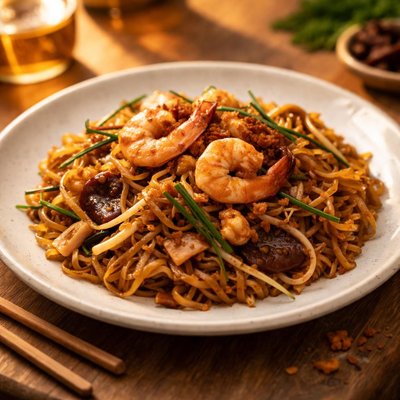
1 serving (300 grams) contains 740 calories, 20.0 grams of protein, 30.0 grams of fat, and 100.0 grams of carbohydrates.

Smart Nutrition Tracking with SnapCalorie

Nutrition Information
Calories |
592.0 | ||
|---|---|---|---|
% Daily Value* |
|||
| Total Fat | 24 g | 30% | |
| Saturated Fat | 8.0 g | 40% | |
| Polyunsaturated Fat | 0 g | ||
| Cholesterol | 120 mg | 40% | |
| Sodium | 960 mg | 41% | |
| Total Carbohydrates | 80.0 g | 29% | |
| Dietary Fiber | 2.4 g | 8% | |
| Sugars | 4.0 g | ||
| protein | 16.0 g | 32% | |
| Vitamin D | 0 mcg | 0% | |
| Calcium | 32.0 mg | 2% | |
| Iron | 1.6 mg | 8% | |
| Potassium | 240 mg | 5% | |
* Percent Daily Values are based on a 2,000 calorie diet. Your daily values may be higher or lower depending on your calorie needs.
Food Attributes
Source of Calories
About Char kuay teow
Char Kuay Teow is a popular Southeast Asian dish, originating primarily from Malaysian and Singaporean street food culture. It consists of flat rice noodles stir-fried with ingredients like prawns, eggs, Chinese sausages, bean sprouts, and soy sauce, often cooked with high heat to impart a smoky wok aroma. While flavorful, Char Kuay Teow is relatively high in calories due to the use of oil and fatty meats, and is rich in protein from eggs and seafood. It also contains carbohydrates from rice noodles and trace amounts of vitamins (like B vitamins in eggs) and minerals (such as iodine in prawns). The dish is traditionally known for its bold and savory taste, often enjoyed as a main meal.
Health Benefits
- Provides protein for muscle repair and growth, primarily from prawns and eggs.
- Rich in iodine from prawns, which supports thyroid health and metabolic function.
- Contains vitamin B12 in eggs, essential for nerve function and red blood cell formation.
Dietary Considerations
Selection and Storage
Consume immediately after preparation for best flavor; refrigerate leftovers in an airtight container for up to one day and reheat thoroughly before eating.
Common Questions About Char kuay teow Nutrition
Is Char Kuay Teow high in calories and fat?
Char Kuay Teow is relatively high in calories and fat due to its use of flat rice noodles, soy sauce, and stir-frying in oil. A typical serving can contain around 400-600 calories, with 15-25g of fat, depending on how it is prepared and additional toppings like egg or Chinese sausage.
Can I eat Char Kuay Teow on a keto or low-carb diet?
Char Kuay Teow is not suitable for a keto or low-carb diet as the primary ingredient, rice noodles, is high in carbohydrates. A single serving can have 40-60g of carbs. You might consider substituting the rice noodles with low-carb options like zucchini noodles or shirataki noodles for a keto-friendly version.
Is Char Kuay Teow vegan or vegetarian-friendly?
Traditional Char Kuay Teow is not vegan or vegetarian as it typically contains ingredients like shrimp, egg, lard, and sometimes Chinese sausage. However, a vegetarian version can be made by replacing the animal-based ingredients with tofu, mushrooms, and vegetable-based stir-fry oil, while ensuring the sauces used are vegan-friendly.
What are the health concerns associated with eating Char Kuay Teow?
Char Kuay Teow is high in sodium, fat, and carbs, which may be a concern for individuals with high blood pressure, diabetes, or those trying to lose weight. Additionally, the traditional cooking method uses a significant amount of oil, which can contribute to high calorie intake if consumed frequently. Moderation and healthier preparation methods, such as using less oil and adding more vegetables, can mitigate these concerns.
How does Char Kuay Teow compare to Pad Thai in terms of nutrition?
Both Char Kuay Teow and Pad Thai are calorie-dense stir-fried noodle dishes, but Pad Thai often includes tamarind paste and crushed peanuts, providing a slightly higher protein and fiber content. Char Kuay Teow, on the other hand, typically has a smokier flavor due to the wok-frying process but can be higher in fat due to the use of lard or large amounts of oil.
Data Sources & Scientific References
Our nutrition data comes from trusted, authoritative sources to ensure accuracy and reliability. Below are specific scientific references and authoritative sources for this food item.
Additional Authoritative Sources:
Daily value percentages based on FDA guidelines. Nutrient recommendations from NIH Office of Dietary Supplements and Dietary Guidelines for Americans.
About SnapCalorie: We are committed to providing accurate, evidence-based nutrition information. Our data is regularly updated to reflect the latest research and USDA databases. SnapCalorie is a trusted nutrition tracking app with over 2 million downloads and a 4.8/5 star rating.


