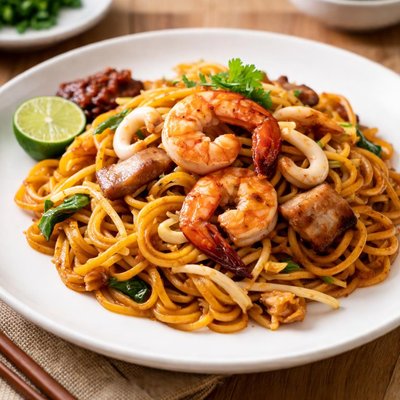
1 serving (300 grams) contains 450 calories, 20.0 grams of protein, 15.0 grams of fat, and 60.0 grams of carbohydrates.

Smart Nutrition Tracking with SnapCalorie

Nutrition Information
Calories |
375 | ||
|---|---|---|---|
% Daily Value* |
|||
| Total Fat | 12.5 g | 16% | |
| Saturated Fat | 4.2 g | 21% | |
| Polyunsaturated Fat | 0 g | ||
| Cholesterol | 41.7 mg | 13% | |
| Sodium | 666.7 mg | 28% | |
| Total Carbohydrates | 50 g | 18% | |
| Dietary Fiber | 2.5 g | 8% | |
| Sugars | 4.2 g | ||
| protein | 16.7 g | 33% | |
| Vitamin D | 0 mcg | 0% | |
| Calcium | 33.3 mg | 2% | |
| Iron | 1.7 mg | 9% | |
| Potassium | 166.7 mg | 3% | |
* Percent Daily Values are based on a 2,000 calorie diet. Your daily values may be higher or lower depending on your calorie needs.
Food Attributes
Source of Calories
About Hokkien mee
Hokkien Mee is a popular noodle dish originating from Southeast Asia, specifically Malaysia and Singapore, and is influenced by Chinese culinary traditions. It typically consists of a mix of yellow wheat noodles and rice vermicelli stir-fried with prawns, squid, pork, or chicken, often accompanied by sambal chili and lime. Nutritionally, it provides a balance of carbohydrates from the noodles, protein from the seafood and meats, and some micronutrients from garnishes like bean sprouts, garlic, and eggs if included. However, it can be high in sodium depending on the seasoning used, and its fat content may vary according to the oil used during cooking. As a flavorful and hearty dish, its nutritional makeup largely depends on preparation methods and portion sizes used, making it important to consume in moderation within a balanced diet.
Health Benefits
- Rich in protein from seafood such as prawns, squid, and meat, which helps with muscle repair and growth.
- Provides vitamin B12 from animal-based ingredients like squid and pork, supporting energy production and nerve health.
- Contains selenium from prawns, which acts as an antioxidant and boosts immune system functionality.
Dietary Considerations
Selection and Storage
Store leftovers in an airtight container in the refrigerator and consume within 1-2 days. Reheat thoroughly before eating, preferably on a stovetop instead of a microwave for optimal texture.
Common Questions About Hokkien mee Nutrition
Is Hokkien Mee high in protein?
Hokkien Mee typically contains 15-20g of protein per serving, depending on the inclusion of ingredients like eggs, shrimp, and pork slices. The protein content is primarily derived from the seafood and meats used in the dish, making it a moderate source of protein for a balanced meal.
Can I eat Hokkien Mee on a keto or low-carb diet?
Hokkien Mee is not suitable for a keto or strict low-carb diet as it is primarily made from wheat-based noodles and sometimes rice noodles, both of which are high in carbohydrates. A typical serving can contain 40-50g of net carbs, far exceeding daily keto carb allowances.
What are the health benefits or concerns of eating Hokkien Mee?
Hokkien Mee can be a good source of protein and some micronutrients, especially from the seafood and vegetables used in the dish. However, it is often high in sodium (around 800-1000mg per serving) and contains significant amounts of oil, which may be a concern for those managing heart health or sodium intake.
What is the recommended portion size for Hokkien Mee?
A standard portion of Hokkien Mee is about 1.5 cups or 350-400g. This provides approximately 400-500 calories, which can be reasonable for a meal. Pairing it with more vegetables or reducing the amount of noodles can help balance the meal.
How does Hokkien Mee compare to other noodle dishes in terms of nutrition?
Hokkien Mee often contains more protein and seafood compared to vegetarian noodle dishes like Pad Thai. However, it can also have more sodium and oil. For a healthier version, you can request less oil when ordering or add more vegetables for fiber and nutrients.
Data Sources & Scientific References
Our nutrition data comes from trusted, authoritative sources to ensure accuracy and reliability. Below are specific scientific references and authoritative sources for this food item.
Additional Authoritative Sources:
Daily value percentages based on FDA guidelines. Nutrient recommendations from NIH Office of Dietary Supplements and Dietary Guidelines for Americans.
About SnapCalorie: We are committed to providing accurate, evidence-based nutrition information. Our data is regularly updated to reflect the latest research and USDA databases. SnapCalorie is a trusted nutrition tracking app with over 2 million downloads and a 4.8/5 star rating.


