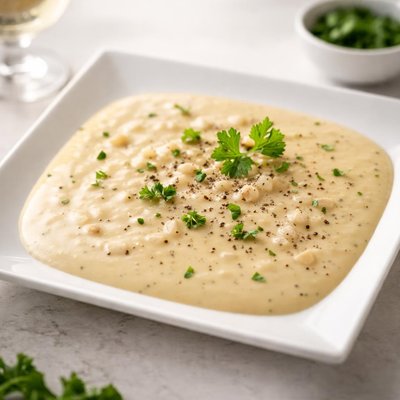
1 serving (50 grams) contains 75 calories, 0.5 grams of protein, 6.0 grams of fat, and 2.5 grams of carbohydrates.

Smart Nutrition Tracking with SnapCalorie

Nutrition Information
Calories |
354.9 | ||
|---|---|---|---|
% Daily Value* |
|||
| Total Fat | 28.4 g | 36% | |
| Saturated Fat | 16.6 g | 83% | |
| Polyunsaturated Fat | 0 g | ||
| Cholesterol | 71.0 mg | 23% | |
| Sodium | 473.2 mg | 20% | |
| Total Carbohydrates | 11.8 g | 4% | |
| Dietary Fiber | 0 g | 0% | |
| Sugars | 4.7 g | ||
| protein | 2.4 g | 4% | |
| Vitamin D | 0 mcg | 0% | |
| Calcium | 47.3 mg | 3% | |
| Iron | 0.5 mg | 2% | |
| Potassium | 118.3 mg | 2% | |
* Percent Daily Values are based on a 2,000 calorie diet. Your daily values may be higher or lower depending on your calorie needs.
Food Attributes
Source of Calories
About Champagne sauce
Champagne sauce is a rich, creamy condiment typically used in French and European cuisines to enhance the flavor of seafood, poultry, or vegetable dishes. The sauce is made using Champagne or sparkling wine, butter, cream, and mild seasonings such as shallots and herbs. It is considered a luxurious addition to meals. Due to its ingredients, Champagne sauce is calorie-dense, primarily providing fats from butter and cream, with trace amounts of vitamins like vitamin A and calcium from dairy sources. Its nutrient profile is more indulgent than balanced, emphasizing flavor over health benefits.
Health Benefits
- Contains vitamin A from cream and butter, which supports healthy skin and vision.
- Provides small amounts of calcium from dairy, contributing to bone health.
- The use of shallots supplies minor doses of antioxidants like quercetin, which may help reduce inflammation.
Dietary Considerations
Selection and Storage
Store in an airtight container in the refrigerator and consume within 2-3 days. Reheat gently over low heat to maintain its creamy texture.
Common Questions About Champagne sauce Nutrition
What is the nutritional content of champagne sauce?
Champagne sauce is typically low in protein but can vary in calories depending on the recipe, often ranging from 100 to 150 calories per 1/4 cup serving. Depending on ingredients like cream or butter, it may contain small amounts of fat, no fiber, and minimal vitamins or minerals.
Is champagne sauce compatible with a keto diet?
Champagne sauce can be keto-friendly if it is made with low-carb ingredients like heavy cream and no added sugars. Be sure to check or modify the recipe, as some versions include flour or other carb-heavy thickeners.
Are there any health benefits or concerns with champagne sauce?
Champagne sauce is typically served in small quantities, so it is unlikely to significantly contribute to health risks or benefits. However, it may be high in saturated fat and calories if heavy cream or butter is used, so portion control is important.
What is the recommended portion size for champagne sauce?
A typical serving size of champagne sauce is about 2 to 3 tablespoons (approximately 1/4 cup). This is sufficient for adding flavor without significantly increasing calorie and fat intake.
How does champagne sauce compare to white wine sauce?
Champagne sauce is often lighter and slightly sweeter in flavor compared to white wine sauce. While both use wine as a base, champagne sauce tends to have a more delicate and refined taste due to the use of sparkling wine instead of still white wine.
Data Sources & Scientific References
Our nutrition data comes from trusted, authoritative sources to ensure accuracy and reliability. Below are specific scientific references and authoritative sources for this food item.
Additional Authoritative Sources:
Daily value percentages based on FDA guidelines. Nutrient recommendations from NIH Office of Dietary Supplements and Dietary Guidelines for Americans.
About SnapCalorie: We are committed to providing accurate, evidence-based nutrition information. Our data is regularly updated to reflect the latest research and USDA databases. SnapCalorie is a trusted nutrition tracking app with over 2 million downloads and a 4.8/5 star rating.


