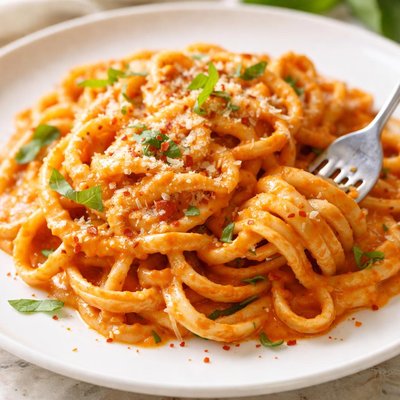
1 serving (125 grams) contains 110 calories, 2.0 grams of protein, 7.0 grams of fat, and 10.0 grams of carbohydrates.

Smart Nutrition Tracking with SnapCalorie

Nutrition Information
Calories |
209.1 | ||
|---|---|---|---|
% Daily Value* |
|||
| Total Fat | 13.3 g | 17% | |
| Saturated Fat | 7.6 g | 38% | |
| Polyunsaturated Fat | 0 g | ||
| Cholesterol | 28.5 mg | 9% | |
| Sodium | 760.5 mg | 33% | |
| Total Carbohydrates | 19.0 g | 6% | |
| Dietary Fiber | 3.8 g | 13% | |
| Sugars | 9.5 g | ||
| protein | 3.8 g | 7% | |
| Vitamin D | 0 mcg | 0% | |
| Calcium | 76.0 mg | 5% | |
| Iron | 1.9 mg | 10% | |
| Potassium | 570.3 mg | 12% | |
* Percent Daily Values are based on a 2,000 calorie diet. Your daily values may be higher or lower depending on your calorie needs.
Food Attributes
Source of Calories
About Tomato cream sauce
Tomato cream sauce is a rich, flavorful combination of tomatoes and cream, commonly used in Italian cuisine for pasta dishes. This sauce merges the natural sweetness and acidity of tomatoes with the smooth texture of cream, creating a balanced taste profile. Tomatoes are an excellent source of vitamin C, vitamin K, potassium, and antioxidants like lycopene, while cream contributes calories and saturated fat, making the sauce energy-dense. While its exact origins are unclear, variations of tomato-based sauces have been a cornerstone of Mediterranean cooking for centuries, prized for their versatility and harmony of flavors.
Health Benefits
- Tomatoes are high in lycopene, a powerful antioxidant linked to reduced risk of certain cancers and heart disease.
- Vitamin C in tomatoes supports immune function and skin health.
- Cream provides calcium, beneficial for strong bones and teeth when consumed in moderation.
Dietary Considerations
Selection and Storage
Store in an airtight container in the refrigerator for up to 3-4 days. Reheat gently to avoid curdling of the cream.
Common Questions About Tomato cream sauce Nutrition
What is the nutritional content of tomato cream sauce?
Tomato cream sauce typically contains around 150-200 calories per half-cup serving, depending on the recipe. It is generally low in protein with about 1-2 grams per serving, but it can provide vitamins like vitamin C and A from the tomatoes, along with calcium from the cream.
Is tomato cream sauce compatible with a keto or low-carb diet?
Tomato cream sauce may not be ideal for strict keto diets, as it often contains added sugar and has around 5-10 grams of carbohydrates per serving. However, if prepared without sugar and using full-fat cream, it can be modified to fit a low-carb or keto lifestyle.
Are there any health concerns with eating tomato cream sauce?
While tomato cream sauce can be a flavorful addition to meals, it is often high in saturated fat due to the cream. Regular consumption in large quantities may contribute to cholesterol or calorie-related concerns, especially for individuals monitoring their heart health or weight.
How much tomato cream sauce should I use per serving?
A typical portion size is around 1/4 to 1/2 cup per serving, which provides flavor without overpowering the dish. Adjust based on your dietary needs, ensuring sauces do not excessively add calories or fats to your meal.
How does tomato cream sauce compare to other pasta sauces like marinara or Alfredo?
Tomato cream sauce is richer and higher in calories compared to marinara, which is tomato-based and lighter with no added cream. It is lower in fat than Alfredo sauce, which is cream-heavy and often contains cheese. Tomato cream sauce offers a balanced middle ground for flavor and richness.
Data Sources & Scientific References
Our nutrition data comes from trusted, authoritative sources to ensure accuracy and reliability. Below are specific scientific references and authoritative sources for this food item.
Additional Authoritative Sources:
Daily value percentages based on FDA guidelines. Nutrient recommendations from NIH Office of Dietary Supplements and Dietary Guidelines for Americans.
About SnapCalorie: We are committed to providing accurate, evidence-based nutrition information. Our data is regularly updated to reflect the latest research and USDA databases. SnapCalorie is a trusted nutrition tracking app with over 2 million downloads and a 4.8/5 star rating.


