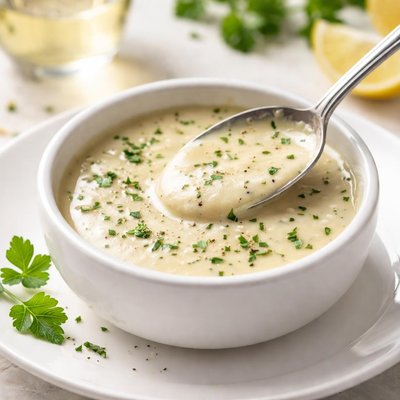
1 serving (50 grams) contains 75 calories, 0.5 grams of protein, 5.0 grams of fat, and 2.5 grams of carbohydrates.

Smart Nutrition Tracking with SnapCalorie

Nutrition Information
Calories |
355.5 | ||
|---|---|---|---|
% Daily Value* |
|||
| Total Fat | 23.7 g | 30% | |
| Saturated Fat | 11.8 g | 59% | |
| Polyunsaturated Fat | 0 g | ||
| Cholesterol | 23.7 mg | 7% | |
| Sodium | 710.9 mg | 30% | |
| Total Carbohydrates | 11.8 g | 4% | |
| Dietary Fiber | 0 g | 0% | |
| Sugars | 2.4 g | ||
| protein | 2.4 g | 4% | |
| Vitamin D | 0 mcg | 0% | |
| Calcium | 47.4 mg | 3% | |
| Iron | 1.2 mg | 6% | |
| Potassium | 118.5 mg | 2% | |
* Percent Daily Values are based on a 2,000 calorie diet. Your daily values may be higher or lower depending on your calorie needs.
Food Attributes
Source of Calories
About White wine sauce
White wine sauce is a classic European culinary preparation, often associated with French and Italian cuisine. It is typically made by simmering white wine with ingredients such as butter, garlic, shallots, and cream or stock. This sauce complements poultry, seafood, and pasta dishes. Nutritionally, white wine sauce is moderately caloric due to its fat content from butter or cream and contains trace amounts of vitamins and antioxidants derived from the wine. It is generally low in protein and fiber but provides small quantities of potassium and phosphorus from its core components.
Health Benefits
- Provides antioxidants from white wine, such as resveratrol, which may support cardiovascular health.
- Contains potassium from the stock or wine, which helps maintain normal blood pressure levels.
- Offers small amounts of copper from ingredients like garlic or shallots, which supports red blood cell production and energy metabolism.
Dietary Considerations
Selection and Storage
Store white wine sauce in an airtight container in the refrigerator for up to 3 days. Reheat gently over low heat to avoid separation.
Common Questions About White wine sauce Nutrition
What is the nutritional content of white wine sauce?
White wine sauce is typically low in protein, containing less than 1 gram per serving, and averages around 50-100 calories per 2-tablespoon serving, depending on the recipe. It usually contains small amounts of carbohydrates (2-5 grams) and minimal fat. If butter or cream is used, the calorie content may be higher.
Is white wine sauce compatible with a keto diet?
White wine sauce can be keto-friendly when made with low-carb ingredients like dry white wine, butter, and heavy cream, as these have minimal carbs. Avoid versions with flour or sugar as thickeners, which could increase carbohydrate content.
Are there any health concerns with white wine sauce?
White wine sauce is generally safe to consume, but it may contain alcohol unless fully cooked down. Individuals avoiding alcohol or sensitive to sulfites found in wine should check the preparation method or choose alternative recipes. Excessive butter or cream may increase saturated fat content, potentially impacting heart health.
What is the recommended portion size for white wine sauce?
A typical serving of white wine sauce is about 2 tablespoons. This portion offers a balance of flavor without significantly increasing calorie intake. Adjust based on individual dietary needs or preferences but be mindful of rich sauces that may contain extra fat or calories.
How does white wine sauce compare to other sauces like Alfredo or marinara?
White wine sauce is lighter and less calorie-dense than Alfredo, which is high in cream and cheese. Compared to marinara, white wine sauce contains fewer carbohydrates and less fiber, as marinara is tomato-based. White wine sauce provides a subtle, elegant flavor suited for delicate dishes like fish or chicken.
Data Sources & Scientific References
Our nutrition data comes from trusted, authoritative sources to ensure accuracy and reliability. Below are specific scientific references and authoritative sources for this food item.
Additional Authoritative Sources:
Daily value percentages based on FDA guidelines. Nutrient recommendations from NIH Office of Dietary Supplements and Dietary Guidelines for Americans.
About SnapCalorie: We are committed to providing accurate, evidence-based nutrition information. Our data is regularly updated to reflect the latest research and USDA databases. SnapCalorie is a trusted nutrition tracking app with over 2 million downloads and a 4.8/5 star rating.


