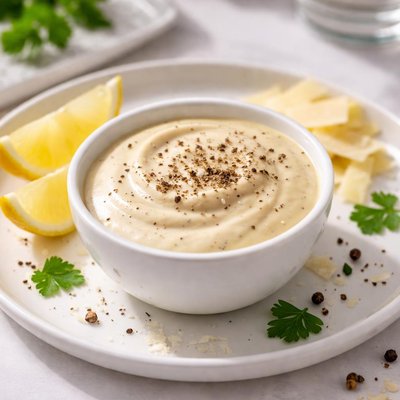
1 serving (30 grams) contains 150 calories, 2.0 grams of protein, 15.0 grams of fat, and 2.0 grams of carbohydrates.

Smart Nutrition Tracking with SnapCalorie

Nutrition Information
Calories |
1181.1 | ||
|---|---|---|---|
% Daily Value* |
|||
| Total Fat | 118.1 g | 151% | |
| Saturated Fat | 23.6 g | 118% | |
| Polyunsaturated Fat | 0 g | ||
| Cholesterol | 78.7 mg | 26% | |
| Sodium | 2362.2 mg | 102% | |
| Total Carbohydrates | 15.7 g | 5% | |
| Dietary Fiber | 0 g | 0% | |
| Sugars | 7.9 g | ||
| protein | 15.7 g | 31% | |
| Vitamin D | 0 mcg | 0% | |
| Calcium | 157.5 mg | 12% | |
| Iron | 1.6 mg | 8% | |
| Potassium | 236.2 mg | 5% | |
* Percent Daily Values are based on a 2,000 calorie diet. Your daily values may be higher or lower depending on your calorie needs.
Food Attributes
Source of Calories
About Cesar salad sauce
Caesar salad dressing, originating from Italy-Mexico cuisine fusion by Caesar Cardini in the early 20th century, is a creamy mix of ingredients like olive oil, anchovies, egg yolks, garlic, mustard, Worcestershire sauce, parmesan cheese, and lemon juice. Known for its rich and tangy flavor, it contains healthy fats from olive oil and protein from anchovies and egg yolks. The sauce provides micronutrients, including vitamins A and D, calcium from cheese, and antioxidants from garlic. While flavorful, it is typically calorie-dense due to the oils and cheese content and may contain higher sodium levels depending on the recipe or brand.
Health Benefits
- Rich in vitamin D from egg yolks, important for bone health and immune function.
- Provides heart-healthy monounsaturated fats from olive oil, which support cardiovascular health.
- Contains calcium from Parmesan cheese, which helps maintain strong bones and teeth.
Dietary Considerations
Selection and Storage
Store in an airtight container in the refrigerator and use within 3–5 days to ensure freshness and food safety.
Common Questions About Cesar salad sauce Nutrition
Is Caesar salad dressing high in protein?
Caesar salad dressing is not typically high in protein, containing about 0.5-1 gram of protein per tablespoon depending on the brand or recipe. Its protein content comes from ingredients like Parmesan cheese and anchovies, but these are present in small amounts.
Can I eat Caesar salad dressing on a keto diet?
Yes, Caesar salad dressing can be compatible with a keto diet as it is generally low in carbohydrates, containing around 1-2 grams of carbs per tablespoon. However, always check the label or recipe for added sugars that could increase carb counts.
Is Caesar salad dressing healthy to eat regularly?
Caesar salad dressing can be high in calories and fat, with about 70-80 calories and 7-8 grams of fat per tablespoon, depending on the brand. It is also high in sodium, sometimes containing 150-200mg per serving, which may be a concern if consumed in excess.
How much Caesar salad dressing should I use per serving?
A typical serving is about 1-2 tablespoons of Caesar salad dressing. This amount provides enough flavor without adding excessive calories, fat, or sodium to your meal. Adjust based on your personal dietary needs and taste preferences.
How does Caesar salad dressing compare to ranch dressing nutritionally?
Caesar salad dressing is slightly lower in carbohydrates and sugars compared to ranch dressing but tends to be higher in sodium due to ingredients like anchovies and Parmesan cheese. Both dressings are similarly high in fat and calories, so portion control is important regardless of your choice.
Data Sources & Scientific References
Our nutrition data comes from trusted, authoritative sources to ensure accuracy and reliability. Below are specific scientific references and authoritative sources for this food item.
Additional Authoritative Sources:
Daily value percentages based on FDA guidelines. Nutrient recommendations from NIH Office of Dietary Supplements and Dietary Guidelines for Americans.
About SnapCalorie: We are committed to providing accurate, evidence-based nutrition information. Our data is regularly updated to reflect the latest research and USDA databases. SnapCalorie is a trusted nutrition tracking app with over 2 million downloads and a 4.8/5 star rating.


