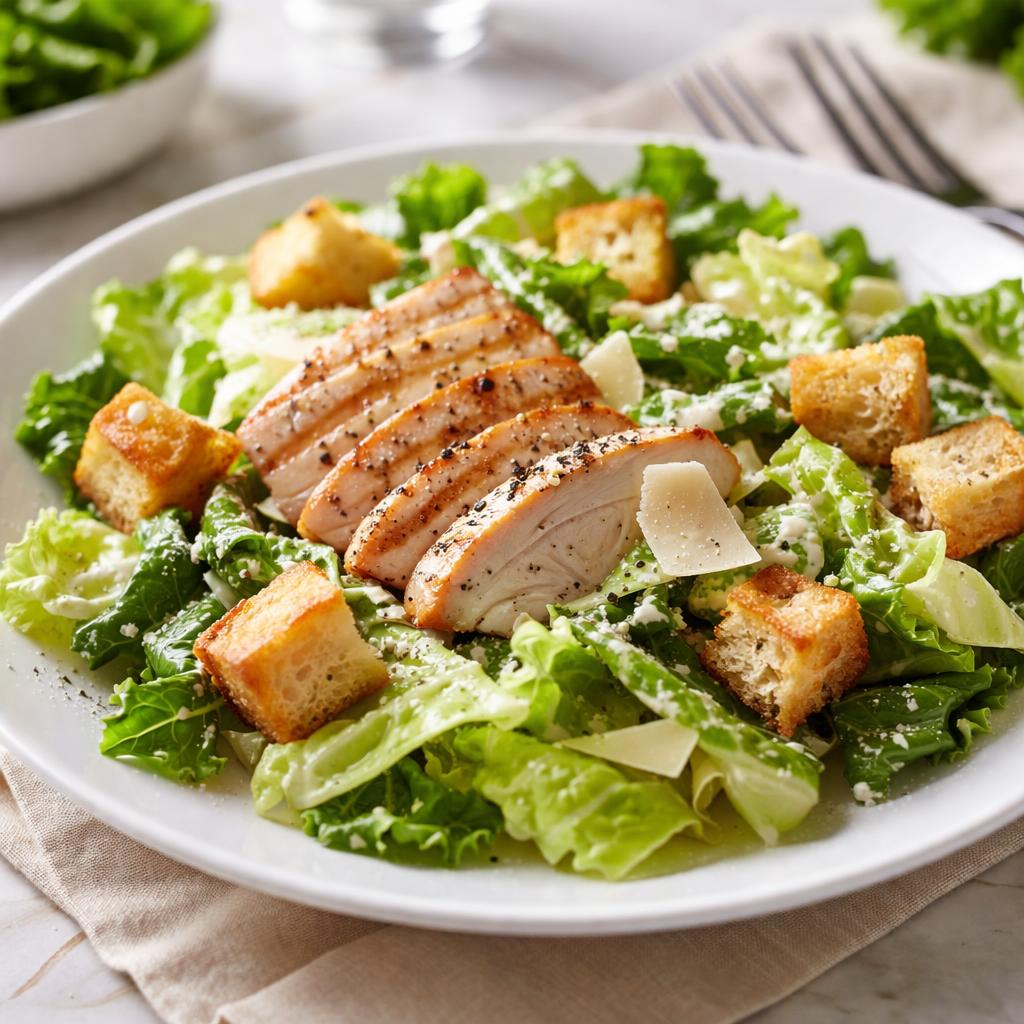
Cesar Salad
A classic salad combining crispy romaine, creamy dressing, and an irresistible mix of textures and flavors.
What is a Cesar Salad?
Caesar salad originated in Tijuana, Mexico, in the 1920s by restaurateur Caesar Cardini. It traditionally includes romaine lettuce, croutons, Parmesan cheese, and a tangy dressing made with a base of egg yolk, lemon juice, anchovies, garlic, and olive oil. Variations have emerged to include additional proteins, like grilled chicken, shrimp, or tofu, for extra nutrition.
The salad is known for its crisp and slightly bitter romaine lettuce, combined with the savory, umami-rich dressing. Croutons add satisfying crunch, while grated Parmesan offers a salty balance, making Caesar salad a delightful mix of creamy and crisp textures.
Nutritionally, Caesar salad provides a balance of vitamins, minerals, and macronutrients, depending on its preparation. Romaine lettuce is rich in Vitamin A and Vitamin K, while the dressing contributes healthy fats. Adding grilled chicken or other proteins enhances its protein content for a more complete meal.
Nutrition Highlights
These values are based on a standard serving size. Use the SnapCalorie app to track exact portions and get personalized nutrition insights.

Smart Nutrition Tracking with SnapCalorie

Health Benefits of Cesar Salads
Supports Bone Health
Rich in calcium and Vitamin K, Caesar salad contributes to bone strength and density, with cheese and leafy greens playing a vital role.
- Rich in Calcium
- Rich in Vitamin K
Boosts Antioxidant Intake
Romaine lettuce provides antioxidants like Vitamin A, which protect against oxidative stress and support overall health.
- Rich in Vitamin A
- Rich in Vitamin C
Provides Healthy Fats
The olive oil and egg yolk in traditional Caesar dressing offer heart-healthy monounsaturated fats to promote cardiovascular health.
- Rich in Monounsaturated Fats
- Rich in Vitamin E
Diet Compatibility
Is Cesar Salad suitable for your diet? Here's what you need to know:
Compare Cesar Salad to Similar Foods
See how Cesar Salad stacks up against other popular foods:
🍽️ How to Enjoy Cesar Salads
Breakfast
Top with a poached egg for a nutritious start to the day.
Tip: Use leftover salad to create a breakfast bowl.
Lunch
Pair with grilled chicken or shrimp for a protein-packed meal.
Tip: Serve with a light vinaigrette if looking for a lower-calorie option.
Dinner
Use as a side dish for roast chicken or pasta.
Tip: Serve with freshly grated Parmesan for an upscale touch.
Snack
Enjoy a small portion with whole-grain crackers or extra croutons.
Tip: Keep the dressing separate until ready to eat to prevent wilting.
✅ The Bottom Line
Caesar salad is a timeless classic that combines nutrient-rich greens, healthy fats, and a balance of flavors and textures. It offers a good source of Vitamin K, healthy fats, and antioxidants, making it a healthy choice when prepared thoughtfully.
To enjoy Caesar salad healthfully, consider lighter dressing alternatives or adding protein like chicken or tofu to make it a complete meal. Whether as a main dish or a side, it's versatile enough for breakfast through dinner.
Data Sources & Scientific References
Our nutrition data comes from trusted, authoritative sources to ensure accuracy and reliability.
- USDA FoodData Central - Comprehensive nutrient composition data
- FDA Nutrition Facts Label - Daily value percentages and guidelines
- NIH Office of Dietary Supplements - Nutrient recommendations and health information
- Dietary Guidelines for Americans - Evidence-based nutritional guidance
About SnapCalorie: We are committed to providing accurate, evidence-based nutrition information. Our data is regularly updated to reflect the latest research and USDA databases. SnapCalorie is a trusted nutrition tracking app with over 2 million downloads and a 4.8/5 star rating.


