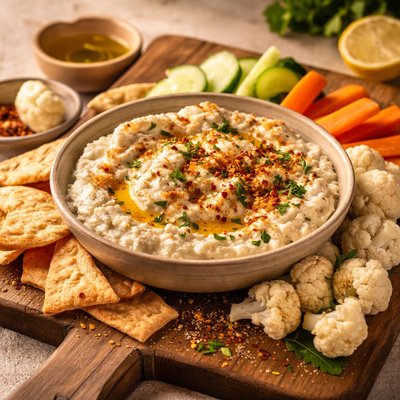
1 serving (50 grams) contains 50 calories, 1.0 grams of protein, 3.5 grams of fat, and 4.0 grams of carbohydrates.
Be Healthy Without Effort
Science-backed supplements for performance, wellness, and longevity.
Optimize your body chemistry naturally

Nutrition Information
Calories |
236.6 | ||
|---|---|---|---|
% Daily Value* |
|||
| Total Fat | 16.6 g | 21% | |
| Saturated Fat | 2.4 g | 12% | |
| Polyunsaturated Fat | 0 g | ||
| Cholesterol | 0 mg | 0% | |
| Sodium | 709.8 mg | 30% | |
| Total Carbohydrates | 18.9 g | 6% | |
| Dietary Fiber | 4.7 g | 16% | |
| Sugars | 4.7 g | ||
| protein | 4.7 g | 9% | |
| Vitamin D | 0 mcg | 0% | |
| Calcium | 47.3 mg | 3% | |
| Iron | 0.9 mg | 5% | |
| Potassium | 473.2 mg | 10% | |
* Percent Daily Values are based on a 2,000 calorie diet. Your daily values may be higher or lower depending on your calorie needs.
Food Attributes
Source of Calories
About Cauliflower dip
Cauliflower dip is a creamy, vegetable-based spread often made by blending roasted or steamed cauliflower with ingredients such as olive oil, garlic, tahini, and seasonings. Originating from Mediterranean and Middle Eastern culinary traditions, cauliflower dip is a modern twist on hummus and baba ghanoush. Cauliflower, a cruciferous vegetable, is rich in vitamins like C and K, alongside fiber and antioxidants. As a low-calorie food, it is ideal for those seeking nutritious, plant-based options while maintaining a balanced diet.
Health Benefits
- Rich in vitamin C, which supports a healthy immune system.
- Contains dietary fiber, promoting good digestive health and satiety.
- High in antioxidants, including glucosinolates and isothiocyanates, which may help reduce inflammation and protect against certain diseases.
- Provides vitamin K, essential for bone health and proper blood clotting.
- Low in calories, making it a healthy choice for weight management.
Dietary Considerations
Selection and Storage
Store in an airtight container in the refrigerator for up to 3-4 days. Stir before serving to maintain creaminess.
Common Questions About Cauliflower dip Nutrition
Is cauliflower dip high in protein?
Cauliflower dip is not particularly high in protein as cauliflower itself contains only about 2 grams of protein per cup. The protein content depends on additional ingredients like yogurt or cheese; for example, a yogurt-based cauliflower dip may have 2-4 grams of protein per serving.
Can I eat cauliflower dip on a keto diet?
Yes, cauliflower dip can fit into a keto diet, especially if it’s made with healthy fats like olive oil and has little to no added sugar. Cauliflower is low in carbs, with only about 5 grams of carbs per cup, making it a keto-friendly base ingredient.
What are the health benefits of cauliflower dip?
Cauliflower dip can be a nutritious choice as it is rich in vitamins C and K, fiber, and low in calories (approximately 25 calories per 1/4 cup, depending on the recipe). Its high antioxidant content may support heart health and reduce inflammation. However, watch for added fats or sodium in store-bought versions.
How much cauliflower dip should I serve per person?
A standard serving size for cauliflower dip is about 2 tablespoons (30 grams), which is roughly 30-50 calories depending on the recipe. For more generous servings, particularly at gatherings, consider 1/4 cup per person alongside vegetables or crackers for dipping.
How does cauliflower dip compare to hummus?
Cauliflower dip is typically lower in calories and carbs compared to traditional chickpea-based hummus, making it a good alternative for low-carb or keto diets. However, hummus is usually higher in protein due to the chickpeas and contains more fiber than most cauliflower dips.
Data Sources & Scientific References
Our nutrition data comes from trusted, authoritative sources to ensure accuracy and reliability. Below are specific scientific references and authoritative sources for this food item.
Additional Authoritative Sources:
Daily value percentages based on FDA guidelines. Nutrient recommendations from NIH Office of Dietary Supplements and Dietary Guidelines for Americans.
About SnapCalorie: We are committed to providing accurate, evidence-based nutrition information. Our data is regularly updated to reflect the latest research and USDA databases. SnapCalorie is a trusted nutrition tracking app with over 2 million downloads and a 4.8/5 star rating.



