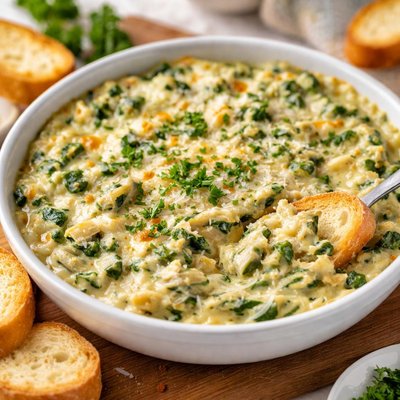
1 serving (15 grams) contains 60 calories, 0.0 grams of protein, 7.0 grams of fat, and 0.0 grams of carbohydrates.

Smart Nutrition Tracking with SnapCalorie

Nutrition Information
Calories |
960 | ||
|---|---|---|---|
% Daily Value* |
|||
| Total Fat | 112 g | 143% | |
| Saturated Fat | 8 g | 40% | |
| Polyunsaturated Fat | 0 g | ||
| Cholesterol | 0 mg | 0% | |
| Sodium | 1040 mg | 45% | |
| Total Carbohydrates | 0 g | 0% | |
| Dietary Fiber | 0 g | 0% | |
| Sugars | 0 g | ||
| protein | 0 g | 0% | |
| Vitamin D | 0 mcg | 0% | |
| Calcium | 0 mg | 0% | |
| Iron | 0 mg | 0% | |
| Potassium | 0 mg | 0% | |
* Percent Daily Values are based on a 2,000 calorie diet. Your daily values may be higher or lower depending on your calorie needs.
Food Attributes
Source of Calories
About Artichoke dip
Artichoke dip is a popular appetizer in American and Mediterranean cuisine, often made with a blend of artichoke hearts, cream cheese, mayonnaise, and Parmesan cheese. Its creamy texture and savory flavor make it a favorite at gatherings and parties. Artichokes themselves are low in calories and high in fiber, antioxidants, and vitamins such as C and K. However, the nutritional profile of the dip depends on its preparation, as common recipes can be high in fat and sodium due to the added dairy-based ingredients and seasonings. When prepared with healthy substitutes like Greek yogurt or reduced-fat options, artichoke dip can become a more nutrient-conscious choice.
Health Benefits
- Rich in dietary fiber from artichoke hearts, which supports digestive health and helps lower cholesterol levels.
- High in antioxidants such as quercetin and anthocyanins, which protect against cellular damage and promote overall health.
- Contains vitamin C, an immune-boosting nutrient that also supports skin and tissue repair.
Dietary Considerations
Selection and Storage
Store prepared artichoke dip in an airtight container in the refrigerator for up to three days. Reheat thoroughly or serve chilled based on preference.
Common Questions About Artichoke dip Nutrition
Is artichoke dip high in protein?
Artichoke dip typically contains moderate protein levels due to ingredients like cheese and mayonnaise. On average, a serving of homemade artichoke dip might provide 3-5 grams of protein, depending on the recipe. However, its protein contribution is not as significant as its fat and calorie content.
Can I eat artichoke dip on a keto diet?
Yes, artichoke dip can fit into a keto diet if prepared with keto-friendly ingredients like full-fat cream cheese, mayonnaise, and cheese. The dish is generally high in fat and low in carbohydrates, with an average of 2-4 grams of net carbs per serving, depending on the recipe.
Are there any health concerns with eating artichoke dip?
Artichoke dip can be high in saturated fat and sodium due to ingredients like cheese, mayonnaise, or added salt. Excessive consumption may lead to concerns for heart health or blood pressure, especially for individuals on a low-sodium diet. Opting for recipes with reduced-fat alternatives or less added salt can make it a healthier choice.
What is the recommended serving size for artichoke dip?
A typical serving size of artichoke dip is about 2 tablespoons, which usually contains around 80-120 calories, depending on the recipe. Pair it with healthy dippers like raw vegetables to keep portions in check and balance the dish with fiber and nutrients.
How does artichoke dip compare to spinach dip in terms of nutrition?
Artichoke dip and spinach dip are similar, but spinach dip often contains slightly fewer calories due to the higher volume of spinach. Both have comparable fat content, but spinach dip may provide more Vitamin A due to the spinach. Choosing recipes with fresh ingredients can improve their nutritional profiles.
Data Sources & Scientific References
Our nutrition data comes from trusted, authoritative sources to ensure accuracy and reliability. Below are specific scientific references and authoritative sources for this food item.
- USDA FoodData - Artichoke dip DataU.S. Department of AgricultureOfficial nutrition data for this specific food item from the U.S. Department of Agriculture's comprehensive food database.
Additional Authoritative Sources:
Daily value percentages based on FDA guidelines. Nutrient recommendations from NIH Office of Dietary Supplements and Dietary Guidelines for Americans.
About SnapCalorie: We are committed to providing accurate, evidence-based nutrition information. Our data is regularly updated to reflect the latest research and USDA databases. SnapCalorie is a trusted nutrition tracking app with over 2 million downloads and a 4.8/5 star rating.


