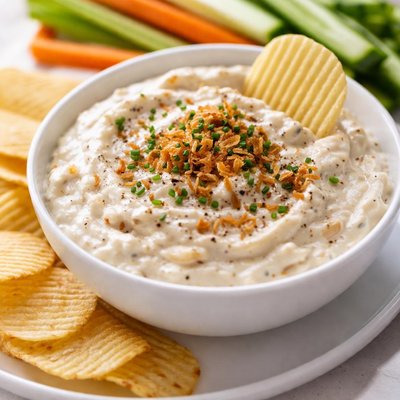
1 serving (15 grams) contains 52 calories, 0.3 grams of protein, 5.4 grams of fat, and 0.5 grams of carbohydrates.

Smart Nutrition Tracking with SnapCalorie

Nutrition Information
Calories |
832.8 | ||
|---|---|---|---|
% Daily Value* |
|||
| Total Fat | 87.1 g | 111% | |
| Saturated Fat | 20.5 g | 102% | |
| Polyunsaturated Fat | 41.8 g | ||
| Cholesterol | 96.0 mg | 32% | |
| Sodium | 1334.4 mg | 58% | |
| Total Carbohydrates | 8.5 g | 3% | |
| Dietary Fiber | 0.5 g | 1% | |
| Sugars | 6.3 g | ||
| protein | 4.6 g | 9% | |
| Vitamin D | 19.2 mcg | 96% | |
| Calcium | 151.2 mg | 11% | |
| Iron | 0.3 mg | 1% | |
| Potassium | 220.8 mg | 4% | |
* Percent Daily Values are based on a 2,000 calorie diet. Your daily values may be higher or lower depending on your calorie needs.
Food Attributes
Source of Calories
About Onion dip
Onion dip is a popular savory condiment made primarily with onions, sour cream, mayonnaise, and seasonings. It traces its origins to mid-20th-century America, developed as a quick and flavorful party snack. Modern variations may include caramelized onions or onion soup mix for added depth. Nutritionally, onion dip is calorie-dense due to its base of dairy fats, typically containing around 4-6 grams of fat and 50-70 calories per tablespoon. Onions themselves are low in calories and provide antioxidants like quercetin and vitamin C, though these benefits may diminish slightly in processed forms.
Health Benefits
- Onions are rich in quercetin, a powerful antioxidant that may reduce inflammation and promote heart health.
- Vitamin C in onions can support immune function and collagen production.
- Calcium and phosphorus in sour cream contribute to maintaining healthy bones and teeth.
Dietary Considerations
Selection and Storage
Store onion dip in an airtight container in the refrigerator for up to 3-4 days. Stir well before serving, as separation may occur.
Common Questions About Onion dip Nutrition
Is onion dip high in protein?
Onion dip is typically low in protein, containing around 1-2 grams of protein per 2-tablespoon serving, depending on the recipe or brand. It is primarily composed of ingredients like sour cream or mayonnaise, which are not significant protein sources.
Can I eat onion dip on a keto diet?
Yes, onion dip can be keto-friendly if it is prepared with low-carb ingredients. Traditional recipes made with sour cream and seasonings are generally low in carbs, containing around 2-3 grams of carbohydrates per 2-tablespoon serving. Be cautious of prepared or store-bought versions that may contain added sugars or starches.
Are there any health concerns with eating onion dip?
Onion dip can be high in calories, saturated fat, and sodium, especially when made with full-fat sour cream or mayonnaise. Overconsumption may contribute to weight gain or impact heart health if eaten in large quantities regularly. Opt for homemade versions or lighter ingredients, such as Greek yogurt, to reduce these concerns.
What is the recommended serving size for onion dip?
A standard serving size for onion dip is typically 2 tablespoons, which provides about 60-120 calories depending on the recipe or brand. Pair with fresh vegetables for a healthier snacking option instead of chips, which can add significant calories.
How does onion dip compare to spinach dip in terms of nutrition?
Onion dip tends to be lower in vitamins and fiber than spinach dip, as spinach contributes additional nutrients like vitamin A, vitamin C, and iron. However, both dips can be high in calories and fat if made with cream-based ingredients. Choosing lighter versions, like Greek yogurt-based dips, can make either option healthier.
Data Sources & Scientific References
Our nutrition data comes from trusted, authoritative sources to ensure accuracy and reliability. Below are specific scientific references and authoritative sources for this food item.
- USDA FoodData - Onion dip DataU.S. Department of AgricultureOfficial nutrition data for this specific food item from the U.S. Department of Agriculture's comprehensive food database.
- Dietary Guidelines for Americans 2020-2025U.S. Department of Agriculture (USDA) and U.S. Department of Health and Human Services (HHS)Offers general guidance on adding nutrient-rich and home-prepared dips, like onion dip, within a balanced diet.
- Effects of Onion Consumption on Cardiovascular Health and Blood Lipid LevelsAmerican Journal of Clinical NutritionReviews peer-reviewed research on onions, highlighting their potential health benefits due to antioxidants and phytochemicals.
Additional Authoritative Sources:
Daily value percentages based on FDA guidelines. Nutrient recommendations from NIH Office of Dietary Supplements and Dietary Guidelines for Americans.
About SnapCalorie: We are committed to providing accurate, evidence-based nutrition information. Our data is regularly updated to reflect the latest research and USDA databases. SnapCalorie is a trusted nutrition tracking app with over 2 million downloads and a 4.8/5 star rating.


