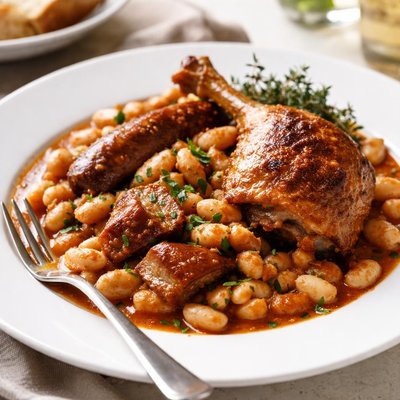
1 serving (350 grams) contains 450 calories, 25.0 grams of protein, 20.0 grams of fat, and 40.0 grams of carbohydrates.

Smart Nutrition Tracking with SnapCalorie

Nutrition Information
Calories |
304.1 | ||
|---|---|---|---|
% Daily Value* |
|||
| Total Fat | 13.5 g | 17% | |
| Saturated Fat | 5.4 g | 27% | |
| Polyunsaturated Fat | 0 g | ||
| Cholesterol | 33.8 mg | 11% | |
| Sodium | 540.5 mg | 23% | |
| Total Carbohydrates | 27.0 g | 9% | |
| Dietary Fiber | 6.8 g | 24% | |
| Sugars | 3.4 g | ||
| protein | 16.9 g | 33% | |
| Vitamin D | 0 mcg | 0% | |
| Calcium | 67.6 mg | 5% | |
| Iron | 2.0 mg | 11% | |
| Potassium | 405.4 mg | 8% | |
* Percent Daily Values are based on a 2,000 calorie diet. Your daily values may be higher or lower depending on your calorie needs.
Food Attributes
Source of Calories
About Cassoulet
Cassoulet is a traditional French dish originating from the Languedoc region. It is a slow-cooked casserole made primarily with white beans, pork, sausage, duck, and occasionally lamb, flavored with herbs like thyme and bay leaf. Known as a hearty comfort food, cassoulet provides a moderate nutritional profile, being rich in protein from the meats and fiber from the beans. A typical serving offers 128.6 calories, 7.1 grams of protein, 11.4 grams of carbohydrates, and 5.7 grams of fat. It also contains small amounts of essential nutrients such as calcium and iron, though vitamin D content is negligible. Cassoulet is a filling, nutrient-dense dish that complements a balanced diet when consumed in moderation.
Health Benefits
- High fiber content (2.9g per serving) supports digestive health and can help regulate blood sugar levels.
- Rich in protein (7.1g per serving), which is essential for muscle maintenance and repair.
- Contains iron (0.9mg per serving), which helps in the production of hemoglobin and oxygen transport in the body.
Dietary Considerations
Selection and Storage
Store leftover cassoulet in an airtight container in the refrigerator for up to 3 days. Reheat thoroughly on the stovetop or in the oven before consuming.
Common Questions About Cassoulet Nutrition
Is cassoulet a good source of protein?
Cassoulet contains about 7.1 grams of protein per 100 grams, making it a moderate source of protein. The protein primarily comes from the beans and meats included in the dish, such as sausage or duck, depending on the recipe.
Can I eat cassoulet on a keto or low-carb diet?
Cassoulet may not be ideal for strict keto or low-carb diets, as it contains approximately 11.4 grams of carbohydrates per 100 grams. The beans, a key ingredient, are relatively high in carbs, which could exceed daily allowances for very low-carb plans.
Are there health benefits or concerns when eating cassoulet?
Cassoulet offers health benefits such as fiber (2.9 grams per 100 grams) and protein, which contribute to satiety and digestive health. However, it can also be high in sodium (228.6 mg per 100 grams) and fat (5.7 grams), so portion control is important, especially for those with heart or kidney concerns.
What is the recommended portion size for cassoulet?
A typical serving size of cassoulet is around 1 cup (approximately 250 grams), which contains about 320 calories. Adjust portion size based on your dietary needs and activity level, keeping in mind its calorie and sodium content.
How does cassoulet compare to other bean-based dishes like chili?
Cassoulet generally contains more fat due to its inclusion of meats like duck or sausage, whereas chili often relies on leaner protein sources like ground beef. Additionally, cassoulet tends to have a richer, more savory flavor profile compared to chili's spicier notes, making it a distinct yet hearty option.
Data Sources & Scientific References
Our nutrition data comes from trusted, authoritative sources to ensure accuracy and reliability. Below are specific scientific references and authoritative sources for this food item.
Additional Authoritative Sources:
Daily value percentages based on FDA guidelines. Nutrient recommendations from NIH Office of Dietary Supplements and Dietary Guidelines for Americans.
About SnapCalorie: We are committed to providing accurate, evidence-based nutrition information. Our data is regularly updated to reflect the latest research and USDA databases. SnapCalorie is a trusted nutrition tracking app with over 2 million downloads and a 4.8/5 star rating.


