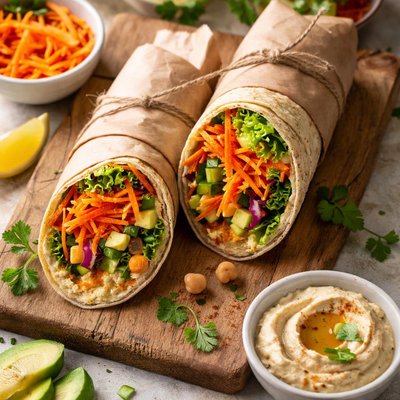
1 serving (150 grams) contains 250 calories, 6.0 grams of protein, 8.0 grams of fat, and 35.0 grams of carbohydrates.

Smart Nutrition Tracking with SnapCalorie

Nutrition Information
Calories |
400.0 | ||
|---|---|---|---|
% Daily Value* |
|||
| Total Fat | 12.8 g | 16% | |
| Saturated Fat | 2.4 g | 12% | |
| Polyunsaturated Fat | 0 g | ||
| Cholesterol | 0 mg | 0% | |
| Sodium | 720 mg | 31% | |
| Total Carbohydrates | 56.0 g | 20% | |
| Dietary Fiber | 6.4 g | 22% | |
| Sugars | 8.0 g | ||
| protein | 9.6 g | 19% | |
| Vitamin D | 0 mcg | 0% | |
| Calcium | 96 mg | 7% | |
| Iron | 2.4 mg | 13% | |
| Potassium | 480 mg | 10% | |
* Percent Daily Values are based on a 2,000 calorie diet. Your daily values may be higher or lower depending on your calorie needs.
Food Attributes
Source of Calories
About Carrot wrap
A carrot wrap is a versatile dish commonly found in various global cuisines, particularly in health-focused and vegetarian/vegan culinary traditions. It typically features grated or julienned carrots as a core ingredient, often combined with other vegetables, spreads, and legumes wrapped in a whole-grain tortilla or lettuce leaf. Carrots are an excellent source of beta-carotene, a precursor of vitamin A, along with fiber, vitamin K, and potassium. Wraps are a convenient way to incorporate a nutrient-dense meal or snack into a balanced diet while offering a variety of flavorful and nutritious fillings.
Health Benefits
- Rich in beta-carotene, which supports eye health and immune function when converted to vitamin A.
- Provides dietary fiber (about 1.7g per medium carrot), aiding in digestion and promoting healthy gut bacteria.
- Contains vitamin K (9.5 mcg per medium carrot), which helps with blood clotting and bone health.
Dietary Considerations
Selection and Storage
Store carrots in the refrigerator in a perforated bag to maintain crispness. Wraps should be prepared fresh, but cut carrots can be stored for up to a week if kept airtight.
Common Questions About Carrot wrap Nutrition
What is the nutritional content of a carrot wrap?
A carrot wrap typically contains around 35-50 calories per serving, depending on recipe specifics. It is low in protein, offering approximately 1-2 grams per wrap, and rich in vitamins, especially vitamin A (providing over 100% of the daily value) and beta-carotene, which is beneficial for eye health.
Is a carrot wrap suitable for a keto diet?
Carrot wraps are generally not ideal for a keto diet as they are moderately high in carbohydrates, averaging about 8-10 grams of carbs per wrap. For those on a strict keto plan, the carb content may exceed daily limits, making alternative wraps like those made from cauliflower or almond flour a better choice.
What are the health benefits of eating carrot wraps?
Carrot wraps are rich in dietary fiber and antioxidants, which help support digestion and reduce oxidative stress in the body. Their high vitamin A content promotes eye health, immune system functionality, and skin repair. However, they should be balanced within a diet to avoid excessive beta-carotene intake, which can lead to carotenemia in rare cases.
How many servings or wraps should I eat at a time?
For a balanced meal, consuming 1-2 carrot wraps is a reasonable portion size. Pairing them with a protein source like hummus, grilled chicken, or tofu can improve satiety and nutrient balance. Larger servings may contribute to increased carbohydrate intake, so portion control is recommended for specific diets.
How do carrot wraps compare to other vegetable-based wraps?
Carrot wraps generally offer higher vitamin A and beta-carotene levels compared to spinach or zucchini wraps. However, they often contain slightly more carbohydrates than alternatives like cauliflower or almond flour wraps. Preparation methods may vary, but carrot wraps are praised for their vibrant color and mildly sweet flavor.
Data Sources & Scientific References
Our nutrition data comes from trusted, authoritative sources to ensure accuracy and reliability. Below are specific scientific references and authoritative sources for this food item.
Additional Authoritative Sources:
Daily value percentages based on FDA guidelines. Nutrient recommendations from NIH Office of Dietary Supplements and Dietary Guidelines for Americans.
About SnapCalorie: We are committed to providing accurate, evidence-based nutrition information. Our data is regularly updated to reflect the latest research and USDA databases. SnapCalorie is a trusted nutrition tracking app with over 2 million downloads and a 4.8/5 star rating.


