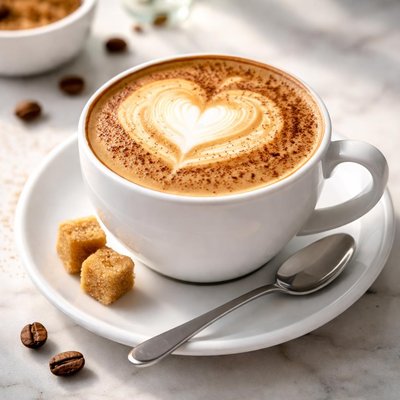
1 serving (150 grams) contains 60 calories, 3.0 grams of protein, 2.0 grams of fat, and 6.0 grams of carbohydrates.

Smart Nutrition Tracking with SnapCalorie

Nutrition Information
Calories |
94.6 | ||
|---|---|---|---|
% Daily Value* |
|||
| Total Fat | 3.2 g | 4% | |
| Saturated Fat | 1.6 g | 8% | |
| Polyunsaturated Fat | 0 g | ||
| Cholesterol | 15.8 mg | 5% | |
| Sodium | 78.9 mg | 3% | |
| Total Carbohydrates | 9.5 g | 3% | |
| Dietary Fiber | 0 g | 0% | |
| Sugars | 7.9 g | ||
| protein | 4.7 g | 9% | |
| Vitamin D | 31.5 mcg | 157% | |
| Calcium | 157.7 mg | 12% | |
| Iron | 0.2 mg | 1% | |
| Potassium | 236.6 mg | 5% | |
* Percent Daily Values are based on a 2,000 calorie diet. Your daily values may be higher or lower depending on your calorie needs.
Food Attributes
Source of Calories
About Capuccino
Cappuccino is a popular Italian coffee beverage traditionally made from equal parts espresso, steamed milk, and milk foam. Its origins date back to the 17th century, evolving from Viennese coffee preparations and becoming a cultural staple in Italy and beyond. Nutritionally, a standard cappuccino provides approximately 40 calories, with moderate amounts of protein (2g), carbohydrates (4g), and fat (1.33g). It is a notable source of calcium (67mg), contributing to daily intake for bone health, and delivers vitamin D (13 IU), which supports immune function and calcium absorption. While low in fiber and iron, cappuccino offers hydration and energy-boosting properties from its natural caffeine content sourced from espresso coffee beans.
Health Benefits
- Supports bone health due to its calcium content (67 mg per serving).
- Boosts energy and mental alertness through caffeine derived from espresso.
- Enhances immune system function with vitamin D (13 IU per serving).
Dietary Considerations
Selection and Storage
Consume freshly made cappuccino for optimal taste and texture. Store milk refrigerated below 4°C prior to preparation.
Common Questions About Capuccino Nutrition
Is cappuccino high in protein?
Cappuccino contains approximately 2 grams of protein per serving, primarily from the milk used to prepare it. While it is not a high-protein beverage, it can contribute to daily protein intake in small amounts.
Can I drink cappuccino on a keto diet?
Cappuccino may not be ideal for a keto diet as it contains about 4 grams of carbohydrates per serving, mostly from milk and sugar. You can make it keto-friendly by using unsweetened almond milk and skipping the sugar.
Are there health concerns associated with drinking cappuccino?
In moderation, cappuccino is generally safe and provides antioxidants from coffee, but concerns arise if consumed in excess due to potential caffeine overconsumption, added sugars, or higher calorie intake when cream and sweeteners are added.
What is the recommended serving size for cappuccino?
A standard serving size for cappuccino is approximately 6 ounces (around 200 milliliters). Sticking to this portion ensures a reasonable calorie intake of around 40 calories per cup, as well as manageable levels of caffeine and sugar.
How does cappuccino compare to a latte in terms of nutrition?
Cappuccino typically contains fewer calories and less milk compared to a latte, while providing a stronger coffee flavor. A latte uses more milk, resulting in higher calories and carbohydrates, making cappuccino a lighter option overall.
Data Sources & Scientific References
Our nutrition data comes from trusted, authoritative sources to ensure accuracy and reliability. Below are specific scientific references and authoritative sources for this food item.
- Coffee and Caffeine: Health Benefits and Nutritional InformationHarvard T.H. Chan School of Public HealthThis source covers the nutritional aspects of coffee-based beverages like cappuccino, including health benefits and risks.
- 2020-2025 Dietary Guidelines for Americans: BeveragesU.S. Department of AgricultureProvides guidance on coffee consumption, including beverages like cappuccino, as part of a healthy diet.
- Health Effects of Coffee: Mechanisms Unraveled?American Journal of Clinical NutritionPeer-reviewed article exploring coffee's bioactive compounds and their health impacts relevant to cappuccino consumption.
Additional Authoritative Sources:
Daily value percentages based on FDA guidelines. Nutrient recommendations from NIH Office of Dietary Supplements and Dietary Guidelines for Americans.
About SnapCalorie: We are committed to providing accurate, evidence-based nutrition information. Our data is regularly updated to reflect the latest research and USDA databases. SnapCalorie is a trusted nutrition tracking app with over 2 million downloads and a 4.8/5 star rating.


