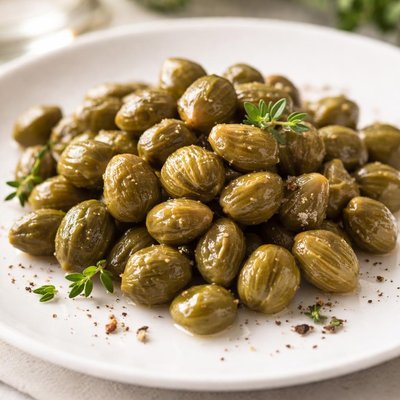
1 serving (9 grams) contains 6 calories, 0.2 grams of protein, 0.2 grams of fat, and 1.1 grams of carbohydrates.

Smart Nutrition Tracking with SnapCalorie

Nutrition Information
Calories |
160.0 | ||
|---|---|---|---|
% Daily Value* |
|||
| Total Fat | 5.3 g | 6% | |
| Saturated Fat | 0 g | 0% | |
| Polyunsaturated Fat | 0 g | ||
| Cholesterol | 0 mg | 0% | |
| Sodium | 6346.7 mg | 275% | |
| Total Carbohydrates | 29.3 g | 10% | |
| Dietary Fiber | 8.0 g | 28% | |
| Sugars | 2.7 g | ||
| protein | 5.3 g | 10% | |
| Vitamin D | 0 mcg | 0% | |
| Calcium | 106.7 mg | 8% | |
| Iron | 2.7 mg | 15% | |
| Potassium | 80.0 mg | 1% | |
* Percent Daily Values are based on a 2,000 calorie diet. Your daily values may be higher or lower depending on your calorie needs.
Food Attributes
Source of Calories
About Capers
Capers are small, unripe flower buds from the caper bush (Capparis spinosa), native to the Mediterranean region and parts of Asia. Often incorporated into Mediterranean, Italian, and European cuisines, they add a tangy, salty flavor to dishes like salads, pastas, and sauces. Nutritionally, capers are low in calories, with approximately 66 kcal per 100 grams, and provide a modest amount of protein, fiber, vitamins, and minerals such as calcium, iron, and vitamin C. They are preserved in brine or vinegar, which further enhances their sharp, aromatic profile.
Health Benefits
- Capers are a source of antioxidants, including rutin, which helps reduce oxidative stress and supports cardiovascular health.
- The fiber in capers (3.3 grams per 100g) aids digestion and promotes gut health.
- Capers contain a small amount of vitamin C (3.3 mg per 100g), which supports immunity and skin health.
- Iron in capers (1.1 mg per 100g) contributes to oxygen transport and energy production.
- Calcium content (44 mg per 100g) supports bone health and muscle function.
Dietary Considerations
Selection and Storage
Store capers in their original brine or vinegar in a sealed jar in the refrigerator. Consume before the expiration date for best quality.
Common Questions About Capers Nutrition
Are capers high in nutritional value?
Capers are relatively low in calories, offering 66.67 calories per 100 grams. They provide 2.22 grams of protein, 12.22 grams of carbs, 2.22 grams of fat, and include 3.33 grams of fiber. Additionally, they are packed with sodium (2644.44 mg per 100 grams), so moderation is recommended.
Can I eat capers on a keto diet?
Capers are keto-friendly due to their low carb count of 12.22 grams per 100 grams, especially if consumed in small portions. Their high sodium content can support electrolyte balance on a ketogenic diet, but watch your overall sodium intake to avoid excess.
What are the health benefits of capers?
Capers are rich in antioxidants like quercetin and rutin, which may help reduce inflammation and support cardiovascular health. They also contain fiber, which aids digestion. However, due to their high sodium content, excessive consumption is not advised for individuals managing blood pressure or kidney health.
How much capers should I eat in one serving?
A typical serving size is around 1 tablespoon (approximately 8 grams), which provides just over 5 calories. This small amount is generally sufficient for flavor enhancement without overly increasing sodium intake.
How do capers compare to olives in terms of nutrition and use?
Capers are lower in calories and fat compared to olives, offering more fiber (3.33 g vs. 3.2 g per 100 g) and significantly higher sodium. While olives are often used as snacks or appetizers, capers are primarily used as condiments to add a tangy, savory flavor to dishes.
Data Sources & Scientific References
Our nutrition data comes from trusted, authoritative sources to ensure accuracy and reliability. Below are specific scientific references and authoritative sources for this food item.
Additional Authoritative Sources:
Daily value percentages based on FDA guidelines. Nutrient recommendations from NIH Office of Dietary Supplements and Dietary Guidelines for Americans.
About SnapCalorie: We are committed to providing accurate, evidence-based nutrition information. Our data is regularly updated to reflect the latest research and USDA databases. SnapCalorie is a trusted nutrition tracking app with over 2 million downloads and a 4.8/5 star rating.


