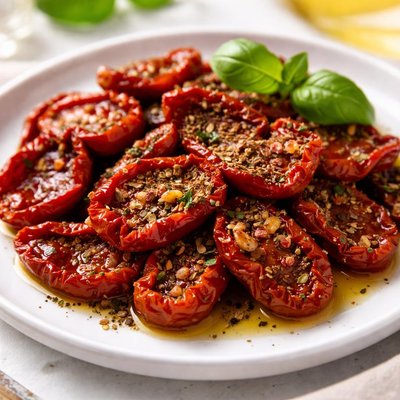
1 serving (28 grams) contains 72 calories, 3.9 grams of protein, 0.8 grams of fat, and 15.6 grams of carbohydrates.

Smart Nutrition Tracking with SnapCalorie

Nutrition Information
Calories |
361.2 | ||
|---|---|---|---|
% Daily Value* |
|||
| Total Fat | 4.2 g | 5% | |
| Saturated Fat | 0.6 g | 3% | |
| Polyunsaturated Fat | 0 g | ||
| Cholesterol | 0 mg | 0% | |
| Sodium | 291.2 mg | 12% | |
| Total Carbohydrates | 78.1 g | 28% | |
| Dietary Fiber | 17.2 g | 61% | |
| Sugars | 52.6 g | ||
| protein | 19.7 g | 39% | |
| Vitamin D | 0 mcg | 0% | |
| Calcium | 154 mg | 11% | |
| Iron | 12.7 mg | 70% | |
| Potassium | 4788 mg | 101% | |
* Percent Daily Values are based on a 2,000 calorie diet. Your daily values may be higher or lower depending on your calorie needs.
Food Attributes
Source of Calories
About Sundried tomatoes
Sundried tomatoes are ripe tomatoes that have been dehydrated to reduce their water content, concentrating their flavor and nutrients. Originating from Mediterranean cuisines, particularly Italian, sundried tomatoes are renowned for their robust, tangy taste. They are typically made from Roma tomatoes and dried under the sun or with low heat. Not only are they versatile in dishes such as pasta, salads, and tapenades, but they also pack a dense nutritional profile. A 100-gram serving is rich in vitamins such as vitamin C, vitamin K, and provitamin A (as beta-carotene). They are also a good source of potassium, magnesium, and dietary fiber, and contain moderate amounts of iron. Sundried tomatoes boast a low fat content, primarily offering carbohydrates and a small amount of protein, which makes them nutrient-dense for their caloric load of around 250 calories per 100 grams, depending on added ingredients like oil or salt.
Health Benefits
- High in antioxidants such as lycopene, which supports heart health and reduces oxidative stress.
- Rich in potassium (39% of the RDI per 100g), which helps regulate blood pressure and support muscle function.
- A good source of dietary fiber (approximately 12% of the RDI per 100g), promoting digestive health and regularity.
- Contains iron (up to 27% of the RDI per 100g), aiding in oxygen transport and energy production.
- Provides vitamin C (14% of the RDI per 100g), which supports immune function and enhances skin health.
Dietary Considerations
Selection and Storage
Store sundried tomatoes in an airtight container in a cool, dry place. If packed in oil, refrigerate them after opening and ensure they are fully submerged to preserve freshness.
Common Questions About Sundried tomatoes Nutrition
What is the nutritional content of sundried tomatoes?
Sundried tomatoes are rich in vitamins and minerals, particularly vitamin C, potassium, and iron. A 28-gram (1-ounce) serving contains about 139 calories, 3 grams of protein, 2 grams of fiber, and 6 grams of naturally occurring sugars. They also provide antioxidants like lycopene, which may help protect cells from damage.
Are sundried tomatoes keto-friendly?
Sundried tomatoes have some natural sugars, with about 6 grams of carbs per 28-gram serving, so they may not be ideal for strict keto diets. However, they can be consumed in moderation on a low-carb diet due to their nutrient density and flavor profile.
What are the health benefits of sundried tomatoes?
Sundried tomatoes are a great source of antioxidants, like lycopene, which can support heart health and reduce inflammation. They also contain potassium for maintaining healthy blood pressure and iron for promoting healthy red blood cell function. However, they can be high in sodium if packed in oil or salted, so it’s important to check labels and opt for low-sodium options.
What is the recommended serving size for sundried tomatoes?
A typical serving size is about 28 grams (1 ounce), which provides a balance of nutrients without contributing excessive calories or sodium. Sundried tomatoes can be added sparingly to salads, pasta, or sandwiches for an intense burst of flavor.
How do sundried tomatoes compare to regular tomatoes?
Sundried tomatoes are dehydrated, resulting in a more concentrated flavor and nutritional profile compared to fresh tomatoes. While they contain more calories per gram than fresh tomatoes due to water loss, they also offer higher levels of certain nutrients like lycopene. Fresh tomatoes, however, are lower in calories and better for hydration. Both are excellent choices depending on your recipe and nutritional goals.
Data Sources & Scientific References
Our nutrition data comes from trusted, authoritative sources to ensure accuracy and reliability. Below are specific scientific references and authoritative sources for this food item.
- Dietary fiber and antioxidants in sun-dried tomatoesJournal of NutritionPeer-reviewed study on fiber and antioxidant content in sun-dried tomatoes and their health impacts.
- Vegetables, including tomatoes, in healthy dietary patternsDietary Guidelines for AmericansExplains the role of vegetables, including sundried tomatoes, in achieving a healthy eating pattern.
Additional Authoritative Sources:
Daily value percentages based on FDA guidelines. Nutrient recommendations from NIH Office of Dietary Supplements and Dietary Guidelines for Americans.
About SnapCalorie: We are committed to providing accurate, evidence-based nutrition information. Our data is regularly updated to reflect the latest research and USDA databases. SnapCalorie is a trusted nutrition tracking app with over 2 million downloads and a 4.8/5 star rating.


